 Liam Taylor
A powerful cold front is sweeping across southeastern Australia this week, bringing damaging winds of up to 100 km/h, severe thunderstorms, and the season's first snowfall to alpine regions in Victoria, New South Wales, and Tasmania. The Bureau of Meteorology issued severe weather warnings for parts of NSW on 9 April 2026, with the cold front expected to intensify through the weekend as temperatures plunge dramatically within hours.
For homeowners across Victoria, South Australia, and Tasmania, this rapid weather shift is a stark reminder that autumn is the time to check your property — before the storms do it for you.
What the Cold Front Is Bringing
The Bureau of Meteorology's NSW Severe Weather Warning details winds gusting 80–100 km/h over elevated terrain, with prefrontal thunderstorms capable of producing localised downbursts. In alpine regions, snow is forecast as low as 700–800 metres — Mount Hotham is already recording its first snow of the season.
Temperature swings of 15–20 degrees Celsius within a few hours are expected, placing enormous stress on building materials: roofing materials expand and contract rapidly, sealants crack, and any existing weakness in gutters or flashings becomes a pathway for water intrusion.
This follows an already damaging storm season. Tropical Cyclone Maila, which made landfall at Category 3 strength on 5 April 2026, caused significant roof damage and water infiltration across far north Queensland, with metal cladding losses reported in multiple Pilbara towns. The Australian Government's Disaster Assist service provides official guidance and emergency support for homeowners affected by declared natural disasters, including storm damage recovery grants.
7 Things to Inspect Before the Weekend
Storm damage often isn't caused by catastrophic destruction — it's caused by small vulnerabilities that were already there, waiting for the right conditions. Here's what to check now:
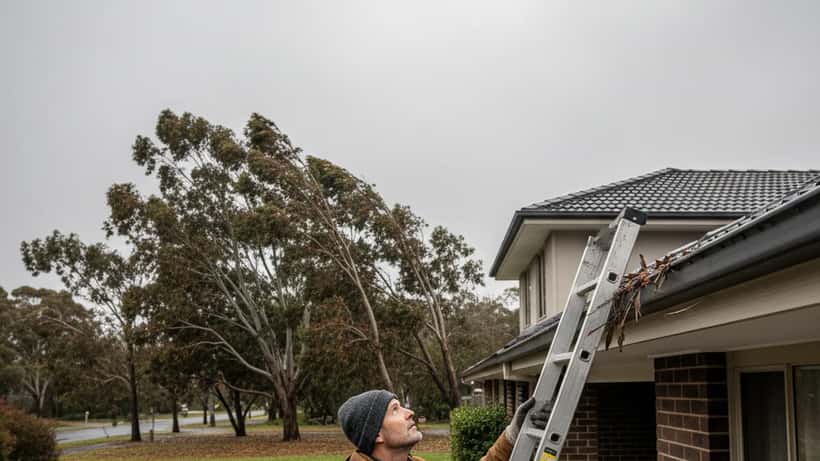
1. Your roof and gutters. Clear any leaf or debris buildup from gutters — blocked gutters overflow and push water under eaves and into roof cavities. Look for cracked, lifted, or missing tiles from ground level with binoculars.
2. Downpipes and drainage. Follow your downpipes to their base and check they discharge away from the house and foundation. A blocked or redirected downpipe during heavy rain can cause thousands of dollars in foundation damage.
3. Skylights and roof windows. Check the seals around any roof penetrations — skylights, vents, and flues are common failure points in wind-driven rain events.
4. External doors and window seals. Run your hand around door and window frames on a dry day — any draught means a potential water entry point. Silicone sealant around frames should be flexible and uncracked.
5. Outdoor structures. Garden sheds, pergolas, and carports are particularly vulnerable to wind damage. Check fixings, ensure panels are firmly secured, and if possible, move lightweight items (furniture, pots, tools) inside before the front hits.
6. Trees near the house. Dead branches and leaning trees are a real risk in 100 km/h gusts. Walk your property boundaries and identify any limbs that could fall onto your roof or powerlines.
7. Your insurance policy. Before a storm hits, check your building insurance policy covers storm damage, and know your excess. Document your property's current condition with photos — this helps enormously in any claims process.
When to Call a Builder or Inspector
If your property is more than 20 years old and hasn't had a professional structural inspection in the past five years, this cold front is a good prompt to arrange one. Older homes often have original roof battens, flashings, and sealants that have reached the end of their service life.
After the storm passes, be cautious about getting on the roof yourself. Falls from roofs are one of the leading causes of serious injury and death in home maintenance, according to Safe Work Australia. A licensed building inspector or roofer can assess damage safely, identify structural issues, and provide documentation for insurance claims.
The most common mistake homeowners make after storm damage is delaying repairs. What starts as a small roof leak can spread to wall framing, ceiling plaster, electrical fittings, and insulation within days of ongoing wet weather. Acting quickly — with a qualified tradesperson — saves money and prevents secondary damage.
The Bigger Picture: Climate and Your Home
Severe autumn cold fronts in southeastern Australia are becoming more intense according to the Bureau of Meteorology's climate analysis. As temperature differentials between the tropics and the Southern Ocean increase, frontal systems carry more energy — meaning stronger winds and more rapid weather changes.
For homeowners, the practical implication is clear: storm-proofing your home is no longer optional maintenance — it's a financial decision. The cost of a professional inspection and targeted repairs is a fraction of the cost of dealing with water-damaged insulation, rotted timber framing, or a collapsed pergola.
Disclaimer: This article provides general information for Australian homeowners. Specific building maintenance decisions should always be made with a qualified and licenced tradesperson familiar with local building codes and weather conditions.
Looking for a qualified builder or home inspector in your area? Expert Zoom connects Australian homeowners with licensed tradespeople who can assess storm readiness and carry out repairs after severe weather events.
