 Chloe Wilson
Radiohead's announcement on 7 September 2026 landed like the best possible news for a generation of fans: 16 Australian arena shows across Perth, Melbourne and Sydney from May to June 2027 — the band's first Australian tour in 15 years. Ticket registration runs until 5pm AEST on 10 September 2026. Demand is enormous. But buried in the logistics of this long-awaited return is a detail that hearing health professionals want concert-goers to consider now, well before standing in an arena for two hours with a Radiohead PA system running at full capacity: these are in-the-round arena shows, and that format has specific, measurable consequences for your ears.
The News: 15 Years, 16 Shows, and an "In the Round" Stage
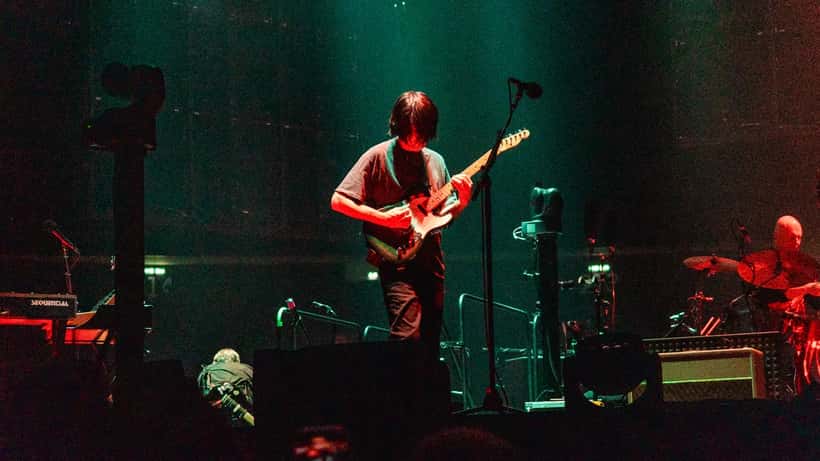
Radiohead's 2027 Australian tour spans Rod Laver Arena in Melbourne, RAC Arena in Perth, and Afterpay Arena in Sydney, with dates clustered across late May and early June 2027. The band has confirmed the stage will be configured "in the round" — positioned at the centre of the arena floor with the audience surrounding it on all sides, mirroring the format used on their 2012 world tour.
For many fans, the in-the-round configuration is the most appealing reason to splurge on a floor ticket. The format reduces the distance between the stage and the furthest audience member and creates an exceptional sense of intimacy even in venues seating 15,000 to 18,000 people. However, it is also the acoustic configuration that places the highest proportion of audience members closest to distributed speaker arrays — the delay towers and side fills required to deliver consistent sound levels in every direction.
That proximity has a documented consequence: floor-level sections in in-the-round arena shows routinely sustain noise levels of 100 to 110 decibels across the performance duration.
Expert Analysis: What 105 dB Means Over Two Hours
According to the World Health Organization's safe listening guidelines, sounds above 85 dBA are capable of causing permanent hearing damage with prolonged exposure. At 105 dB — a conservative estimate for floor positions near delay towers at an in-the-round arena show — the WHO's safe daily exposure threshold is approximately four minutes. A standard two-hour Radiohead set runs to roughly 120 minutes, representing exposure approximately 30 times beyond the safe daily dose at that level.
The mechanism is well-established: sustained loud noise damages the stereocilia — microscopic hair-like structures inside the cochlea that convert sound waves into electrical signals. Once these cells are lost, they do not regenerate. The auditory system does not have the capacity to repair itself the way skin or bone does.
What makes the 2026 research landscape particularly relevant for concert-goers is the growing understanding of cochlear synaptopathy — a condition identified in a study published in Scientific Reports (2026) where large-scale music events cause subclinical hearing damage. The synaptic connections between cochlear hair cells and auditory nerve fibres are severed without any corresponding damage to the outer hair cells that standard audiological tests measure. In practical terms: you can walk out of a concert, pass a routine hearing test the next morning, and still have sustained irreversible neurological damage that progressively impairs how your brain processes complex sound — speech in noisy environments, the separation of instruments in music, directional hearing.
For fans attending multiple Australian festival and arena shows in the same period, this compounding effect deserves serious consideration. Recovery from temporary threshold shift — the muffled, ringing hearing experienced immediately after a loud concert — takes 16 to 48 hours of genuine quiet. Attending consecutive shows before full recovery means each subsequent concert begins from a degraded cochlear baseline.
If You're in the Floor Section: A Concrete Case
Consider a 24-year-old fan — call her Priya — who books floor tickets for two consecutive Melbourne shows on 13 and 14 May 2027. She's attended concerts regularly since her mid-teens, notices mild tinnitus after loud shows, but has never used earplugs and has not had a hearing assessment.
At a sustained floor level of 105 dB near a delay tower, Priya exhausts her safe daily noise dose in approximately four minutes. Across the first 120-minute set, her cochlear exposure is roughly 30× the WHO daily safe limit. She leaves the 13 May show with temporary threshold shift — the characteristic ringing and muffled sensation familiar to regular concert-goers. Full recovery requires 16 to 48 hours of quiet.
On 14 May, 24 hours later, if Priya attended a normal day (commuting, conversation, city noise), her cochlea has not fully recovered. The second concert begins from a marginally compromised baseline. The incremental permanent damage from that second night is individually small but irreversible — and across a lifetime of attending arena shows unprotected, these increments accumulate into clinically measurable hearing loss.
Here is the if/then that audiologists want Priya to understand: if she invests in a pre-tour hearing assessment and custom musician's earplugs with 15 dB attenuation (available from audiology clinics across Australia for approximately $200 to $350), her effective floor exposure drops from 105 dB to 90 dB. That is still a loud concert. But at 90 dB, the WHO safe daily exposure threshold extends from four minutes to approximately 2.5 hours — comfortably covering a full Radiohead set. She hears the same mix, at the same relative balance between instruments and vocals, simply at a volume that does not carry the same permanent cost. Two protected shows versus two unprotected shows represent a meaningful and irreversible difference in long-term auditory health, not a minor inconvenience of wearing something in your ears.
Practical Implications: When to See a Hearing Professional
The circumstances in which an audiological consultation before Radiohead 2027 is specifically recommended:
You already experience tinnitus. If you notice ringing, buzzing or hissing after loud environments, your cochlea has already sustained some permanent damage. Your remaining hair cell reserve is reduced compared to someone without tinnitus. Attending arena shows without professional guidance and appropriate protection accelerates further loss.
You're booking multiple shows. With six Melbourne dates and six Sydney dates available, multi-show bookings are common. An audiologist can map your cumulative exposure across those events and advise on appropriate recovery intervals and protection levels.
You're under 35. The WHO estimates 1.1 billion young people globally are currently at risk from recreational noise exposure. Early baseline assessment allows you to track any changes that occur over years of attending live music.
You haven't had a hearing assessment in more than two years. Noise-induced hearing loss is painless and gradual. There is no moment when it hurts; the first indication is often difficulty following conversation in noisy environments — a symptom that appears years after the damage has accumulated. Earlier detection of rock-music-related hearing changes allows for intervention before loss becomes severe.
What to Do Before Tickets Go on Sale
Start with a baseline hearing test. Book an audiological assessment before the ticket sale period closes. The Australian Government's Hearing Services Program provides subsidised access to hearing assessments for eligible Australians. Private assessments at audiology clinics typically cost $80 to $150 and take approximately 45 minutes.
Choose musician's earplugs over foam. Standard foam earplugs attenuate sound unevenly — they block high frequencies first and create the muffled, bass-heavy experience that makes concerts unpleasant with protection. Musician's earplugs use flat-frequency filters (typically 9 dB, 15 dB or 25 dB attenuation options) that reduce overall volume while preserving the full frequency mix. A Radiohead concert through 15 dB musician's plugs sounds like a Radiohead concert. Off-the-shelf options from brands including Loop, Etymotic and EarPeace range from $20 to $70. Custom-moulded versions from audiologists range from $200 to $350 and last significantly longer.
Manage your position on the floor. In-the-round delay tower placement varies by venue and tour configuration, but as a general rule, moving 10 metres further from a delay speaker can reduce your exposure by 6 to 10 dB — effectively doubling or quadrupling your safe exposure duration. Checking venue maps before purchasing and identifying delay tower positions is a straightforward step that requires no equipment.
Plan genuine quiet between shows. If you're attending multiple dates, treat the 24-hour window between shows as a recovery period. Avoid headphones, busy restaurants, loud transport, and any significant noise source. The goal is 16 to 48 hours of sound levels below 70 dB — normal conversation level or quieter — between concerts.
Take tinnitus seriously. Post-concert tinnitus is not a normal part of the concert experience; it is a biological signal that your cochlea has been stressed beyond its safe operating threshold. If yours has intensified over recent years of concert attendance, an audiological consultation before Radiohead 2027 is not precautionary — it is overdue.
Radiohead's Australian return in 2027 is a once-in-a-generation event for many fans. The hearing you bring into those shows is the same hearing you'll use for the rest of your life. Protecting it requires less inconvenience than most people expect, and costs a fraction of what treating significant hearing loss — hearing aids, auditory rehabilitation, speech processing difficulties — costs over a lifetime.
This article is intended for general informational purposes only and does not constitute medical advice. If you are experiencing tinnitus, hearing difficulty, or any auditory symptoms, consult a registered audiologist or your GP.
format_used: Expert reaction
