 Emily Turner
Billy Idol was announced as a 2026 Rock & Roll Hall of Fame inductee on 13 April 2026 — a milestone that caps nearly five decades of performing at ear-splitting volumes. The punk icon, now 70, described himself as "knocked out" by the honour. But for audiologists and hearing specialists in Australia, his induction raises a question that applies to millions of concertgoers: what does a lifetime of loud music actually do to your hearing?
The Class of 2026 Includes Artists Who Lived in the Loud Lane
Billy Idol joins a 2026 inductee class that includes Iron Maiden and Phil Collins — artists whose careers collectively represent thousands of performances in stadiums, arenas, and festival grounds. The induction ceremony takes place on 14 November 2026 at the Peacock Theater in Los Angeles. Idol also released a new album, "Dream Into It," in early 2026 on Dark Horse Records.
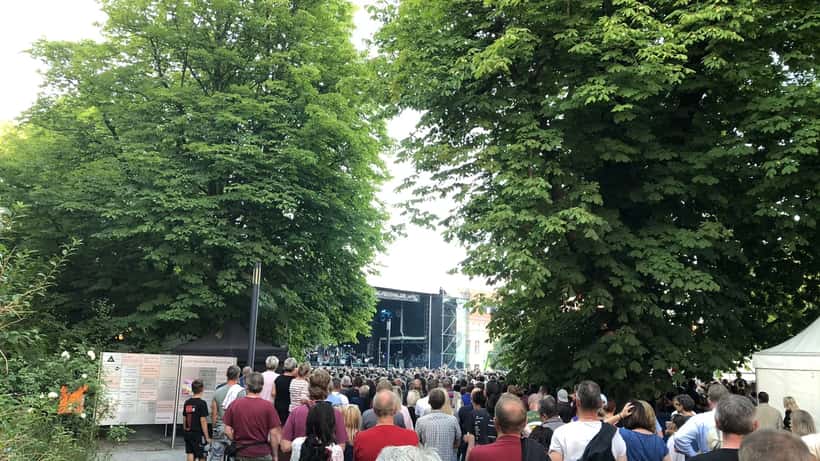
Idol's rise through punk and new wave in the late 1970s and 1980s placed him in some of the loudest venues of his era. The average rock concert produces sound levels between 100 and 120 decibels (dB) — well above the 85 dB threshold at which noise-induced hearing loss begins to accumulate. At 120 dB, irreversible damage can begin in under a minute of continuous exposure. Musicians performing on stage experience significantly higher exposure than audience members, often standing within metres of monitor speakers delivering 110–130 dB directly into their ears.
How Noise-Induced Hearing Loss Works
Noise-induced hearing loss is one of the most preventable — and most ignored — health conditions in Australia. According to the Australian Institute of Health and Welfare (AIHW), approximately one in six Australians currently lives with some form of hearing loss, making it the third most common chronic health condition in the country.
The mechanics are straightforward: the inner ear contains tiny hair cells in the cochlea that translate sound vibrations into neural signals. Loud sounds create physical trauma to these cells. Unlike most other cells in the body, cochlear hair cells do not regenerate once destroyed.
Damage typically follows a predictable pattern:
- Temporary threshold shift — After a loud concert, sounds seem muffled for hours. This is the hair cells recovering from stress.
- Tinnitus onset — Persistent ringing or buzzing in the ears, which can begin after a single traumatic exposure or accumulate gradually over years.
- Permanent high-frequency loss — The 4,000–8,000 Hz range is damaged first, affecting consonant clarity and making speech in noisy environments difficult.
- Broadband loss — In severe or long-term cases, the damage extends across all frequencies.
The cruel irony: most people don't notice significant hearing loss until 30–50% of cochlear hair cells have already been destroyed.
You Don't Have to Be a Rock Star to Be at Risk
Billy Idol performed for a living. But audiologists see noise-induced hearing loss every week in patients who simply attended concerts regularly — or who wear earbuds at high volume during their commute.
Common risk scenarios in Australia include:
- Tradies and construction workers — Regular exposure to power tools, jackhammers, and machinery without adequate hearing protection
- Regular concertgoers — Attending two or three shows per month over several years accumulates significant cochlear damage
- Musicians and sound engineers — Even at lower rehearsal volumes, daily exposure adds up over a career
- Fitness class enthusiasts — Many group fitness classes in Australia run music above 100 dB consistently
Safe Work Australia sets the standard noise exposure limit at 85 dB averaged over an 8-hour working day. Every 3 dB increase halves the safe exposure time — so at 88 dB, safe exposure drops to 4 hours; at 100 dB, to just 15 minutes.
What the Warning Signs Look Like
Many Australians delay seeking help because early hearing loss is easy to rationalise. Common signs include:
- Asking people to repeat themselves, particularly in background noise
- Turning up the TV louder than others in the household find comfortable
- Difficulty following conversations in restaurants or crowded rooms
- A persistent ringing, buzzing, or hissing sound (tinnitus)
- Sounds seeming "flat" or lacking clarity after a loud event
Important: Any sudden or rapid change in hearing, or tinnitus that appears suddenly without noise exposure, warrants urgent medical attention — these can indicate underlying conditions beyond noise damage.
The Right Time to See a Hearing Specialist
A hearing specialist (audiologist) can conduct a full audiogram — a painless, non-invasive test that maps your hearing sensitivity across all frequencies. This produces a baseline from which any future changes can be tracked precisely.
The earlier you identify loss, the more options remain available. Tinnitus management strategies, sound therapy, and lifestyle adjustments can slow progression and significantly improve daily quality of life, even before hearing aids become necessary. The cost of a hearing assessment is also generally covered or subsidised for eligible Australians through Hearing Australia, the government-funded hearing service provider.
Billy Idol's Rock Hall recognition is a celebration of a remarkable career. But for the millions of Australians who grew up at his shows — and those still regularly attending concerts and festivals today — his five decades in front of screaming crowds serve as a timely reminder. Hearing health deserves the same attention as every other aspect of your wellbeing.
If you've been to one too many loud concerts and notice any of the symptoms above, a consultation with a health professional is the smartest first encore you'll ever take.
