 Isabelle Torres
A magnitude 7.7 earthquake struck Panama on 9 October 2026, flattening buildings across three provinces and triggering a brief Pacific tsunami warning that sent thousands fleeing to higher ground. For the roughly 80,000 Australians who visit Central America each year, yesterday's disaster is a timely reminder that knowing your travel insurance rights before the ground starts shaking — not after — can be the difference between recovering $3,000 and losing it entirely.
What Happened in Panama on 9 October 2026
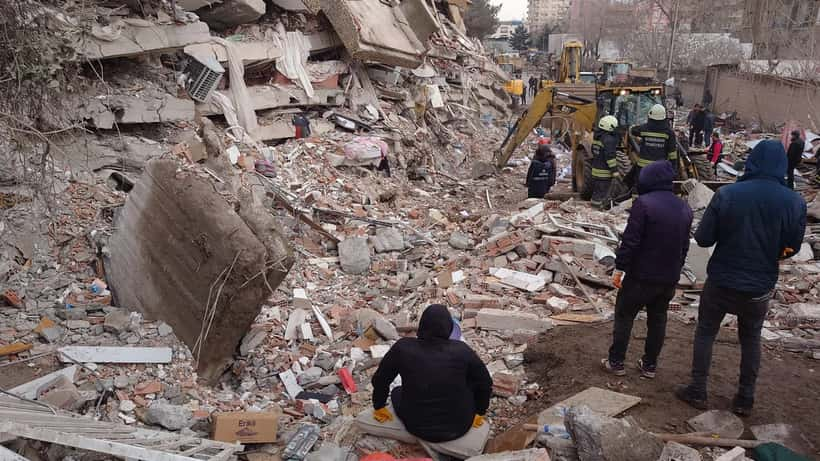
The U.S. Geological Survey initially recorded the event at magnitude 8.0 before revising it to 7.7 — the most powerful earthquake to hit Panama in modern recorded history. The epicentre sat approximately 10 kilometres southwest of Pitaloza Arriba in Herrera province, at a shallow depth of 10 km, which amplified the shaking far beyond the immediate area.
A 6.6 magnitude aftershock struck roughly two and a half hours later near Río Grande on the Pacific coast. Further aftershocks measuring 5.8 and 5.5 followed before midnight local time, according to the USGS. Damage was concentrated in three provinces — Veraguas, Herrera and Los Santos — and footage from international news outlets showed the complete collapse of a 19th-century Catholic cathedral in Penonomé. Panamanian authorities confirmed several injuries, including at least one person struck by falling debris from a partly collapsed structure.
The U.S. Pacific Tsunami Warning Center issued a coastal alert within minutes of the main quake, then lifted it approximately one hour later. Australian citizens in the region received emergency notifications through the Department of Foreign Affairs and Trade's Smartraveller system.
Panama lies on the Pacific Ring of Fire. Researchers at the University of California Riverside had previously identified the Azuero Peninsula fault as a major seismic risk, estimating it could expose more than one million people to severe shaking in a worst-case event — a scenario that broadly materialised on 9 October.
Why Australian Travellers Are Exposed Right Now
Panama has grown steadily as an Australian travel destination over the past decade. Direct connections through Miami and Houston make the country accessible from Sydney, Melbourne and Brisbane, and Panama City's value as a transit hub for South American itineraries has pushed annual visitor numbers higher. DFAT data places Central America and the Caribbean collectively at more than 80,000 Australian visits per year.
The risk many of those travellers face this week is not physical — it is financial. Most Australians assume their comprehensive travel insurance policy covers everything that could go wrong during a natural disaster. In practice, earthquake-related accommodation destruction, missed connections caused by aftershocks, and ground transport disruptions frequently fall into policy grey areas that insurers contest in writing.
Under the Australian Consumer Law (ACL), your entitlements when a travel service is disrupted by a natural disaster depend on three factors: whether you purchased insurance, which exclusions your policy contains, and whether the airline or accommodation provider has validly invoked a force majeure clause. A consumer law solicitor can review your specific documents and identify grounds for recovery you would otherwise overlook.
DFAT's Smartraveller advisory for Panama is the authoritative source for travel safety ratings and up-to-date guidance for Australians in the region.
When "Force Majeure" Doesn't Actually Let Airlines Off the Hook
The term "force majeure" — an unforeseeable event outside a party's control — appears in nearly every airline and hotel contract. Operators routinely invoke it to deny refunds after natural disasters, and many Australians accept the refusal without challenge.
But there is a legal distinction most travellers miss: force majeure clauses cover the operator's liability for the disaster itself, not their obligation to rebook or refund services they voluntarily cancelled out of caution. If your airline cancelled a Panama City flight on 9 or 10 October 2026 as a precautionary measure — rather than because the airport was physically destroyed — the carrier's ACL obligation to refund or reroute you may still apply in full.
A 2023 Full Federal Court decision (ACCC v Flight Centre Travel Group) reinforced that travel companies cannot contract out of ACL consumer guarantees by citing force majeure for cancellations they chose to make. Knowing this case exists, and citing it when lodging a claim, materially changes your negotiating position.
For pre-paid accommodation, the ACL's consumer guarantee provisions require services to be fit for purpose. If a Panama City hotel refuses to refund pre-paid nights by citing force majeure but the property is in fact operational, an ACL complaint to the Australian Competition and Consumer Commission — or a state fair trading office — can succeed where a direct demand to the hotel failed.
The same legal principles that helped Australians caught in Japan's 7.1 earthquake earlier in 2026 apply directly to Panama: the ACL does not suspend itself because a natural disaster occurred overseas.
Sophie's $3,320 Booking: Two Scenarios After the Quake
Sophie is a 38-year-old accountant from Brisbane who booked a twelve-day Panama and Costa Rica itinerary departing 14 October 2026. She pre-paid:
- Return flights via Miami: AUD $2,100
- Hotel in Panama City's Casco Viejo district: AUD $840 for five nights
- Canal transit and day tour package with an Australian-based operator: AUD $380
- Total committed spend: AUD $3,320
Following the 7.7 earthquake, her hotel emailed invoking force majeure and refused any refund. Her airline offered a 12-month flight credit subject to a $150 rebooking fee.
Scenario A — no legal advice: Sophie accepts both refusals. She receives a flight credit she cannot conveniently redeem (nominally worth $2,100 but costing $150 to activate, and tied to a narrow travel window). She forfeits the $840 hotel pre-payment and the $380 tour package outright. Total cash loss: $1,220, plus the inconvenient $2,100 credit.
Scenario B — a 90-minute legal consultation at AUD $220–$380: A consumer law solicitor identifies three separate grounds:
- The hotel's force majeure clause does not override ACL sections 60–62 consumer guarantees for pre-paid services. A formal letter of demand recovers the $840 hotel pre-payment within 14 days.
- The airline's precautionary cancellation on 10 October qualifies for a cash refund under ACL s267 — not merely a flight credit. A complaint to the ACCC triggers expedited resolution, recovering $2,100 in cash rather than a restricted voucher.
- The Australian-based tour operator has no valid ACL force majeure defence for a domestically contracted package. A small claims tribunal filing recovers the $380 tour payment.
Total recovered: $3,320. Net benefit after legal fee: $2,940–$3,100. The consultation paid for itself more than eight times over.
The rule of thumb is straightforward: if your pre-paid travel spend exceeds $800 and at least one provider is invoking force majeure to deny a refund, a legal consultation almost always recovers more than it costs.
What to Do in the Next 72 Hours
Whether you are currently in Panama or have upcoming travel booked, four steps apply immediately.
Register with Smartraveller. If you are in Panama or booked to travel within the next 30 days, register at smartraveller.gov.au to receive official DFAT alerts as the situation in Herrera, Veraguas and Los Santos provinces evolves.
Document everything now. Screenshot all booking confirmations, cancellation emails, and force majeure notices from airlines or hotels before they expire from your inbox. This documentation is essential for any ACL claim or insurance dispute.
Check your policy's natural disaster clause before calling your insurer. Australian travel insurance policies typically contain a 72-hour exclusion window — if you purchased a policy after the earthquake became public knowledge on 9 October, new earthquake-related claims may be excluded. Policies purchased before that date should be unaffected by this exclusion.
Consult a legal expert if any provider refuses a refund. Consumer law specialists on ExpertZoom can review your bookings, identify which providers are in breach of ACL guarantees, and draft demand letters that typically resolve disputes within 14 days — far faster than formal tribunal proceedings.
Panama's 7.7 earthquake is also a reminder to check your insurance coverage before you travel, not during a crisis. The rights Australians have after seismic events like Melbourne's 2026 earthquake follow the same ACL framework — consumer guarantees are automatic, regardless of where the disruption occurs.
Travel insurance and consumer law are two separate shields. One is optional; the other is automatic under Australian law. Knowing both exist, and knowing where they overlap, means that even when the ground moves without warning, your financial position doesn't have to shift with it.
This article contains general legal information only and does not constitute legal advice. For guidance specific to your situation, consult a qualified consumer law solicitor.
