 Mia Jones
In the early hours of Saturday, 4 October 2026, residents across Melbourne and the surrounding region were woken by a magnitude 4.8 earthquake centred near Leongatha in South Gippsland. Walls shook, windows rattled, and for thousands of homeowners across Victoria, a familiar question followed the tremors: am I covered — and if my insurer disputes it, what are my legal rights?
What Happened This Weekend
The 4.8 magnitude event struck at approximately 1am AEST, with its epicentre approximately 135 kilometres southeast of Melbourne's CBD, at a depth of 10 kilometres, confirmed by Geoscience Australia. It follows a 3.7 magnitude tremor recorded on 1 October near Woodside, Victoria, felt across Yarram and surrounding rural communities.
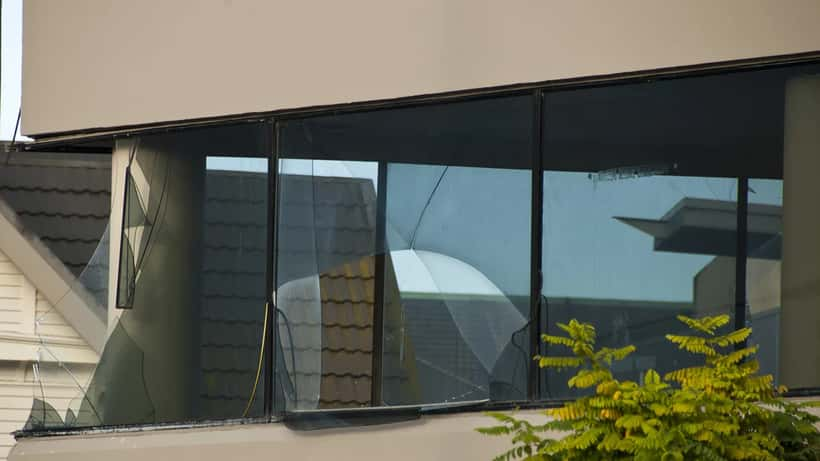
Residents across metropolitan Melbourne — from Frankston to Footscray — reported shaking homes, rattling windows, and minor visible cracking in plaster ceilings and external brickwork. The Insurance Council of Australia confirmed it was monitoring the situation for emerging claims.
Victoria sits within one of Australia's most seismically active regions. The 2021 Mansfield earthquake — a 5.9 magnitude event and the largest to strike southeastern Australia in 120 years — generated thousands of insurance claims across the state. The Leongatha event is smaller, but it has reopened a critical question for property owners: does your policy actually cover you, and under what conditions can an insurer legally limit your payout?
What Your Insurer Can Do — and What the Law Says About It
Most Australians assume their home and contents insurance covers earthquake damage. A review of 11 leading Australian home insurance policies found that all included earthquake coverage in principle. But the conditions attached to that coverage are where disputes — and significant financial losses — arise.
The first condition is the waiting period. Most policies require that your cover was active for at least 72 hours before the earthquake occurred. A homeowner who purchased or renewed a policy on Tuesday 1 October — the same day as the first Woodside tremor — may find their insurer applying this clause to deny coverage for damage from the larger Saturday quake. That represents a $10,000 to $50,000 exposure on a standard Melbourne home, and it is entirely permissible under most standard policy terms.
The second condition is the earthquake-specific excess. Unlike the standard excess you select when you first purchase a policy (typically $500–$1,000), an earthquake excess is applied separately and can be significantly higher. Some Australian insurers charge up to $5,000 as a mandatory earthquake excess on top of your standard deductible. Many policyholders are unaware of this clause until they submit a claim.
An insurance solicitor can review your Product Disclosure Statement (PDS) to identify whether the policy wording gives the insurer legitimate grounds to limit your payout — before you receive a decision that may be hard to overturn.
Three Points Where Claims Are Legally Contested
Legal practitioners who handle property and insurance disputes identify three recurring friction points following earthquake events in Australia.
Pre-existing damage clauses. If an insurer's assessor identifies cracks in walls or foundations that pre-date the earthquake — even marginally — they may classify the damage as pre-existing and exclude it from the claim. This is especially common in older Melbourne homes where minor settlement cracking is normal. The insurer bears the burden of proving the damage pre-existed the event, but without your own dated photographic evidence, that burden is easier for them to discharge. Photographs and videos of your property's condition taken before the event are admissible and effective.
Consequential versus direct damage. Policies typically cover direct structural damage caused by seismic movement. Damage that is one step removed — a burst pipe caused by the shaking, or mould resulting from water that entered through a newly cracked wall — is classified as consequential and more frequently disputed. Whether this is covered depends on precise policy language. The Australian Financial Complaints Authority (AFCA) consistently handles these disputes, and it does so for free.
Loss of rental income. For investors whose tenants cannot occupy a property due to earthquake damage, the question of rental income during the repair period is governed entirely by whether you hold a landlord insurance policy with a "loss of rent" provision. A standard home and contents policy does not cover this, and a solicitor can advise on whether a retrospective claim is viable or whether a gap in your policy structure needs correcting before the next event.
For up-to-date guidance on the claims process, ASIC's Moneysmart resource provides a clear overview of how to make a home insurance claim, including your rights when a decision is disputed.
What Actually Happens When You Claim: A Concrete Case
Take this scenario: you own a 1965 brick veneer home in Frankston, approximately 60 kilometres south of Melbourne's CBD and within the zone that felt Saturday's tremor most strongly. Your home and contents policy has a $750 standard excess — but buried in your PDS is an earthquake-specific excess of $3,500, applied on top.
Following the 4.8 magnitude event, you identify a 4-metre crack running along your front brick facade and damage to the internal plasterboard in two rooms. A licensed builder quotes $18,000 to repair.
Without legal review, you lodge the claim. The insurer's assessor arrives 10 business days later. They cite a hairline crack photographed in the same wall when the policy was issued three years ago, classifying part of the damage as pre-existing. They approve $12,500 of the $18,000 claim — then subtract the $3,500 earthquake excess and the $750 standard excess. Your payout: $8,250, against a repair bill of $18,000.
With legal review, a solicitor reviews the insurer's own pre-policy photographs and identifies that the documented hairline crack is on the east-facing wall, while the current damage runs along the north facade — a separate location. Under the Insurance Contracts Act 1984 (Cth), Section 13, the insurer is required to act with utmost good faith. The solicitor writes formally challenging the pre-existing damage determination. The insurer revises its decision, withdraws the pre-existing exclusion, and approves $13,750 — still subject to the earthquake excess, which is contractually valid, but the fabricated pre-existing clause is removed.
The difference: $5,500, recovered through a single letter of dispute. AFCA data from the 2021 Victoria earthquake showed that over 30% of formally disputed earthquake claims were resolved in the policyholder's favour after review. The cost of not asking the question is often much higher than the cost of the advice.
This pattern also appears in property investment contexts. If you hold Australian investment property in seismically active regions, the broader risk profile is explored in Tokyo's 5.9 Earthquake Exposes the Seismic Risk Australian Investors Should Know. For policyholders with travel insurance questions following earthquakes abroad, Japan's 7.1 Earthquake: What Australian Tourists Must Know About Their Coverage is also directly relevant.
The 72-Hour Clause: Is There a Legal Challenge?
If the waiting period clause applies to your situation, it is not necessarily the end of the road. The AFCA dispute resolution process allows policyholders to challenge decisions that apply the 72-hour clause in circumstances where the insurer cannot demonstrate the policy was not active prior to the event. More importantly, if the insurer relies on a technical exclusion to deny a claim where the intent of the policy clearly covered earthquake damage, this may constitute a breach of the duty of utmost good faith.
The key evidence is your policy commencement date, your renewal confirmation, and any communications with your insurer or broker about the coverage you believed you had. If these documents show a reasonable expectation of cover, a solicitor or AFCA can take that case forward.
This article provides general information only and does not constitute legal advice. For advice specific to your situation, consult a licensed legal practitioner specialising in property and insurance law.
A Practical Checklist: What to Do in the Next Seven Days
If your property was affected by this weekend's Leongatha tremor or the earlier Woodside event, take these steps now:
- Document all visible damage immediately — photos and video, with date and time stamps, before any repairs are made.
- Do not fill cracks or repaint before the insurer's assessor has attended. Removing evidence of damage before assessment can be used against your claim.
- Request your full Product Disclosure Statement and read the earthquake-specific clauses — particularly the excess and the waiting period.
- Notify your insurer within 7 days — most policies require prompt reporting, and delayed notification can itself become a basis for partial denial.
- If the claim is reduced or denied, lodge a formal internal dispute and, if unresolved within 30 days, file a free complaint with AFCA.
- Consult a solicitor before accepting any partial settlement if the gap between the insurer's offer and the actual repair cost exceeds $3,000 — that is typically the threshold at which professional legal review pays for itself.
The earthquake that shook Melbourne this weekend was a reminder that seismic risk in southeastern Australia is real and ongoing. Whether your policy protects you fully when you need it depends not just on having a policy, but on knowing exactly what it says — and what the law requires your insurer to do.
