 Fred Rivers
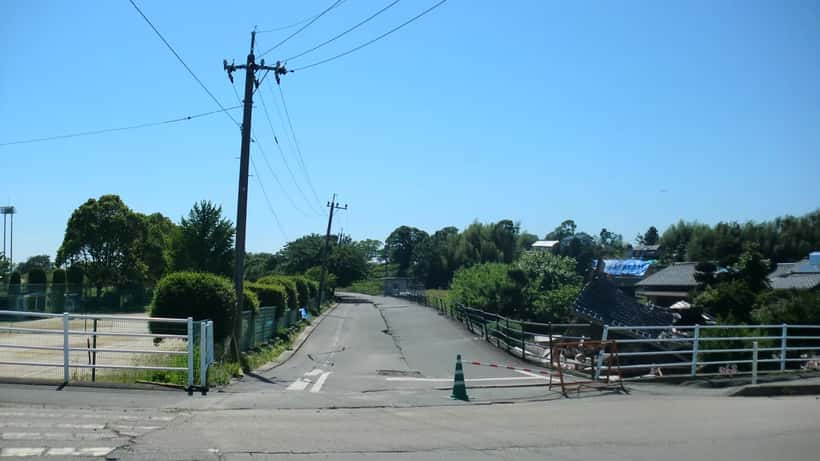
A 7.1-magnitude earthquake struck Japan's Kumamoto Prefecture on 28 July 2026, knocking out power to 48,300 households and triggering tsunami warnings along the Ariake and Yatsushiro coastlines. JR Kyushu suspended its entire rail network, stranding thousands of travellers — including hundreds of Australians — across one of Japan's most popular regional tourism corridors.
For the more than 1.5 million Australians who visit Japan each year, the question after an event like this is not just "Am I safe?" but "What happens to my holiday — and my money — when a natural disaster strikes mid-trip?"
What the Kumamoto Quake Means for Aussie Travellers
The Japan Meteorological Agency (JMA) recorded a maximum seismic intensity of 7 in Uki City and Hikawa — the highest point on Japan's intensity scale, at which buildings crack structurally, roads buckle and utility networks collapse without warning. A tsunami advisory for waves of up to 1 metre was issued for the Ariake and Yatsushiro coastlines, triggering evacuations of low-lying tourist areas.
Major industrial operators — including Sony and TSMC, both of which have plants in the affected region — suspended operations, signalling the breadth of disruption beyond the tourist economy. Kumamoto's high-speed rail links to Fukuoka and Kagoshima were cut off entirely, stranding passengers who could neither continue nor easily return.
For Australians already in Japan, the immediate priority is safety and shelter. But the second wave of stress hits within hours: flights are missed, non-refundable ryokan stays are lost, rail passes become worthless, and insurers' claims lines begin ringing. Understanding what you are actually entitled to claim — and how to frame that claim correctly — can mean the difference between recovering $1,000 and recovering $5,000.
The Single Rule That Determines Whether Your Claim Succeeds
Australia's travel insurance market operates on one foundational principle that surprises many first-time claimants: the known event exclusion. Once a natural disaster has been publicly announced — by the JMA, by the Australian government's Smartraveller service, or by major media — any policy purchased after that point will not cover losses tied to that event. This is not a loophole. It applies consistently across Budget Direct, CoverMore, Allianz, Insure & Go, and virtually every Australian travel insurer.
If you purchased your policy before 28 July 2026, you are in a substantially stronger position. Three areas of coverage are most commonly triggered by earthquake disruption:
Trip cancellation and interruption: When a licensed carrier — airline, rail operator, cruise line — cancels or substantially delays services because of a natural disaster, most comprehensive Australian policies allow you to claim non-refundable prepaid costs. Flights, hotels, guided tours, rail passes, and event tickets are all potentially recoverable, subject to your policy's sub-limits.
Emergency accommodation: Policies vary, but many comprehensive products include 72 to 96 hours of emergency accommodation cover if you are stranded due to suspended transport, capped at a daily limit (typically AUD $200–$350 per night depending on the insurer).
Medical and evacuation costs: Injury claims are almost universally included. More significantly, some premium policies include emergency medical evacuation, which can exceed AUD $50,000 for a medivac from regional Japan to Australia — a cost that uninsured travellers must meet personally.
The disputes — and most of the claims that result in underpayment — arise in three grey zones: travellers who cancelled their own trip voluntarily before any official disruption was declared; accommodation costs that arose because the guest chose to leave early rather than because the property was closed or unsafe; and any additional purchases made after the earthquake became a known event. Insurers routinely classify these as excluded, and policyholders who accept the initial assessment without challenge often leave significant money on the table.
Under Australia's Insurance Contracts Act 1984, insurers are required to handle claims in good faith and to clearly establish that a relevant exclusion applies. Disputes can be escalated at no cost to the Australian Financial Complaints Authority (AFCA). However, the fastest and most effective path to a revised offer is often a legal specialist who understands both the policy wording and the statutory obligations — someone who can reframe a denied claim in terms the insurer cannot easily dismiss.
Disclaimer: This article provides general information only and does not constitute legal or financial advice. Consult a qualified legal professional for advice specific to your circumstances.
What Happens When You Paid $6,000 for a Kyushu Holiday
Here is a realistic scenario that reflects what many Australians in Japan right now are facing.
A couple from Brisbane booked a 10-day Kyushu itinerary for late July 2026: return flights from Sydney ($2,600), a four-night ryokan package near Aso ($1,800), two JR rail passes ($640), guided hiking tours ($780), and a farewell dinner reservation ($220) — a total outlay of $6,040. They purchased a comprehensive travel insurance policy in May 2026, well before any earthquake had occurred.
When the Kumamoto earthquake hits on 28 July 2026, JR Kyushu suspends all services. Their ryokan in the Aso caldera region is inspected for structural damage and closed for at least five days. Their insurer initially offers $1,400 in compensation, citing a clause that the trip interruption benefit applies only to cancellation by a "licensed transport carrier" — arguing that the ryokan closure is a separate, non-covered event.
If a legal expert is consulted, the argument shifts:
Under the Insurance Contracts Act, the burden rests with the insurer to prove that an exclusion applies — not with the policyholder to prove that it does not. The ryokan closure is causally linked to the earthquake (a named covered peril), not a voluntary decision by the guests. The rail suspension, meanwhile, caused a missed connection that directly triggered additional hotel costs in Kumamoto city.
With a correctly structured claim — one that establishes the causal chain from covered peril to each specific loss — the recoverable amount rises to approximately $4,800: flights for early departure ($2,600), ryokan reimbursement ($1,800), and additional hotel and transport costs ($400). That is a $3,400 improvement on the initial offer.
The if/then logic: if your policy was in force before 28 July 2026 and your losses can be traced back to the earthquake as the originating cause, then the insurer's obligation extends beyond just the cancelled transport leg — but only if you know how to establish that causal link in writing.
Three Steps to Take Before You Close Your Claim
Whether you are currently in Japan or planning to travel in the coming weeks, take these actions immediately. Similar situations — including what happened to Australians caught in the UAE during the Iran conflict — show that the claims process rewards those who act quickly and document thoroughly.
Check the Smartraveller advisory. The Australian Government's official travel advice platform at smartraveller.gov.au is updated in near-real time during significant incidents. The platform specifies whether particular regions require reconsideration or have a "do not travel" advisory — and that advisory status is relevant to whether your insurer can invoke exclusions around voluntary travel to an affected area.
Call your insurer's emergency assistance line — not their standard claims team. Emergency assistance desks operate 24 hours and carry approval authority for immediate costs: emergency evacuation, hospital pre-authorisation, and accommodation in declared disaster zones. The standard claims team processes paperwork; the emergency line authorises real-time spending.
Do not accept the first offer without legal review. Research consistently shows that a large proportion of initial travel insurance assessments in Australia undervalue claims involving natural disaster disruptions, particularly where multiple interlinked losses are involved. A travel law specialist — accessible through platforms like Expert Zoom — can review your policy wording, identify which clauses have been misapplied, and prepare a formal dispute letter to the insurer before any AFCA escalation is needed.
For Australians who hold property investments or long-stay arrangements in Japan, separate legal questions arise around Japan's national earthquake insurance framework — administered by Japan's Ministry of Finance and mandatory for all residential property — and whether that scheme interacts with any Australian-held policy or superannuation product. This is a distinct but equally important area where a legal or wealth management specialist can prevent significant financial loss.
Japan remains one of Australia's most popular international destinations — and also one of the world's most seismically active countries. Knowing your rights before you fly, and having access to the right expert when disruption occurs, is the most practical form of travel preparation available.
