 Liam Taylor
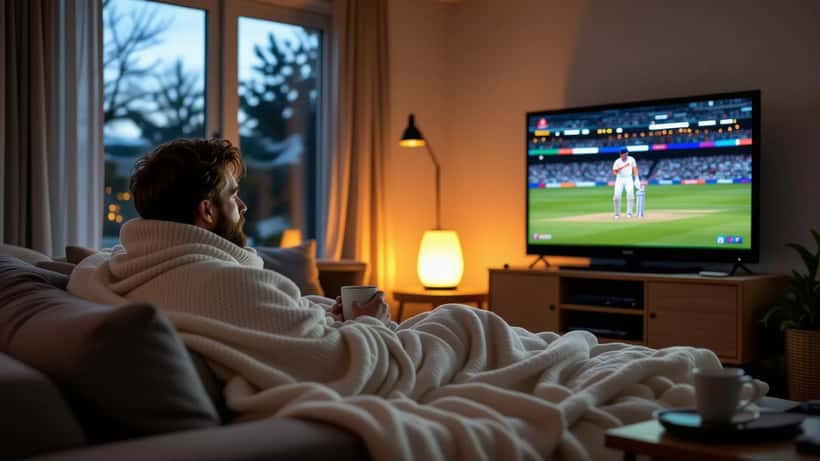
India lead England 1-0 in the one-day series after their six-wicket win at Birmingham on 14 July 2026, and the second ODI is under way in Cardiff today. With the decider set for Lord's on 19 July, Australian fans face a run of matches that start in the evening and finish deep into a cold winter night. Building a warm, safe place to watch has quietly become a home-improvement job worth doing properly.
The tour has already been a marathon. England swept the T20 series 4-0 to move top of the rankings, and the ODIs have pulled the schedule later still. Because the games are played in the United Kingdom, a day-night start lands in prime evening viewing here before rolling past midnight on the east coast. In the middle of July, that means hours in front of a screen while the house cools down.
Why a late-night session is a home-safety question
Most fans reach for the obvious fixes: a bigger television, a portable heater dragged in from the shed, an extra power board behind the couch. Each of those small decisions carries a risk that only shows up when the gear runs for six hours straight in a cold room.
Overloaded power boards overheat. Old extension leads run under rugs. Radiant heaters sit too close to curtains or a drying load of washing. None of it matters for a quick news bulletin. It matters a great deal when the same setup runs from the toss until stumps, night after night, across a three-match series.
The numbers back this up. According to Energy Safe Victoria, research by Master Electricians suggests up to 15 people are killed and around 300 hospitalised across Australia each year in domestic electrical accidents that a safety switch could have prevented. The regulator also notes that only about 60 per cent of Victorian homes have one or more safety switches fitted.
Get the electrics right before you switch on
The single most important upgrade is a residual current device, better known as a safety switch. It cuts power in a fraction of a second if it detects current leaking to earth, which is the fault that causes most electric shocks. If your switchboard is older or you are not sure what protects each circuit, a licensed electrician can inspect it and add protection where it is missing.
A few habits protect the rest of the room. Plug heaters and the television directly into wall sockets rather than daisy-chained power boards. Use one board rated for the load, not three linked together. Retire any lead with a cracked plug or a warm-to-the-touch connector. Keep cords out of walkways so nobody trips in the dark during a wicket.
If you want a permanent viewing area — a converted garage, a rumpus room, an enclosed alfresco space — that is licensed work. Adding fixed power points, hard-wired heating or a wall-mounted screen must be done by a qualified electrician under the national wiring rules. Do-it-yourself electrical work is illegal in every Australian state and voids most home insurance if something goes wrong.
Warmth without the fire risk
Heating is where winter viewing setups most often go wrong. A radiant bar heater needs clear space around it, well away from lounges, blankets and curtains. Never run one on an extension lead, and never leave it on when you drift off in the closing overs.
Electric throws and heated blankets are a lower-risk way to stay warm on the couch, but check the label for an automatic shut-off and replace any that are frayed. A reverse-cycle split system, if you already have one, is the safest and cheapest way to heat a room for a long session. A home-improvement or electrical professional can advise on whether your space suits a fixed heater or a portable one.
Screen and sound for a long night
Positioning matters once you commit to hours in a chair. Mount or place the television at eye level to avoid neck strain, and keep some soft ambient light in the room so your eyes are not locked on a bright screen in total darkness. Both small choices make a five-hour night far more comfortable.
Manage the volume too. Late finishes on the east coast mean the last hour often plays out while the rest of the street sleeps. A soundbar with a night mode, or a set of wireless headphones, lets you follow every appeal at Lord's without a knock from the neighbours. If you are wall-mounting a screen or running speaker cabling through a ceiling, that is another job where a tradesperson saves you a patch-up later.
Plan it before the Lord's decider
With the series level in India's favour and the finale at Lord's on 19 July, there is a short window to get a viewing space sorted. Fans setting up for other events have faced the same questions, as our guide to home viewing improvements for the World Cup 2026 quarter-finals shows, and the on-field context is covered in our India vs England 2026 match analysis.
The safe path is simple. Anything that plugs in, you can manage yourself with common sense and well-maintained gear. Anything fixed, wired or built in belongs to a licensed professional. For the difference between a quick fix and a permanent installation — and to have your switchboard checked before a long run of late nights — talk to a qualified electrician or home-improvement expert on Expert Zoom.
You can read Energy Safe Victoria's guidance on electrical inspections and safety switches on its official electrical safety pages. Get the setup right once, and the only thing keeping you up will be the cricket.
