 Liam Campbell
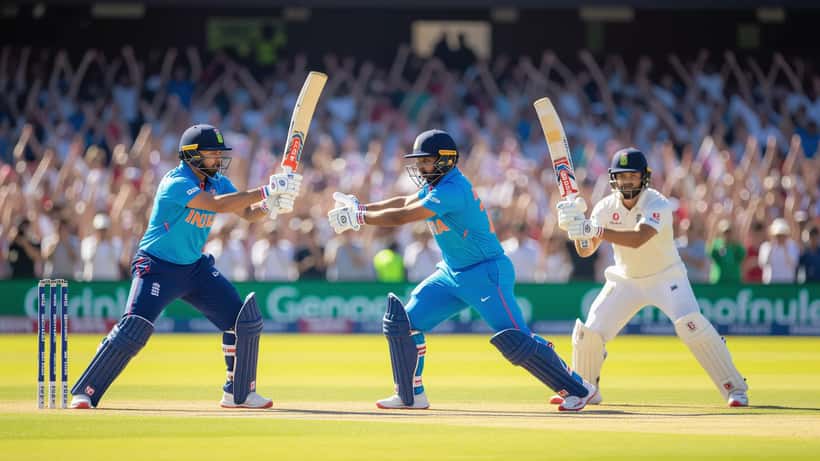
The 2026 India vs England limited-overs series has become one of the most talked-about contests on the cricket calendar, drawing millions of viewers across Australia and the subcontinent. With both teams reshaping their squads around aggressive batting, data-driven bowling plans, and youthful fielding units, every match is being treated as a tactical referendum on where the modern game is heading. For Australian fans waking before dawn to stream the action, the series offers more than entertainment: it is a live case study in how expert insight, fitness science, and real-time analytics now decide matches at the highest level.
India enters the fixture with a settled top order but questions around its middle-overs acceleration. The management has backed a blend of experience and aggression, yet English bowlers have repeatedly targeted the phase between overs 11 and 30, where run-rate pressure can trigger collapses on slower surfaces. Analysts note that India's success has often depended on how quickly it reads the pitch rather than how hard it hits in the powerplay. That reading, increasingly, comes from specialised consultants—former internationals, data scientists, and conditioning coaches—who feed information to the dressing room within minutes of the toss.
England, meanwhile, continues to push the boundaries of what a batting lineup can do in the first ten overs. The "Bazball" ethos has matured into something more disciplined in 2026: still fearless, but less reckless against spin in the middle overs. The selectors have prioritised multi-skilled players who can bowl six useful overs and finish an innings with the bat, a template that makes squad depth more valuable than individual stardom. Observers have compared this approach to the broader trend in professional sport, where versatility and injury resilience matter as much as raw talent.
Injury management has already shaped the series narrative. Fast bowlers on both sides have been rotated carefully, with load-monitoring technology tracking every delivery in training. A recent feature on Jofra Archer's Return to England's T20I XI: What High-Performance Medicine Means for Cricket illustrated how medical teams now treat seamers as long-term assets rather than short-term weapons. The same logic applies to India's pace battery, where workload charts are shared between national, franchise, and academy staff to prevent burnout during a packed calendar year.
The conditions in 2026 have also sparked debate among experts. Drier surfaces have favoured finger spinners who can vary pace without turning the ball sharply, rewarding bowlers who understand angles more than mystery variations. Batting coaches have responded by encouraging hitters to use the crease and manipulate the field, a skill that separates players who merely score runs from those who control the tempo of an innings. For club cricketers and fantasy-league players watching from Australia, these subtle adjustments are often the difference between a winning pick and a wasted transfer.
Fantasy cricket has added another layer of engagement to the India vs England rivalry. Draft platforms now weight recent form, venue history, and head-to-head records into player prices, creating markets that move almost as fast as the live odds. Casual players frequently overvalue reputation and undervalue matchup-specific data, a pattern that professional analysts exploit when building tournament lineups. A batsman who struggles against left-arm spin is not merely having a bad day; he is presenting a tactical opening that captains and data teams have planned for days in advance.
From a commercial standpoint, the series highlights how cricket content travels beyond traditional broadcast markets. Streaming audiences in Australia include large diaspora communities, corporate hospitality buyers, and sports-betting researchers who consume pre-match analysis across podcasts, newsletters, and short-form video. That fragmentation has created demand for concise, expert-curated briefings rather than hour-long preview shows. Platforms that can translate complex match-ups into plain-language recommendations are capturing attention at the expense of legacy commentary panels.
The mental side of the contest deserves equal attention. England's leadership group has spoken openly about sports-psychology support, while India has leaned on former captains who mentor younger players through high-pressure chases. The margin between the teams may ultimately be decided not by technique but by composure in the final five overs, when the scoreboard distorts decision-making. Experts in performance psychology describe these moments as "compressed risk" windows, where preparation and instinct must align within seconds.
Looking ahead, the 2026 series is likely to influence squad selection for the next global tournament cycle. Young all-rounders who perform against top-tier opposition tend to rise quickly through franchise leagues and national contracts, while veterans who struggle against spin or pace are forced to adapt or step aside. Coaches are already reviewing every dismissal and boundary to identify patterns that will shape training camps in the coming months. The data generated by this series will outlast the result itself.
For Australian businesses and sports enthusiasts, the India vs England rivalry is also a reminder that expert advice carries value beyond the boundary rope. Whether it is interpreting player fitness reports, assessing commercial partnerships, or structuring fantasy-league strategy, the same principles apply: gather reliable information, weigh uncertainty, and act before the market fully prices in the obvious. The 2026 series will be remembered for more than runs and wickets; it will be remembered as another chapter in cricket's transformation into a discipline where expertise, technology, and athletic excellence converge.
