 Olivia Thompson
The ground shifted beneath Tokyo at 2:00 a.m. on 23 August 2026. A magnitude 5.9 earthquake, centred at a depth of 70 kilometres beneath southern Ibaraki Prefecture, sent shaking across Tokyo, Saitama, Chiba and Kanagawa prefectures — injuring 37 people and halting Shinkansen services for damage inspections. There was no tsunami warning. But for Australian investors who have quietly poured capital into Japanese equities and property over the past 18 months, the tremor arrives as a pointed question: how much seismic risk is already sitting inside your portfolio?
Japan's Earthquake Reality: What the Data Shows
Japan is not merely earthquake-prone — it is the most seismically active major economy on Earth. The country sits at the convergence of four tectonic plates: the Pacific, Philippine Sea, Eurasian and North American. According to the Japan Meteorological Agency, Japan records approximately 1,500 perceptible earthquakes every year, accounting for roughly 18 per cent of all earthquakes of magnitude 6.0 or greater worldwide.
The 23 August event registered intensity lower 5 on Japan's seven-point shindo scale in Tokyo's Adachi Ward and parts of Ibaraki, Saitama and Chiba prefectures — significant enough to throw residents from bed, rupture a water main and disrupt commuter rail lines well into the morning peak. Of the 37 people injured across five prefectures, the majority were hurt falling in the dark or hitting furniture as early-warning alarms sounded on mobile phones. A woman in her eighties suffered a serious hip fracture in Yokohama after falling from bed.
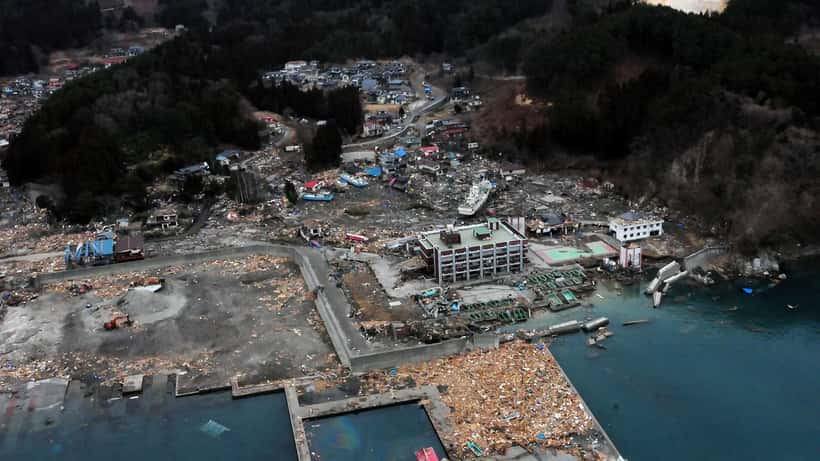
This kind of event — a magnitude 5.x quake centred northeast of the city core — is considered routine by Japanese standards. The scenario that seismologists have long flagged, a magnitude 7.3 directly beneath central Tokyo, carries estimated damage projections of ¥95 trillion (approximately AUD 1.0 trillion) according to the Tokyo Metropolitan Government's own disaster-preparedness modelling. Japan has not experienced that event in the modern era. But the August 23 quake is a reminder that the probability window never closes.
Why Australian Investors Have More Japan Exposure Than They Realise
For much of the past decade, Japan barely registered on the radar of retail Australian investors. That changed decisively in 2025. Drawn by Tokyo Stock Exchange-mandated corporate governance reforms, exposure to semiconductor and AI supply chains, and valuations well below stretched US markets, Australian inflows into Japanese equities tripled over the year, according to data published by BlackRock's iShares Australia unit. BetaShares, one of Australia's largest ETF providers, recorded inflows into its Japan equities fund that exceeded every prior annual record.
The appeal is understandable. The Nikkei 225 was among the best-performing major indices through 2024 and 2025. The yen staged a modest recovery from decade lows, amplifying unhedged AUD returns. J-REITs — Japanese real estate investment trusts — have been actively marketed to self-managed super fund (SMSF) trustees seeking yield outside Australia's overheated domestic property market, with distributions averaging 3.5–4.5 per cent annually for diversified portfolios.
What has received far less attention is the physical risk embedded in those assets. A survey conducted by Japan Real Estate Analytics in early 2026 found that fewer than 30 per cent of foreign retail investors in Japanese equities or property could correctly identify whether their holdings carried earthquake-specific insurance coverage. For Australian investors reaching for yield in an unfamiliar market, that knowledge gap carries real financial consequences.
What Happens to a $150,000 Japan Allocation When Tokyo Shakes: A Concrete Case
Consider a 54-year-old SMSF trustee in Brisbane who, following the 2025 surge in Japanese market sentiment, allocated $150,000 — approximately 15 per cent of their fund — across a diversified Japan-focused ETF (tracking the Nikkei 225) and two J-REITs weighted toward Tokyo commercial and residential property.
The 5.9 quake on 23 August 2026 caused only moderate market disruption: the Nikkei dipped 0.8 per cent at the following open before largely recovering. On a $100,000 equity position, that translates to a paper loss of roughly $800 — recoverable within days.
But that same trustee should stress-test their position against the scenario Japanese authorities have specifically modelled: a direct magnitude 7.3 event beneath central Tokyo. Tokyo Metropolitan Government projections estimate that event could destroy or severely damage up to 610,000 buildings. Insurance penetration for residential property in Japan is approximately 65 per cent for earthquake-specific cover — meaning roughly one in three properties has no earthquake insurance at all. J-REITs typically carry earthquake cover, but claim settlement in a catastrophic event can take 12 to 24 months, during which distributions may be suspended.
If the Brisbane trustee's Nikkei ETF falls 20–25 per cent in the aftermath — a plausible range, given the index shed more than 17 per cent in the two trading sessions immediately following the 2011 Tōhoku earthquake — the loss on the equity component alone reaches $20,000 to $25,000. If J-REIT distributions are suspended for 18 months during claim resolution, the AUD 5,250 in expected annual yield disappears for the equivalent period.
The combined impact: $28,000 to $33,000 in losses and foregone income on a $150,000 position. That represents 2.8 to 3.3 per cent of total SMSF assets — material damage that no amount of geographic diversification within Australia would have buffered.
If, by contrast, the August 23-style moderate quake is the worst event in the next two years, the position loses $800 at open and recovers by close. The difference between those two outcomes depends entirely on geological variables that no financial model can reliably predict.
What Earthquake Risk Means for Your Japan Strategy
None of this means Japanese assets are unsuitable for Australian portfolios. Japan's building codes — particularly the 1981 New Earthquake Resistance Standard and its strengthened 2000 revision — are among the world's most rigorous. Modern Tokyo high-rises are engineered to remain structurally sound through a direct magnitude 7 event. Japan's institutional disaster-response capacity is deep; the 2011 earthquake, the most financially costly in recorded history, saw the broader economy recover much of its footing within 18 months.
But building Japan exposure into an SMSF or personal investment portfolio without accounting for seismic tail risk is an incomplete analysis. There are four practical steps wealth advisers are increasingly raising with clients who hold Japan positions:
Verify earthquake insurance on any property holdings. For Australians investing directly in Japanese real estate — increasingly common among buyers chasing low entry prices in regional cities — confirming whether the holding carries earthquake-specific cover (jishin hoken) is non-negotiable. Standard Japanese fire insurance (kasai hoken) does not cover earthquake damage. This is a documented source of financial loss for foreign investors after previous Japanese earthquake events.
Diversify within Japan geographically. Not all Japanese assets carry equal seismic exposure. Osaka, Fukuoka and Sapporo carry materially lower modelled earthquake risk than central Tokyo or the Tokai coastal corridor. J-REITs with national portfolio diversification offer less concentration risk than single-city property plays.
Review liquidity buffers. An SMSF with 15–20 per cent allocated to Japan needs sufficient liquidity to avoid being forced to sell during a post-quake market dislocation. Selling Japanese assets into a declining yen and a falling equity market simultaneously can compound losses well beyond the initial shock.
Run a catastrophe scenario. Any financial planner managing a portfolio with Japan exposure should model: what does the fund look like if Japanese equities fall 22 per cent and J-REIT distributions are suspended for 12 months simultaneously? That is not an extreme assumption — it is a scenario grounded in the 2011 precedent and the Tokyo government's own modelling. Knowing the number in advance allows for an informed position-sizing decision, rather than a reactive one.
Australians holding Japan-exposed portfolios in SMSFs or personal accounts can connect with a qualified wealth management adviser through Expert Zoom's platform, which matches clients with verified specialists in international diversification and SMSF strategy.
This article is for informational purposes only and does not constitute financial or investment advice. Consult a licensed financial adviser before making investment decisions.
