 Mark Campbell
Australians searching "fires near me" spiked dramatically this week as fears about renewed bushfire activity resurface across southeastern states. The 2025-26 bushfire season — already ranked among the worst since Black Summer — destroyed 338 homes in Victoria alone by January 2026, burned over 400,000 hectares, and generated more than 1,400 insurance claims. Now, as autumn conditions bring new fire risks to parts of New South Wales and Queensland, homeowners are asking: is my home actually safe?
What Happened in the 2025-26 Bushfire Season
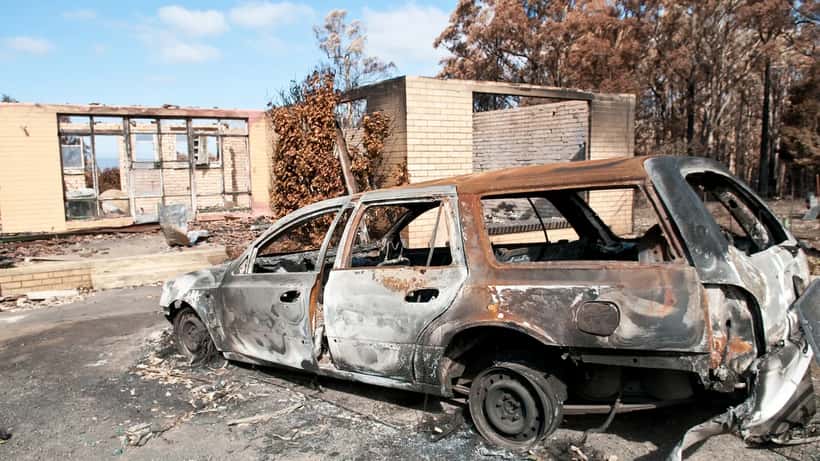
Victoria's January 2026 bushfire crisis was devastating. Premier Jacinta Allan declared a state of disaster across 18 local government areas. The Longwood fire alone burned 137,000 hectares; the Walwa fire consumed 102,000 hectares of bushland and farmland. More than 15,000 livestock were lost, and 900+ structures were damaged or destroyed, according to the Victorian Government's official incident report.
Moody's Insurance analysis found that 30 per cent of the 1,400-plus insurance claims were total losses — meaning the home or structure was completely destroyed, not just damaged. For many Australians in fire-prone regions, the season was a stark reminder that proximity to bushland carries serious structural risk.
Fires near residential areas aren't purely a summer phenomenon either. Autumn and spring conditions — dry, windy, with cured grass — create fire weather that can ignite outbreaks across New South Wales, South Australia and Queensland well into April.
Why Your Home May Still Be at Risk — Even After the Season Peaks
Many homeowners assume bushfire risk drops after summer. That's not always the case. Structural vulnerabilities created or worsened during fire events can take months to become visible — and some pose ongoing safety hazards:
- Smoke and heat damage to roof trusses, wall frames and cladding may not be visible without professional inspection
- Ember attack — the main cause of house loss in bushfires — can enter through unsealed roof voids, vents and gaps that homeowners don't know exist
- Foundation cracking from heat-related soil movement is common near fire-affected properties
- Water damage from firefighting efforts (retardant, hose water) can weaken structural elements, especially in older homes
- Ash and chemical contamination around the property may affect garden structures, decks and water tanks
The Australian Institute of Building Surveyors notes that post-fire building assessments are chronically underutilised by homeowners who assume their property escaped unscathed because it's still standing.
What a Professional Assessment Covers
A qualified building inspector or licensed builder can carry out a post-fire structural assessment that goes far beyond what a homeowner can see with the naked eye. This typically includes:
- Thermal imaging inspection of roof cavities and wall frames for heat-affected timber
- Structural integrity check of foundations, walls and load-bearing elements
- Ember intrusion audit — identifying every gap, vent or penetration that could allow ember entry in a future fire event
- Cladding assessment — determining whether external cladding meets current BAL (Bushfire Attack Level) standards
- Drainage and runoff review — ensuring firefighting water hasn't compromised sub-floor drainage or soil stability
For properties in Bushfire Attack Level zones (BAL-12.5 through BAL-FZ), the Building Code of Australia requires specific fire-resistant construction standards. Many older homes were built before these standards applied and may not meet current requirements.
More information about BAL zones and standards is available from the Australian Building Codes Board.
How to Harden Your Home for Future Fire Seasons
Whether you're rebuilding after fire damage or preparing an existing home for future risk, the principles of bushfire hardening are the same. They are practical, measurable, and best implemented with professional guidance:
- Seal roof voids and subfloor vents with ember-resistant mesh (2mm stainless steel)
- Replace combustible cladding with fire-resistant alternatives (fibre cement, brick, rendered masonry)
- Install bushfire shutters or metal screens on all windows and glazed doors
- Upgrade guttering to continuous steel box gutters that don't collect leaf litter or ember
- Clear the 10-metre zone around the home of dry vegetation and combustible materials
- Install a water tank (10,000L minimum) with a dedicated firefighting connection point
Each of these measures requires coordination between licensed builders, plumbers and sometimes fire safety engineers. A trusted local tradesperson who understands local BAL zone requirements is essential — not every builder has the experience to work to bushfire construction standards.
Finding the Right Professional for the Job
ExpertZoom connects Australian homeowners with licensed builders, structural assessors and home improvement specialists who understand bushfire risk. Whether you need a post-fire inspection, a BAL assessment, or a full hardening project — finding the right professional quickly can make a significant difference when fire season returns.
Don't wait until the next fire season to assess your home's vulnerabilities. The time to act is now, while contractors are available and materials are in supply.
Note: This article provides general information only. For specific advice about your property, consult a licensed building professional registered in your state or territory.
