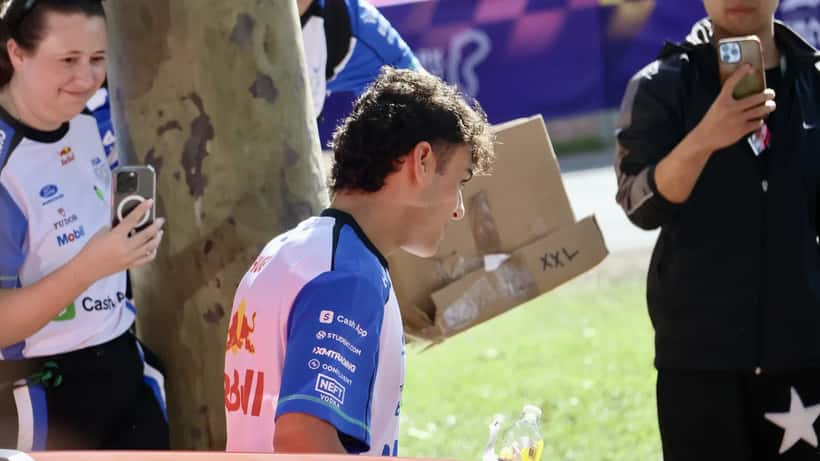
 Liam Campbell
British teenager Arvid Lindblad has become the sole rookie on the 2026 Formula 1 grid and is already exceeding expectations after scoring points on his debut. The 18-year-old Racing Bulls driver, who rose from karting to F1 in just three years, is now the youngest British points scorer in the sport's history.
Lindblad's rapid ascent has captured global attention. From his first Formula 1 practice session in 2025 to his full-time seat alongside Liam Lawson at Racing Bulls, his journey highlights both raw talent and the structured support systems that accelerate young athletes to elite levels.
Who is Arvid Lindblad?
Arvid Lindblad was born in London in August 2007 to a Swedish father and Indian mother. He began karting at five years old and joined the Red Bull Junior Programme during his first full competitive season in 2021. According to the FIA, the sport's governing body, Lindblad secured his super licence before his 18th birthday after winning the Formula Regional Oceania Championship in early 2025.
His multicultural background has become part of his public identity. Lindblad recently drove an F1 car on the streets of Delhi as part of a Red Bull showrun, calling the experience "something I'm very excited about" given his Indian heritage.
A record-breaking rise through the junior ranks
Lindblad's progression through motorsport's junior categories has been breathtakingly fast. He spent just one year in each series before moving up, a trajectory rarely seen in modern racing.
In 2024, he joined PREMA Racing in Formula 3 and became the youngest race winner in the category's history at 16 years old. He secured four victories that season and finished fourth in the championship. The following year, he stepped up to Formula 2 with Campos Racing and again became the youngest winner in category history at Jeddah.
By the end of 2025, Lindblad had accumulated enough super licence points to qualify for Formula 1. The FIA's super licence system requires drivers to demonstrate consistent high-level performance across multiple seasons before they can compete at the sport's pinnacle.
The 2026 season so far: Points on debut
The 2026 F1 season began with sweeping regulatory changes that reset the competitive order. Every team faced new aerodynamic rules, revised power unit specifications, and adjusted tyre formats. For a rookie, this environment could have been overwhelming.
Instead, Lindblad adapted rapidly. During his debut race weekend in Australia in March 2026, he reached Q3 in qualifying and finished eighth in the grand prix. That performance made him the third youngest points scorer in F1 history and Britain's youngest ever.
He maintained his form across the opening races. In China, he finished inside the top 15. At the Japanese Grand Prix in April, he qualified 10th and again reached Q3. His wheel-to-wheel battles with established names including Lewis Hamilton and Max Verstappen during the Australian Grand Prix demonstrated maturity beyond his years.
Why mentorship matters for young elite athletes
Lindblad's success is not simply a product of natural ability. Throughout his career, he has benefited from structured mentorship through the Red Bull Junior Programme. The programme provides young drivers with physical training, nutritional guidance, media coaching, and psychological support alongside their on-track development.
This holistic approach reflects a broader truth in elite sport. Young athletes who reach professional levels in their teens often face physical, emotional, and commercial pressures that extend far beyond their years. Expert guidance in sports medicine, performance psychology, and career management can mean the difference between sustained success and early burnout.
Parents of gifted young athletes frequently ask when specialist support becomes necessary. The answer often lies in the transition points: when a child moves from regional to national competition, when they sign their first professional contract, or when they begin balancing education with full-time training.
A sports medicine professional can assess whether a young athlete's body is coping with increased training loads. A performance psychologist can help manage the anxiety of high-stakes competition. A career advisor can ensure that early commercial opportunities do not distract from long-term development.
When should families seek expert guidance?
The decision to invest in expert support for a young athlete is deeply personal. However, certain indicators suggest that professional advice could be valuable. Persistent fatigue, recurring minor injuries, or difficulty handling competitive pressure are common warning signs.
Financial considerations also play a role. Motorsport, like tennis, swimming, and gymnastics, requires significant family investment during junior years. A wealth management expert can help families structure their spending, explore sponsorship opportunities, and plan for the possibility that a professional career may not materialise.
Lindblad's own family navigated these choices throughout his childhood. The costs of international karting and junior single-seater racing are substantial. Many families in similar positions benefit from consulting experts who understand both the sporting and financial landscapes.
For Australian families watching Lindblad's progress with interest, the parallels to local sporting pathways are clear. Whether in motorsport, cricket, or Olympic disciplines, young athletes who reach elite levels early often need support systems that match their ambition.
What happens next for Lindblad?
The remainder of the 2026 season will test Lindblad's consistency. Racing Bulls has partnered with Red Bull Powertrains and Ford for the new regulatory era, and the team is still understanding its new VCARB03 chassis. Lindblad has described the car as "very different to drive" compared with the 2025 machinery he sampled during practice sessions.
Team principal Alan Permane has expressed strong confidence in his rookie. "Arvid's rapid progression marks him as one of the standout young talents in the sport," Permane said when confirming the 2026 lineup. Racing Bulls has a history of promoting Red Bull juniors who then graduate to the senior team, a path Isack Hadjar followed after his 2025 rookie season.
For now, Lindblad remains focused on learning. "I've come through the ranks pretty quickly," he acknowledged in a pre-season interview. "Every year I'm used to being thrown in the deep end. But on the other hand, I haven't done Formula 1 yet so I don't know what's coming."
That humility, combined with his early results, suggests that Arvid Lindblad may be a name Formula 1 fans hear for many years to come.
