 Liam Campbell
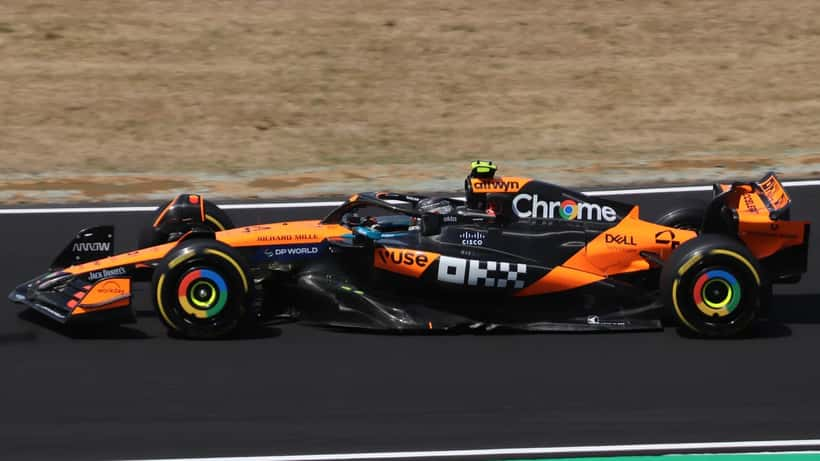
Reigning Formula 1 world champion Lando Norris has endured a torrid start to his 2026 title defence, sitting fifth in the championship with 58 points after five rounds. The McLaren driver, who clinched his maiden crown by two points in Abu Dhabi last December, has faced mechanical retirements, strategic setbacks, and a Mercedes team that has mastered the new regulations faster than anyone predicted.
Norris's struggles offer a rare glimpse into the pressure of defending elite status. While his rivals extend their advantage race by race, the 26-year-old Briton has maintained a public stance of determination that reveals as much about mental resilience as it does about racing skill.
The champion's nightmare start
The 2026 season began with high expectations for McLaren. The team had swept both the Drivers' and Constructors' championships in 2025, and Norris arrived in Melbourne carrying the number one plate for the first time in his career.
The opening weekend delivered a sobering reality. Norris retired from free practice with gearbox issues and finished 51 seconds behind race winner George Russell on Sunday. His team-mate Oscar Piastri, racing at his home grand prix, crashed on the way to the grid and failed to start.
Two weeks later in China, the situation worsened. Both McLarens suffered electrical failures with their Mercedes power units minutes before the race. Norris, who had qualified sixth, recorded the first did-not-start of his entire Formula 1 career. Piastri suffered the same fate, marking his second consecutive DNS after the Australian disaster.
By the end of the opening two rounds, Norris had accumulated just 15 points. His championship defence was effectively over before it had begun.
Norris refuses to surrender
Despite the early setbacks, Norris has repeatedly insisted that McLaren will not abandon its title ambitions. Speaking in April ahead of the Miami Grand Prix, the champion made his position clear.
"We're not giving up," Norris stated. "Although we haven't started the season where we want to be, we still want to push hard for the championship. This isn't a case of giving up and focusing on next year. I'm not sure if that approach ever really works."
His optimism is not without precedent. McLaren has a history of dramatic mid-season turnarounds. In 2023, the team transformed from back-of-the-grid strugglers to podium contenders within months. Norris himself referenced that recovery when discussing the current challenge.
"There's plenty of examples where we've not quite been where we want to be at the start of the year, but have ended up in a much stronger position by the end," he said. "We're a stronger team now than we were then."
That resilience was rewarded in Miami at the start of May. Norris topped sprint qualifying with a lap of 1:27.869, beating Kimi Antonelli by two-tenths of a second. It was his first pole position of 2026 and a reminder that raw speed remains intact even when reliability deserts him.
The psychology of elite comebacks
Norris's public refusal to concede defeat illustrates a psychological trait common among sustained high performers. Sports psychologists distinguish between "outcome resilience" — the ability to accept losses — and "process resilience" — the capacity to maintain constructive behaviour despite negative outcomes.
Research published by the Australian Institute of Sport notes that athletes who sustain elite performance over multiple seasons typically score higher on process resilience metrics than those whose careers follow single-peaked trajectories. The ability to extract learning from failure, maintain training discipline during slumps, and manage external pressure without defensive reactivity separates champions who defend titles from those who collapse under expectation.
Norris appears to demonstrate this pattern. Rather than blaming external factors or publicly criticising his team, he has consistently framed McLaren's struggles as solvable engineering challenges. That framing reduces the cognitive load of stress and preserves the collaborative relationships necessary for technical problem-solving.
When performance pressure becomes a health concern
The psychological demands of elite sport are not abstract concerns. The Australian Psychological Society has documented rising rates of anxiety and burnout among young professional athletes, particularly those who achieve early success and then face sustained public scrutiny.
For families of talented young competitors, recognising the warning signs of unhealthy pressure is essential. Sleep disruption, irritability outside sporting contexts, loss of enjoyment in previously pleasurable activities, and physical symptoms such as persistent tension headaches can all indicate that an athlete's mental health requires professional attention.
A qualified sports psychologist can provide evidence-based interventions including cognitive behavioural techniques, mindfulness training, and performance visualisation. These approaches do not merely help athletes cope with pressure; they often improve objective performance metrics by reducing the physiological arousal that impairs fine motor control and decision-making speed.
The technical mountain McLaren must climb
Norris's mental resilience will mean little unless McLaren solves its technical problems. The team has identified three primary issues with its MCL40 chassis: incomplete understanding of the new Mercedes power unit's operating window, aerodynamic instability at high speeds, and inconsistent tyre temperature management across different circuit types.
Team principal Andrea Stella admitted in March that McLaren was on the "back foot" regarding power unit knowledge compared to Mercedes, which has run the same engine architecture in its own cars since the regulations changed. That gap in institutional knowledge cannot be closed overnight.
McLaren introduced what Norris described as a "completely new car" at the Miami Grand Prix in early May. The upgrade package addressed front-wing geometry, floor edge detailing, and rear suspension kinematics. Early signs were encouraging — Norris's sprint qualifying pole suggested the car had moved closer to Mercedes's pace.
Whether that improvement translates into consistent grand prix contention depends on the development race over the European summer. With nineteen races remaining, mathematical possibility still exists. But Mercedes has shown no signs of slowing its own development, and Ferrari has closed to within striking distance of McLaren in the Constructors' Championship.
What Australian businesses can learn from Norris's fight
The parallels between Norris's situation and high-pressure business environments are striking. Organisations that dominate their markets often face the same challenge when regulatory or technological shifts reset competitive advantages. The companies that survive these transitions share McLaren's characteristics: institutional honesty about current weaknesses, sustained investment in problem-solving, and leadership that maintains team cohesion during difficulty.
For Australian businesses navigating their own performance challenges, the lesson is clear. Setbacks that appear catastrophic in the moment often prove recoverable with the right combination of technical expertise and psychological resilience. Whether the challenge involves supply chain disruption, regulatory change, or competitive pressure, the organisations that respond with structured problem-solving rather than reactive blame typically emerge stronger.
Norris himself may never defend his 2025 title. But his refusal to abandon the fight, even when the odds appear insurmountable, offers a case study in professional resilience that extends far beyond the racetrack.
