 Liam Campbell
Kimi Antonelli has opened a commanding 43-point lead in the 2026 Formula 1 Drivers' Championship after winning the Canadian Grand Prix on May 25, 2026. The Mercedes driver now sits on 131 points, while his nearest rival and team-mate George Russell holds 88 points after a costly retirement in Montreal.
The standings after Round 5 reveal a season dominated by Mercedes power, yet Australian fans have found reason for optimism. Melbourne-born Oscar Piastri sits sixth with 48 points for McLaren, just ten points behind team-mate Lando Norris and within striking distance of Ferrari's Charles Leclerc in third place.
How the 2026 championship looks after Canada
The 2026 F1 season arrived with sweeping regulatory changes designed to reset the competitive order. New aerodynamic rules, revised power unit specifications, and adjusted tyre formats were supposed to compress the field. Instead, Mercedes has established a commanding early advantage.
Antonelli's four consecutive grand prix victories have given him the largest lead any driver has held at this stage of a season since the current points system began. The Italian, promoted from Formula 2 after a dominant 2025 campaign, has adapted to the new regulations faster than his rivals.
Behind him, Russell remains the only driver within a race win's distance of the championship lead. The British driver's 88 points reflect consistent podium finishes punctuated by the Montreal retirement that cost him valuable ground.
Ferrari occupies third and fourth positions with Leclerc on 75 points and Lewis Hamilton on 72. The Scuderia has struggled to match Mercedes's race pace despite showing competitive qualifying speed. Hamilton, in his second season with Ferrari after his blockbuster move from Mercedes, has yet to win a race in 2026.
Oscar Piastri's quiet charge
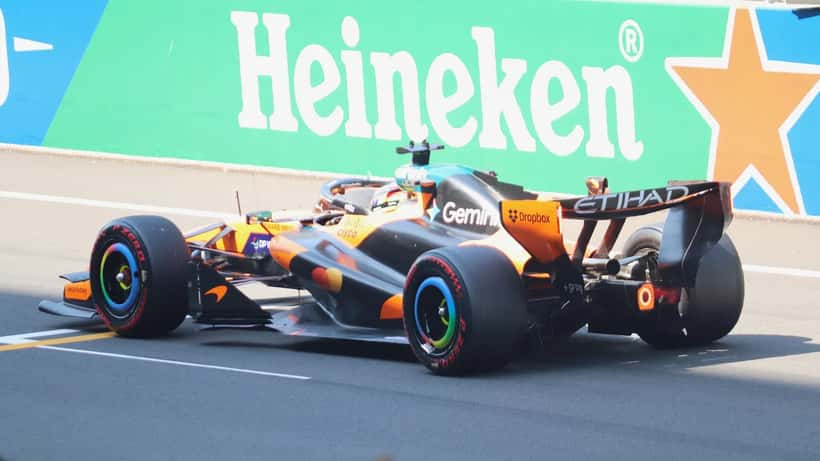
For Australian motorsport enthusiasts, the most significant storyline lies further down the order. Oscar Piastri has accumulated 48 points through the opening five rounds, placing him sixth in the championship and just ten points adrift of Norris in the sister McLaren.
Piastri's 2026 campaign began with a points finish in Australia, where he raced in front of his home crowd at Albert Park. He followed that with consistent top-ten results in China, Japan, and Monaco before adding another strong finish in Canada.
The 25-year-old from Melbourne has developed a reputation for calculated racecraft rather than headline-grabbing qualifying laps. That approach may prove valuable over a 24-race season, particularly as McLaren continues to develop its MCL40 chassis.
McLaren itself sits third in the Constructors' Championship with 106 points, well behind Ferrari's 147 and Mercedes's 219. The Woking-based team has made steady gains since the season opener and is expected to introduce a significant upgrade package for the European summer races.
The Australian motorsport pipeline
Piastri's presence in the upper midfield reflects a broader trend in Australian motorsport. The nation has produced a consistent stream of Formula 1 talent despite its relatively small population and enormous geographic distances.
From Jack Brabham's three world championships in the 1950s and 1960s to Alan Jones's 1980 title, and from Mark Webber's nine grand prix victories to Daniel Ricciardo's eight wins, Australia has punched above its weight in global motorsport. Piastri represents the latest chapter in that lineage.
His journey through the junior categories followed a path increasingly common among Australian racers. After success in national karting championships, Piastri moved to Europe to compete in Formula 4, Formula 3, and Formula 2. That relocation required significant family investment, expert management, and careful planning around education and sponsorship.
When racing families need expert guidance
The path from Australian karting tracks to Formula 1 is extraordinarily demanding. Families of talented young drivers often face decisions that extend far beyond circuit boundaries. The costs of European competition, the complexity of super licence regulations, and the pressures of media exposure create challenges that most sporting families never encounter.
Expert support becomes valuable at several transition points. When a child wins national karting titles and European teams begin expressing interest, parents must evaluate whether relocation is financially viable and developmentally appropriate. A sports management professional can assess sponsorship opportunities, structure contractual agreements with junior teams, and ensure that commercial arrangements do not compromise long-term career flexibility.
Physical preparation presents another critical consideration. Formula 1 drivers withstand forces exceeding five gravities during cornering and braking. Neck strength, cardiovascular fitness, and reaction times must be developed methodically over years. A qualified sports physiologist can design training programmes that build these capabilities without risking injury during growth phases.
Mental resilience matters equally. Young drivers who reach European competition in their mid-teens face isolation from family and friends, intense media scrutiny, and the psychological pressure of competing against rivals who may have greater financial backing. Sports psychologists who specialise in motorsport can provide coping strategies that prevent burnout and maintain performance under stress.
The 2026 season ahead
With nineteen races remaining, the 2026 championship is far from decided. Antonelli's lead is substantial but not insurmountable, particularly if Mercedes encounters reliability issues or if rival teams close the performance gap through development.
The next rounds in Europe will be critical. McLaren has indicated that its first major upgrade of the season will debut at the Spanish Grand Prix in Barcelona. If that package delivers the expected performance improvement, Piastri could find himself battling consistently inside the top five.
For Australian fans, the prospect of a home victory at Albert Park remains tantalising. Piastri has finished on the podium in Melbourne before, and McLaren's development trajectory suggests that 2026 could be the year he challenges for that elusive home win.
Meanwhile, the standings reveal the scale of Red Bull's decline. The team that dominated the early 2020s sits fourth in the constructors' table with just 57 points. Max Verstappen, the four-time world champion, holds seventh in the drivers' standings with 43 points, trailing Piastri by five.
That reversal illustrates a fundamental truth about motorsport. Dominance is temporary, opportunity is cyclical, and the teams and drivers who adapt fastest to regulatory change reap the greatest rewards. For young Australian racers watching Piastri's progress, the message is clear: preparation, patience, and expert guidance can open doors that seemed permanently closed.
