 Ava Miller
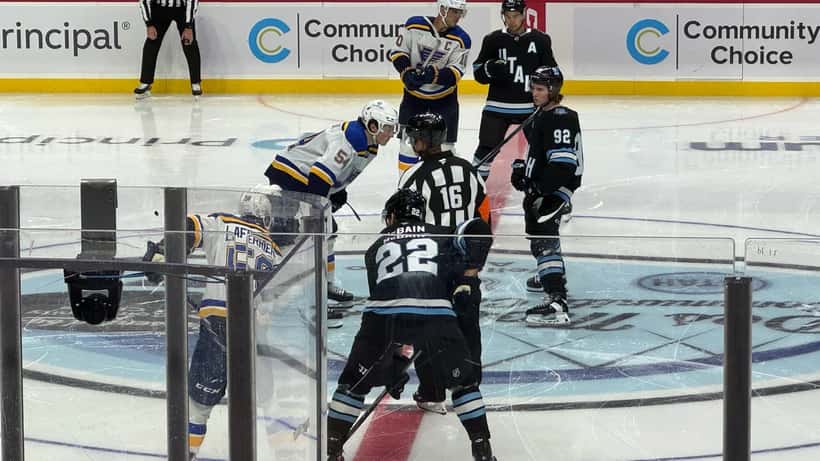
The Utah Mammoth opened their first-ever Stanley Cup Playoff series against the Vegas Golden Knights on April 19, 2026 — making history as only the second expansion franchise to reach the postseason in its second season. With a 43-32-6 regular season record and a No. 1 wild card seed, Utah's run has captured the entire Western Conference's attention. But as any sports medicine physician will tell you, playoffs are where bodies break down.
The collision between Vegas's heavy physical style and Utah's up-tempo game creates a particularly dangerous environment for musculoskeletal injury. Understanding what the doctors see behind the scenes — and how those injuries translate to everyday athletes — is something every weekend hockey player, gym-goer, or sports enthusiast should know.
What Makes NHL Playoffs Uniquely Dangerous
The regular season already demands a brutal physical output: 82 games over about seven months, with travel, back-to-backs, and physicality that few sports match. By the time the playoffs begin, players have already accumulated what sports medicine doctors call "subclinical load" — micro-damage to muscles, tendons, and joints that doesn't show up on an MRI yet but significantly raises injury risk.
For the Utah Mammoth, who played 81 regular season games to clinch their playoff spot, goaltender Karel Vejmelka has logged over 4,000 minutes of in-net time across 64 appearances. In hockey, goalies endure repetitive hip flexion, explosive lateral movements, and collision-induced impacts at a rate that puts the hip labrum and groin under extraordinary stress. Vejmelka's workload — with a 2.75 GAA and .897 save percentage — reflects elite athleticism, but it also represents a body that has been tested to its limits.
Forward Clayton Keller, Utah's offensive leader with 88 points this season, plays in the high-danger areas that draw contact. Wrist fractures, hand injuries, and upper body trauma are common for forwards in his role. The Golden Knights' Jack Eichel, playing through a season that followed a previous cervical spine surgery, demonstrates the complex calculus of risk management that NHL teams navigate every game.
The Three Injuries Doctors Watch Most Closely
According to the National Institute of Arthritis and Musculoskeletal and Skin Diseases, sports injuries fall into two main categories — acute and overuse — and the three most common serious injuries in ice hockey are:
Knee ligament tears (MCL and ACL): The sudden direction changes and contact scenarios in hockey create high-stress torque on the knee joint. MCL sprains are the most frequent, but ACL tears — which typically require 6 to 9 months of recovery — are the career-altering events teams fear most during a playoff run. A single awkward fall into the boards can end a season.
Shoulder separations and rotator cuff injuries: Checked into the boards, falling on an outstretched arm, or absorbing an elbow to the shoulder all stress the acromioclavicular (AC) joint and the rotator cuff. In the playoffs, players will often compete through Grade I or II AC separations with heavy pain management — a short-term choice that carries long-term consequences if not properly rehabilitated.
Concussions: Hockey remains one of the highest-concussion-rate sports in North America despite significant rule changes and equipment improvements. A hard hit against the boards, a puck to the helmet, or a fall on the ice can produce symptoms ranging from mild headache to serious cognitive impairment. The NHL's concussion protocol requires removal and evaluation, but the pressure to return in a playoff series can push players and medical staff into difficult decisions.
What Weekend Athletes Should Take From This
Most people watching the Mammoth-Golden Knights series will never skate competitively, but the injury patterns in elite hockey mirror those seen by sports medicine physicians in recreational athletes of all ages. The weekend warrior who plays adult league hockey, pickup basketball, or recreational soccer faces the same fundamental risk factors — just at different speeds and impact levels.
Sports medicine doctors identify several universal principles that apply whether you are Karel Vejmelka or a 40-year-old playing beer league on Saturday nights:
Overuse before injury — Most recreational athletes get hurt not in one catastrophic moment but after accumulating fatigue and ignoring early warning signals. Soreness that persists more than 48 hours after activity is a sign worth paying attention to.
The importance of proper technique — A poor skating stride, a bad landing pattern, or an inefficient overhead throw places repeated stress on joints and tendons that proper form would distribute more safely. A sports medicine physician or physical therapist can assess movement patterns before they become injury patterns.
When to stop vs. when to push — NHL players have medical teams who make this call. Recreational athletes typically rely on intuition — and often push through pain that signals genuine damage. Sharp, localized pain during movement (not generalized soreness) is the clearest indicator to stop and seek evaluation.
The Right Time to See a Sports Medicine Doctor
Utah's historic playoff run is a reminder that elite performance and injury risk are inseparable. But the same is true at every level of competition. If you have recurring joint pain, persistent soreness that limits your range of motion, or an injury that hasn't healed after two weeks of rest, a sports medicine consultation is appropriate — not excessive.
Early intervention consistently outperforms delayed treatment in outcomes studies. An athlete who sees a specialist within a week of a knee or shoulder injury has measurably better recovery trajectories than one who waits months. The Utah Mammoth didn't reach the playoffs by hoping injuries would resolve on their own — and neither should you.
This article is for informational purposes only and does not constitute medical advice. Consult a licensed physician or sports medicine specialist for diagnosis and treatment of any injury.
