 Davis Caesar
A federal judge halted above-ground construction on President Trump's proposed White House ballroom project on April 16, 2026, issuing a court injunction that stopped one of the administration's most controversial building plans. The Washington Post published a detailed analysis on April 19 documenting how Trump's public fixation on the $400 million project is intensifying even as legal obstacles mount. For property owners and contractors across the United States, the White House standoff offers a rare public lesson in how federal court injunctions work — and what they mean for anyone whose construction project gets caught in legal crossfire.
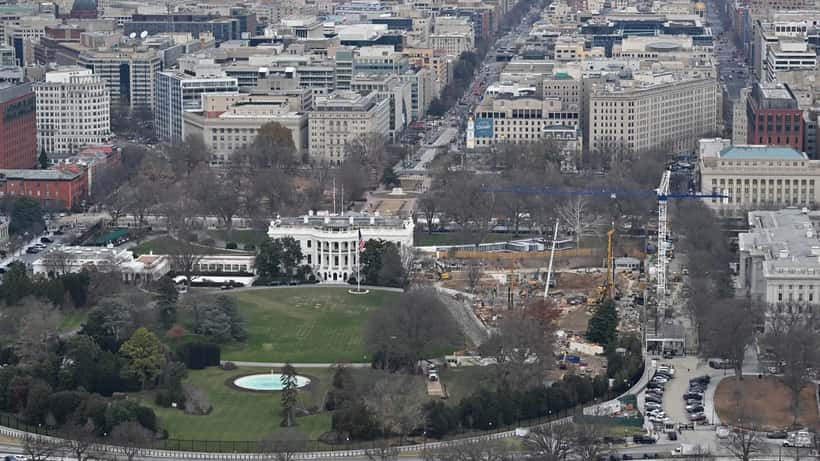
What Happened at the White House
The Trump administration's plan to build a large ballroom and entertainment facility at the White House moved forward in early April 2026 when a federal planning commission approved the project. Documents later revealed the commission softened official language in planning records at the White House's request — a detail first reported by the Washington Post on April 2.
On April 16, 2026, federal Judge Leon issued a court order halting all above-ground construction. The ruling allowed below-ground work — excavation, bunker construction, and utility infrastructure — to continue, but blocked any visible structural building from proceeding.
According to NPR's reporting on April 17, Trump publicly criticized the court's decision, calling it an overreach. The administration filed emergency appeals requesting courts allow construction to resume. As of April 19, above-ground work remains halted under the injunction.
The project's estimated cost of $400 million and the administration's decision not to seek congressional approval have raised additional legal questions about executive spending authority under 31 U.S.C. § 1341, the federal Anti-Deficiency Act, which limits how federal funds can be committed without appropriation.
What Is a Construction Injunction?
A court injunction is a legal order that requires a party to stop — or in some cases start — a specific action. In construction law, injunctions are one of the most powerful tools available to courts, government agencies, and private litigants.
A construction injunction can be:
Temporary Restraining Order (TRO): An emergency pause, typically lasting days or weeks, issued when a court needs time to evaluate a case. No full hearing is required.
Preliminary Injunction: A longer pause issued after both sides have been heard in court, pending resolution of the underlying case. This is what appears to be in effect in the Trump ballroom case.
Permanent Injunction: A final court order, issued after a full trial, permanently blocking certain actions.
To obtain a construction injunction, the requesting party typically must show:
- A likelihood of success on the merits of their legal claim
- That they will suffer irreparable harm without the injunction
- That the balance of harms favors the injunction
- That the injunction serves the public interest
When Can a Construction Project Be Halted?
Property owners, developers, and contractors across the U.S. face construction injunctions more commonly than many realize. The most frequent triggers include:
Environmental violations: Construction near wetlands, protected species habitats, or in violation of the Clean Water Act can trigger immediate federal injunctions.
Permit disputes: Beginning construction before permits are finalized — or violating permit conditions — can result in stop-work orders that escalate to court injunctions if not remedied quickly.
Historic preservation: Projects near or affecting properties on the National Register of Historic Places are subject to federal review under the National Historic Preservation Act. The White House ballroom project is subject to exactly these regulations — the building itself is a national historic landmark.
Neighbor disputes: Adjacent property owners who can demonstrate that construction will cause irreparable harm (flooding, structural damage, loss of light) can seek injunctive relief.
Zoning violations: Construction that violates local zoning codes can be halted by municipal authorities or neighboring landowners.
What Property Owners Should Know Before Building
The White House case is unusual in scale, but the legal dynamics mirror disputes that play out in courtrooms across America every year. Here is what any property owner or developer should understand:
Injunctions can freeze your project at any phase: A court can halt construction whether you're still in the permitting stage or already have walls up. The longer a project runs before an injunction, the more expensive the pause becomes.
Appealing an injunction takes time: Emergency appeals — like the ones the Trump administration filed — do not automatically stay an injunction. Courts can maintain the halt while appeals proceed, meaning construction costs and carrying costs continue to accrue.
Compliance matters: Courts are far more sympathetic to parties who comply with stop-work orders immediately. Continuing construction in defiance of an injunction can result in contempt of court, daily fines, and in severe cases, mandatory demolition.
Get legal counsel before breaking ground: Many injunction disputes stem from problems that could have been avoided at the permitting stage. A construction attorney or real estate lawyer can identify risks in advance — including environmental, historic preservation, and zoning issues — before they become court orders.
Legal disclaimer: This article is for informational purposes only and does not constitute legal advice. Construction law varies by jurisdiction. Consult a licensed attorney before making legal or construction decisions.
The Broader Legal Lesson From 1600 Pennsylvania Avenue
Whatever one thinks of the White House ballroom controversy, the legal mechanics on display are instructive. A federal court used an injunction to pause a construction project on grounds involving historic preservation law and disputes over executive authority — exactly the kinds of regulatory overlaps that affect private projects every day at smaller scale.
If your construction project has been hit with a stop-work order, a neighbor's injunction, or a dispute with a local planning authority, acting quickly and consulting a qualified attorney can make the difference between a temporary delay and a project-ending legal battle.
ExpertZoom connects homeowners, developers, and contractors with experienced legal professionals who specialize in real estate, construction, and property law — helping you understand your rights and your next steps before the situation escalates.
