 Sarah Peterson
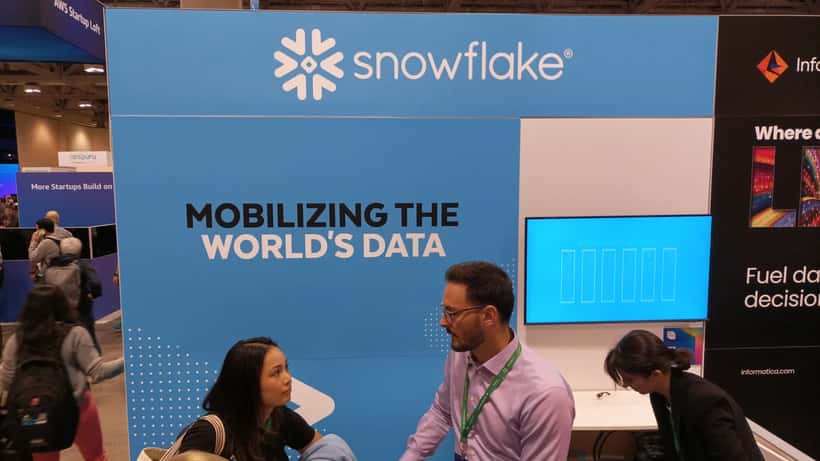
A breach at a third-party SaaS integration provider in early April 2026 exposed authentication tokens and triggered data theft attacks against over a dozen companies — including a number of Snowflake customers. If your business uses Snowflake or any cloud data platform integrated with third-party connectors, you may be at risk right now.
What Happened: The SaaS Integrator Breach
According to security researchers, attackers compromised a SaaS integration provider that manages authentication credentials on behalf of enterprise clients. The breach exposed session tokens — not passwords, but equally dangerous keys that allow attackers to access accounts without triggering standard login alerts.
A small but confirmed subset of Snowflake customers were among those targeted. Attackers used the stolen tokens to query data warehouses, extract customer records, and in some cases exfiltrate sensitive business data before detection systems flagged the activity.
This follows a pattern that the US Cybersecurity and Infrastructure Security Agency (CISA) has been flagging for years: third-party integrations are among the most exploited attack vectors in cloud environments. The weak link is rarely the primary platform — it is the ecosystem of connectors, webhooks, and automation tools that surrounds it.
Why This Is a Wake-Up Call for Businesses
Snowflake itself was not breached. But that distinction matters less than most executives assume.
If a third-party tool integrated with your Snowflake environment was compromised, your data is potentially exposed regardless of how secure your own Snowflake configuration is. This is the core lesson of supply chain security: your security posture is only as strong as the weakest link in your vendor ecosystem.
The scale of exposure is still being assessed. Snowflake has over 10,000 enterprise customers globally. Even a breach affecting 1% of those would represent hundreds of major corporations. In its fiscal year 2026, Snowflake reported more than 430 new product capabilities — each representing new integrations, new API endpoints, and new potential attack surfaces.
For businesses that have not audited their cloud integrations recently, this incident is a direct signal to act.
5 Things Your IT Team Should Do Right Now
1. Audit all active OAuth tokens and API keys. Log into your cloud identity management console and review every active session token associated with third-party integrations. Revoke any that are unnecessary, unused, or from vendors you do not recognize. This takes less than 30 minutes and could prevent a significant breach.
2. Enable multi-factor authentication on all service accounts. Many SaaS integrations run on service accounts that bypass MFA policies applied to human users. This is a critical gap. In 2026, no service account should authenticate with only a token — especially one that has read access to production data.
3. Check your integration vendor list against known affected parties. If you use any integration platform that manages connections to your Snowflake environment, contact the vendor directly and ask whether they were affected. Transparency from vendors is a legal obligation under breach notification laws in most US states.
4. Review data access logs. Snowflake provides detailed access logs showing which users and services queried which tables, at what time, and from which IP address. A spike in off-hours queries from unfamiliar sources is a red flag worth investigating.
5. Implement network-level controls. Restricting Snowflake access to known IP ranges — your corporate network, VPN, and approved cloud services — significantly reduces the attack surface. Snowflake's network policy feature allows this configuration in minutes.
The Broader Picture: Snowflake's Expanding AI Ambitions and Security Stakes
The timing of this breach matters. In March 2026, Snowflake launched "Project SnowWork," a research preview of an autonomous enterprise AI platform designed to run business workflows end-to-end. In January, the company announced the acquisition of Observe, an AI-powered observability platform, targeting the $50 billion IT operations management market.
These are ambitious moves — and they expand Snowflake's footprint inside enterprises. More integrations mean more attack surface. As Snowflake becomes the central nervous system for more organizations' data, securing those integrations becomes correspondingly more critical.
Snowflake's stock dropped more than 9% on April 10 amid broader market concerns about AI competition and cloud software growth. The securities class action lawsuits the company now faces add further pressure. None of this diminishes Snowflake's capabilities — but it underscores why enterprises can no longer treat their data platform as inherently secure simply because it is well-branded.
When to Call an IT Security Specialist
If your team does not have dedicated cloud security expertise, this is the moment to engage an external specialist. Signs that you need immediate consultation:
- You are not certain what third-party tools are integrated with your cloud data platforms
- You have not reviewed access logs or rotated API credentials in the past 90 days
- Your organization uses Snowflake or a similar cloud data warehouse and stores personally identifiable information (PII), financial records, or health data
- You experienced any anomalous activity in your cloud environment this month
An experienced IT security professional can run a rapid integration audit, review your access controls, identify vulnerable configurations, and implement remediation steps — often in a single engagement. The cost of a security review is a fraction of the cost of a breach notification, regulatory fine, or customer trust incident.
ExpertZoom connects businesses with verified IT security specialists who can assess cloud data environments and recommend practical security improvements. In an era where data is both your most valuable asset and your greatest liability, proactive consultation is not optional.
