 Elizabeth Chen
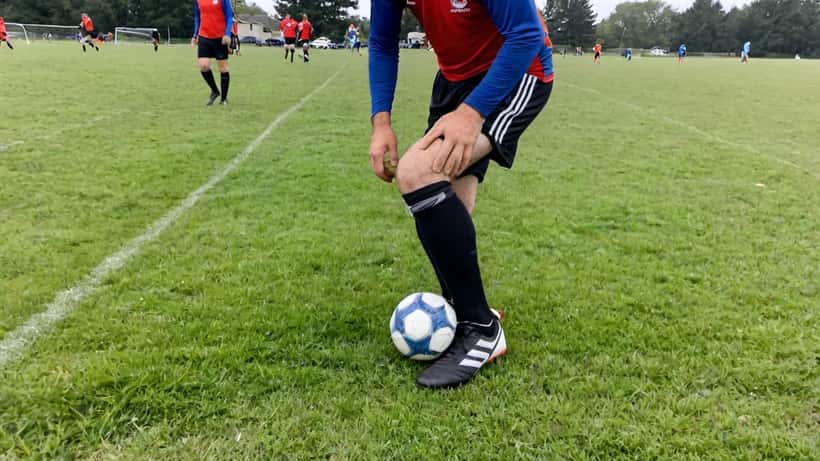
With Arsenal and Manchester City locked in one of the Premier League's tightest title races in years — their pivotal clash scheduled for April 12, 2026 at the Emirates — soccer is dominating weekend conversations across America. And that means millions of weekend warriors are hitting their local fields this spring, inspired by what they see on TV. The problem: amateur players don't have Premier League medical teams standing by when something goes wrong.
The Premier League Title Race: A Fitness Frenzy Driver
The 2025-26 Premier League season has produced a genuinely remarkable title race. Arsenal leads Manchester City by the narrowest of margins, with Liverpool and Tottenham still in contention as the season enters its final six weeks. The April 12 showdown at the Emirates could open a decisive five-point gap — or reset the race entirely.
According to NBC Sports, the stakes are high enough that squad depth and injury management are now considered decisive factors in which club lifts the trophy. Elite clubs like Arsenal and Manchester City employ full-time sports medicine departments, physiotherapists, and rehabilitation specialists dedicated to keeping players on the field.
For the millions of Americans watching these matches and then lacing up their own boots on Saturday morning, the contrast could not be sharper.
What Pro Soccer Reveals About Injury Risk
Elite players get injured despite the best medical support in the world. The most common soccer injuries — ankle sprains, hamstring strains, ACL tears, and groin pulls — occur even at the highest level of fitness and training. For recreational players, the same injuries happen with far less warm-up, less recovery time, and no medical professional present.
According to research published in PMC (National Library of Medicine), hamstring and ACL injuries are often the result of accumulated fatigue rather than a single moment of trauma — meaning weekend warriors who sit at desks all week before sprinting on Sunday are at especially elevated risk. This "overuse mechanism" goes against the popular belief that acute sports injuries are purely random.
Key risk factors for weekend warrior soccer players include:
- Inadequate warm-up: Less than 15 minutes of dynamic stretching significantly increases lower body injury risk
- Previous injury history: A prior ankle sprain that was not fully rehabilitated is the single strongest predictor of a future sprain
- Age over 35: Adults over 35 experience slower muscle recovery and reduced ligament elasticity, increasing vulnerability to sudden changes in direction
- Deconditioning: Playing at full intensity after weeks of inactivity is the classic setup for a hamstring pull
When a Sports Injury Needs a Doctor — Not Just Ice
Most recreational players default to RICE (Rest, Ice, Compression, Elevation) for any sports injury, and for minor strains, this is appropriate. But several injury presentations warrant prompt medical evaluation rather than home management.
See a doctor if you experience any of the following:
- A "pop" sound in the knee, followed by significant swelling within a few hours — this is a classic presentation of an ACL tear, which often requires surgical consultation and 6-12 months of rehabilitation
- Heavy bruising or discoloration on the back of the thigh after a sprint — hamstring grade 2 or grade 3 tears need imaging to confirm severity and guide recovery
- Inability to bear weight on an ankle 24 hours after the injury — this exceeds the threshold for a simple sprain and warrants X-ray to rule out fracture
- Shoulder or wrist pain after a fall — collisions and falls in soccer are common causes of fractures that can be missed if treated as "just a bruise"
According to UnityPoint Health, a common mistake amateur athletes make is delaying medical care because they assume the pain will resolve on its own — only to find weeks later that what felt like a simple muscle ache was a partial tear that needed early treatment to heal correctly.
How Seeing a Sports Medicine Doctor Early Saves Time and Money
Early intervention in sports injuries typically reduces total recovery time and lowers the risk of chronic pain or re-injury. A sports medicine physician can order ultrasound or MRI imaging, prescribe targeted physical therapy, and — critically — clear you to return to play safely rather than guessing when you feel "good enough."
This is the gap between how Premier League players are managed and how most recreational athletes manage themselves. An Arsenal midfielder with a Grade 1 hamstring strain will have an MRI within 24 hours, a personalized rehabilitation protocol, and a precise return-to-play timeline. The average weekend warrior will ice it, take ibuprofen, and wonder why it still hurts three weeks later.
The Right Time to Get Checked
The 2026 spring soccer season is in full swing, coinciding with the Premier League's climactic final weeks. If you play recreational soccer — or any sport involving sprinting, lateral movement, or physical contact — the best preventive step is a pre-season evaluation with a sports medicine physician or general practitioner specializing in musculoskeletal health. For the full list of sports injuries and when to seek care, the American Academy of Orthopaedic Surgeons provides authoritative guidance on diagnosis thresholds and treatment options.
Don't wait for an injury to find a doctor you trust. Connect with a sports medicine specialist or general practitioner on Expert Zoom and get professional advice on injury prevention, safe return-to-play timelines, and the specific risks that apply to your sport and age group.
