 Carl Graham
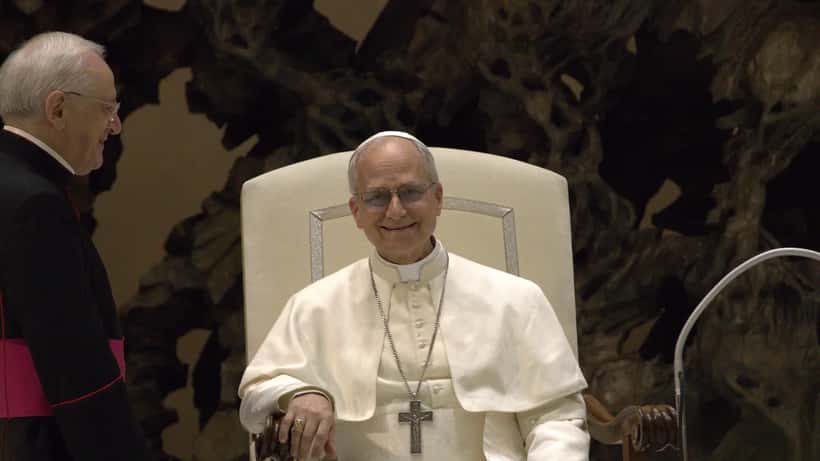
Robert Francis Prevost of Chicago became the first American pope in history when he was elected Pope Leo XIV on May 8, 2025 — and 11 months later, his decisions are reshaping both Vatican governance and U.S.-Vatican relations in ways that directly affect American Catholics and legal institutions alike.
The Historic Election That Changed Everything
On the fourth ballot of the 2025 conclave, 133 of 135 eligible cardinal electors chose Cardinal Robert Prevost, a Chicago-born Augustinian friar with dual U.S.-Peruvian citizenship, as the 267th pope. He chose the name Leo XIV, honoring Pope Leo XIII, whose 1891 encyclical Rerum Novarum defined Catholic social teaching in the industrial age.
The symbolism was deliberate. Leo XIII wrote the Church's foundational response to the First Industrial Revolution. Pope Leo XIV — who cited artificial intelligence as a defining challenge of the modern era — is positioning his papacy as the Church's answer to the Fourth Industrial Revolution.
According to CNN reporting from March 2026, the conclave was more contested than the quick election suggested: Cardinal Timothy Dolan of New York played a pivotal "kingmaker" role in rallying Anglosphere cardinals behind Prevost, who had been essentially invisible in pre-conclave betting markets.
What Changes in Vatican Governance — And Why It Matters Legally
For American Catholics, the first U.S. pope raises immediate questions about institutional accountability, charitable giving, and international law. Here is what has changed since May 2025:
Expanded College of Cardinals Role. Pope Leo XIV has committed to meeting annually with cardinals as co-advisors — a structural shift with no modern precedent. Under Canon Law, this moves some decision-making authority from the Roman Curia to a more distributed body, affecting how Vatican directives reach U.S. dioceses.
New Secretary of State Appointment. In March 2026, Pope Leo XIV appointed Archbishop Paolo Rudelli as chief of the Secretariat of State — the Vatican's equivalent of a foreign minister. For U.S. lawyers who handle matters involving the Holy See (property disputes, religious employment law, or charitable trust administration tied to Catholic institutions), this personnel change signals a new diplomatic posture.
Vatican II Catechesis Initiative. Pope Leo XIV launched a formal series revisiting Second Vatican Council documents, announced in January 2026. This has implications for Catholic schools, hospitals, and social service organizations in the U.S., which collectively employ over 1 million Americans and operate under a complex web of religious exemptions and nonprofit regulations.
The American Pope and U.S. Law: What Experts Are Watching
Legal professionals with clients in Catholic institutions — charities, hospitals, universities, and parishes — are monitoring several developments:
Tax-Exempt Status of Catholic Entities. U.S. Catholic organizations hold over $20 billion in assets and are structured under the IRS 501(c)(3) framework. Any shift in Vatican governance policy that trickles down to U.S. dioceses can affect how those entities file, report, and comply with state charitable solicitation laws.
Religious Freedom and Employment Law. The "ministerial exception" — a U.S. Supreme Court doctrine exempting religious organizations from certain employment discrimination claims — has been contested in dozens of federal cases. With a pope who takes institutional governance seriously, U.S. Catholic employers may face renewed scrutiny of how they apply this exception.
International Law Dimension. The Vatican is a sovereign state, and the Holy See holds permanent observer status at the United Nations. As Michigan State University's International Law Review noted in March 2026, Pope Leo XIV's election "fundamentally reframes U.S.-Vatican diplomatic relations" — including how American civil courts handle cases with Vatican-connected parties.
Estate Planning for U.S. Catholics. Bequests to Catholic dioceses and religious orders are among the most common charitable gifts in American wills. Over 40% of American adults report making or intending to make a charitable bequest, and Catholic organizations consistently rank among the top recipients, according to Giving USA data. Changes in how Vatican-affiliated institutions are structured — and how they comply with state laws on charitable solicitation — can affect whether bequests are honored as intended. A probate or estate planning attorney familiar with religious institutions can flag risks before a will is drafted.
Property and Real Estate. U.S. dioceses own billions of dollars in real estate — schools, rectories, cemeteries, retreat centers. Decisions made at the Vatican level about institutional restructuring, mergers, or diocese consolidation have downstream effects on property titles, easements, and land use agreements that local governments and neighboring property owners may need to navigate through legal channels.
What Should You Do?
The election of the first American pope is not just a religious milestone — it is an institutional event with legal and financial ripple effects across thousands of U.S. organizations. Whether you are a donor to a Catholic charity, an employee at a Catholic hospital, or a nonprofit board member at a Church-affiliated school, understanding how Vatican governance changes translate into U.S. legal obligations is worth a conversation with an expert.
At ExpertZoom, you can connect with legal professionals who specialize in nonprofit law, religious institutions, employment law, and estate planning — attorneys who track exactly how international institutional changes affect American legal rights.
The papacy has changed. The law hasn't paused to catch up. A qualified lawyer can help you navigate the gap.
Legal disclaimer: This article provides general informational context about institutional and legal developments. It does not constitute legal advice. Consult a licensed attorney for guidance specific to your situation.
