 Bernard Stone
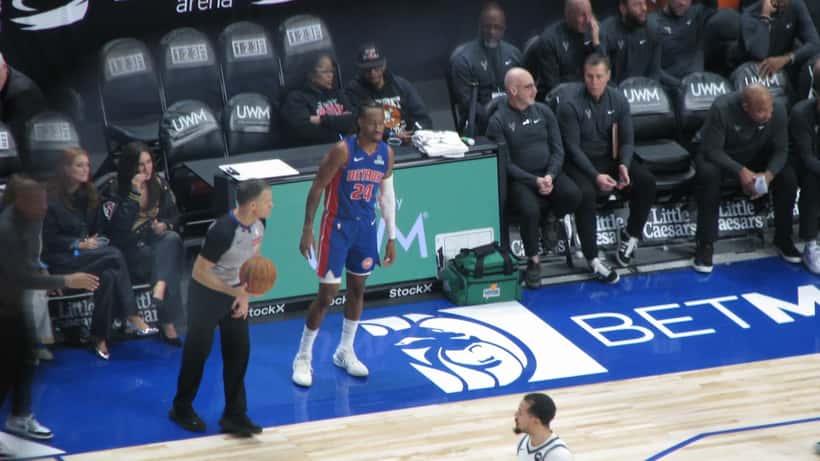
On February 7, 2026, Detroit Pistons guard Daniss Jenkins received the news that every undrafted NBA player works toward: his two-way contract was being converted to a guaranteed two-year standard deal. Weeks later, he was logging 29 minutes in Game 1 of the Eastern Conference Semifinals against the fourth-seeded Cleveland Cavaliers, playing a key role on the top-seeded Pistons.
Jenkins, who went undrafted in the 2024 NBA draft after averaging 14.9 points, 3.5 rebounds, and 5.4 assists at St. John's, is one of the more remarkable recent examples of an athlete transforming a league-minimum opportunity into job security on one of basketball's biggest stages. His journey — from Pacific Tigers to Odessa Wranglers to Iona to St. John's and finally to an NBA starting rotation — is the kind of story that resonates far beyond Detroit.
But for young athletes who achieve a sudden financial breakthrough like Jenkins, the weeks and months after that contract conversion can be as important as the years of work that preceded it.
From Two-Way to Guaranteed: What the Financial Shift Looks Like
A two-way contract in the NBA pays players significantly less than a standard roster deal. In 2026, two-way contracts are valued at roughly $562,000 per year, with limitations on the number of days players can be on the active NBA roster. A standard guaranteed NBA contract — even at the minimum for a player with Jenkins' experience — is worth approximately $1.1 to $1.4 million annually.
The leap from two-way to standard is therefore more than symbolic. It can represent a doubling of income, a guarantee of payment regardless of performance or injury, and an entirely different financial profile.
For Jenkins, this shift happened mid-season, meaning he was suddenly dealing with higher guaranteed income, different tax implications, and a changed financial future — all while playing playoff-caliber basketball in a city with one of the most engaged sports fanbases in the league.
The Financial Mistakes Athletes Make After Contract Upgrades
Wealth managers who specialize in professional athletes consistently identify a set of predictable errors that young players make in the period immediately following a significant contract change:
Lifestyle inflation ahead of income: Signing a new deal — especially one viewed as a breakthrough — often triggers immediate spending on cars, housing, family support, and social status markers. The danger is that spending patterns established during a first major contract rarely scale down if the income doesn't last.
Insufficient tax planning: NBA contracts are subject to federal income tax at the top marginal rate (37% in 2026), California state income tax if the player plays enough games in California (up to 13.3%), and the so-called "jock tax" — a mechanism by which multiple states tax professional athletes based on the number of games played in each jurisdiction. For a player who only recently converted from a two-way deal, navigating the jock tax across an 82-game schedule without professional guidance can result in significant unexpected tax liability at the end of the year.
Insufficient diversification: Many young athletes place too large a portion of their savings in assets tied to their athletic identity — sports agencies, sports-related businesses, or investments proposed by other athletes or their entourages. These concentrated positions carry risks unrelated to market performance.
Inadequate injury protection: Standard NBA contracts are guaranteed, but the guarantee structure varies. Understanding the specific terms of your contract — and what happens to income in the event of a career-ending injury — is a conversation that requires both legal and financial expertise.
What Financial Advisors Recommend in the First 90 Days
For athletes like Jenkins who achieve a contract upgrade mid-season, wealth management professionals typically recommend a structured 90-day financial review immediately following the new deal:
1. Assemble a vetted advisory team. This should include a fee-only financial advisor (one who does not earn commissions on product sales), a tax specialist with sports clientele experience, and a contract attorney. Referrals from established players and the NBA Players Association are preferable to advisors who approach athletes proactively.
2. Establish a spending baseline. Before increasing lifestyle spending, calculate the after-tax income from the new contract — not the gross figure. Monthly take-home pay on a $1.2 million NBA contract is typically in the $50,000–$60,000 range after federal, state, and jock tax withholding. This is the number that should anchor lifestyle planning.
3. Build an emergency fund first. Even guaranteed NBA contracts have limitations. An emergency fund of 12–18 months of personal expenses — in liquid, low-risk accounts — provides a buffer if the unexpected happens.
4. Invest with a long-term horizon. The SEC's Investor.gov provides foundational guidance on diversification and investment basics. For athletes, whose career earning window may be 10 years or fewer, front-loading retirement contributions and diversified index investments during peak earning years is critical.
5. Plan for career transition early. The average NBA career lasts approximately 4.5 years. Players who convert two-way deals into standard contracts may feel financially secure, but the transition to post-basketball life — whether through business, coaching, broadcasting, or other careers — requires financial preparation that starts during active play.
The Bigger Picture: Undrafted Success as a Financial Model
Daniss Jenkins' path is instructive for athletes across sports who enter professional ranks without the signing bonuses and guaranteed rookie contracts of high draft picks. Undrafted players, two-way players, and minor league athletes often develop more durable financial habits than high-draft picks because they experience financial uncertainty early in their careers.
Research on professional athlete financial outcomes consistently shows that athletes who experienced earning uncertainty early — and who built advisory relationships as a result — tend to fare better in retirement than those who received large guaranteed contracts immediately after being drafted.
Similar patterns appear in the wealth planning journeys of other athletes who built their NBA careers from modest beginnings. As explored in the context of how undrafted free agents approach financial planning, the discipline developed during lean years often becomes the greatest financial asset.
Next Steps for Young Athletes
Whether you're an athlete navigating your first professional contract, a parent supporting a young player, or simply someone who has experienced a sudden income change, a financial advisor who understands your specific situation can make the difference between sustained security and a painful reversal.
ExpertZoom connects individuals with qualified wealth management and financial planning professionals who specialize in sudden income events, including contract upgrades, signing bonuses, and career transitions. Getting the right guidance early — as Jenkins' story illustrates — can be as important as earning the contract itself.
This article is for informational purposes only and does not constitute financial advice. Consult a licensed financial advisor for guidance specific to your situation.
