 Elizabeth Chen
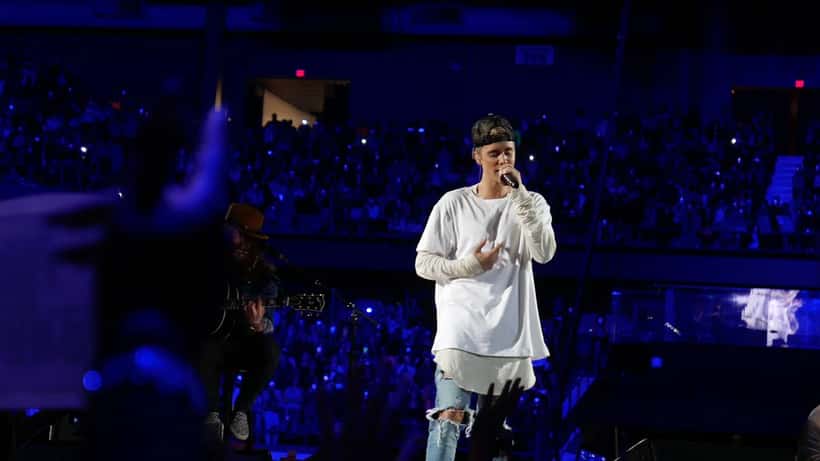
Justin Bieber is headlining Coachella Valley Music and Arts Festival on April 11 and 18, 2026 — his first US concert performance since June 2022. The comeback has generated massive excitement among fans, but it also shines a spotlight on a health issue that affects millions of concertgoers every year: noise-induced hearing damage.
The Biggest Music Festival in the US Returns — and So Does Bieber
The Coachella 2026 lineup, announced in early March, features Bieber alongside Sabrina Carpenter and Karol G as the three headline acts across two weekends. With over 125,000 attendees per day and sound systems regularly hitting 100–110 decibels, Coachella is among the loudest public events in the country.
Bieber's four-year absence from US stages was tied to health challenges including Ramsay Hunt syndrome — a viral condition that caused facial paralysis and prompted him to cancel his Justice World Tour in 2022. His return marks a significant personal recovery milestone, but it also raises an important question many fans won't think to ask: what is a music festival doing to your ears?
What Happens to Your Hearing at 100 Decibels?
The National Institute on Deafness and Other Communication Disorders (NIDCD) reports that exposure to sounds at 100 decibels for just 15 minutes can cause permanent hearing damage. At a typical outdoor music festival, crowd areas near the main stage routinely reach these levels during performances.
According to the NIDCD, approximately 17 percent of American teens and young adults between the ages of 12 and 25 already show signs of noise-induced hearing loss — a condition that is entirely preventable. Unlike age-related hearing decline, noise-induced hearing loss accumulates silently over years and is irreversible once it occurs.
The damage is not limited to the concert moment itself. Tinnitus — the persistent ringing or buzzing in the ears that follows a loud concert — is often dismissed as temporary. In many cases it is. But repeated exposures significantly increase the risk of developing chronic tinnitus, which affects roughly 15 percent of American adults.
Who Is Most at Risk?
Audiologists identify three groups who face heightened risk at music festivals:
Frequent concert attendees: Anyone attending 4 or more loud events per year without hearing protection is building cumulative damage that may not manifest for a decade. By the time symptoms appear, a significant portion of hearing capacity may already be lost.
Front-row fans: Sound levels increase dramatically as distance from speakers decreases. Being within 10 feet of a major stage speaker array can expose listeners to 115–120 decibels — levels where damage begins in under 2 minutes.
Young adults with pre-existing ear conditions: Those with a history of ear infections, eardrum perforation, or prior hearing issues are significantly more vulnerable and should consult an ENT (Ear, Nose, and Throat) specialist before attending high-volume events.
Practical Steps Before You Go to Coachella
The good news: noise-induced hearing loss is almost entirely preventable with the right precautions. ENT specialists recommend the following:
- Use musician-grade earplugs — not foam earplugs that muffle everything, but custom-molded or high-fidelity earplugs that reduce volume evenly across frequencies. These preserve sound quality while cutting peak levels by 15–25 decibels.
- Take breaks — step away from the main stage area for at least 15 minutes every hour. The distance and time allow cochlear hair cells to partially recover.
- Avoid back-to-back days without recovery — the damage from Day 1 of a festival compounds significantly if cochlear inflammation hasn't resolved by Day 2.
- Know the warning signs — if you experience muffled hearing, tinnitus, or a feeling of fullness in the ears after an event, these are early warning signals worth discussing with an ENT.
When Should You See an ENT Specialist?
A single concert is rarely cause for concern for a healthy adult. But if you experience hearing changes that persist beyond 48 hours — muffled sound, tinnitus that doesn't fade, or new difficulty understanding speech in crowded environments — those symptoms warrant a hearing evaluation.
ENT specialists can conduct a baseline audiogram that measures your hearing threshold across all frequencies. Having this baseline before festival season gives you and your doctor a concrete comparison point if symptoms develop later. For anyone attending multiple events this spring — Coachella, Governor's Ball, Lollapalooza — that baseline is genuinely useful.
ExpertZoom connects you with licensed ENT specialists who can assess your hearing health and advise on protective strategies before event season begins. A 30-minute consultation can give you clarity that lasts a career's worth of concerts.
Justin Bieber's Comeback and What It Signals
Bieber's health journey — from Ramsay Hunt syndrome to a full return to the world's most-watched music festival — is a powerful story about resilience and recovery. It's also a reminder that even world-class performers are not immune to the physical tolls of high-decibel environments.
As hundreds of thousands of fans descend on the Coachella Valley this April, the best way to celebrate a historic comeback is to show up ready to protect the very sense that makes the experience worth having.
This article is for general informational purposes only and does not constitute medical advice. Consult a licensed ENT specialist for personalized evaluation.
