 Isabella Torres
The Cleveland Browns officially broke ground on their $2.6 billion enclosed stadium in Brook Park, Ohio, on April 30, 2026, with Ohio Governor Mike DeWine and NFL Commissioner Roger Goodell presiding over the ceremony. For fans, it marks a new era of professional football in Northeast Ohio. But for homeowners and small business owners within a few miles of the construction site at 18300 Snow Road, the questions are far more urgent—and far less celebratory.
Major stadium projects reshape neighborhoods in ways that extend well beyond the final whistle. If you live, own property, or run a business near the new Browns dome, understanding your legal rights and options now—before the concrete hardens—can make a significant financial difference in the years ahead.
What the $2.6 Billion Project Actually Includes
The Brook Park development is not just a football stadium. The Browns' plan calls for a 70,000-seat enclosed, domed venue designed to meet aviation height restrictions near Cleveland Hopkins International Airport, requiring an 80-foot-deep excavation that began in March 2026. Surrounding the stadium: more than 1,500 residential units, 400+ hotel rooms, 299,000 square feet of retail space, and nearly 900,000 square feet of public open space.
This is a $3.4 billion total economic development project, according to project developers. The city of Brook Park, in turn, has agreed to waive construction permit fees in exchange for $24.8 million from the Browns organization over four years, a deal still awaiting key city council votes.
That scale—stadium, hotels, apartments, retail—means the ripple effects on surrounding property extend far beyond a new parking structure. Think zoning reclassifications, traffic infrastructure overhauls, utility upgrades, and new commercial corridors.
How Eminent Domain Works—and When It Applies
Eminent domain is the government's legal authority to acquire private property for public use, with compensation. In Ohio, municipalities can invoke this power for large-scale infrastructure and economic development projects under specific conditions, including when the project is deemed of public benefit.
The key phrase here is "just compensation." Ohio law requires that displaced property owners receive fair market value for their property. But fair market value is a number that must be negotiated—and the government's initial offer is rarely its best offer.
If any parcels adjacent to the Brook Park site are targeted for acquisition to accommodate road widening, utility corridors, or mixed-use development expansion, property owners have the legal right to challenge the appraisal, hire independent appraisers, and negotiate the compensation offer. According to the Ohio Legislative Service Commission, eminent domain proceedings in Ohio require written notice, an independent appraisal, and formal condemnation proceedings if the owner contests the offer.
Even if your property is not directly acquired, you may have legal standing to seek compensation for "inverse condemnation"—when government action substantially diminishes your property's value without a formal taking. Persistent construction noise, vibration-induced structural damage, or business access disruption during road closures can form the basis of such a claim.
Zoning Changes and What They Mean for Property Owners
One of the less-visible impacts of large stadium projects is zoning reclassification. Brook Park is already in the process of redesigning its long-term development master plan around the new stadium district. This can cut both ways for property owners.
If your property is reclassified from residential to mixed-use commercial, it could increase its appraised value—but it could also expose you to higher property taxes, change what your neighbors can legally build, and alter the character of your neighborhood permanently. Conversely, if new zoning regulations restrict development near the stadium (for aviation, noise, or event-traffic reasons), property that seemed attractive for future sale or development may face new limitations.
Before the 2029 projected opening of the new stadium, Brook Park will need to update its zoning code, traffic flow ordinances, and noise ordinances. These changes create a window—narrow but real—for property owners to submit formal comments during public hearings and to work with local attorneys who specialize in zoning law to protect their interests.
Construction Impacts: Noise, Vibration, and Business Disruption
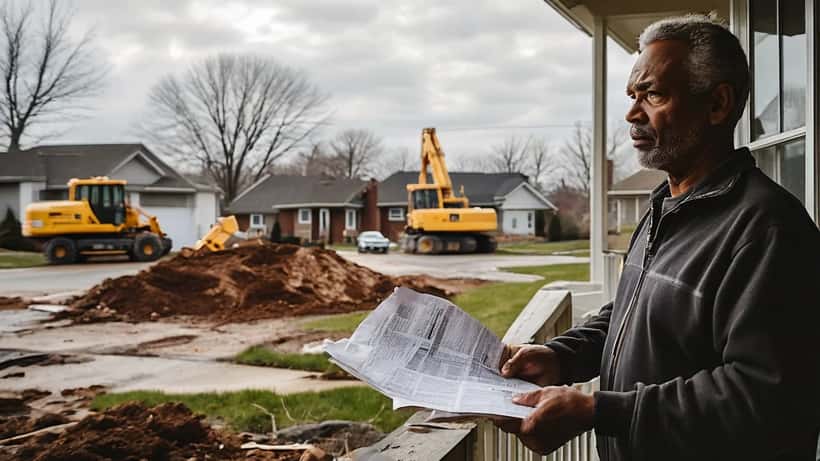
The excavation alone involved digging an 80-foot hole—one of the most intensive foundation projects in Ohio history. For nearby residents, that means years of vibration, heavy machinery noise, and increased truck traffic on local roads.
Ohio law provides limited but real protections against construction-related property damage. If blasting, pile-driving, or heavy excavation causes measurable structural damage to your home—cracks in foundations, misaligned doors, damaged plumbing—you may have grounds to file a damage claim against the contractor or developer. Documenting the pre-construction condition of your property with a licensed inspector is a critical first step.
Small businesses along Snow Road and surrounding corridors face a different challenge: reduced customer access and visibility during multi-year construction. In some states, business owners can claim damages for "loss of access" or "loss of goodwill" during public infrastructure projects. Ohio courts have generally held that temporary construction inconvenience does not rise to the level of compensable harm—but sustained, structural impacts on access may tell a different story.
Property Value: Who Benefits, Who Doesn't
Research on stadium projects offers a mixed picture. Commercial properties within half a mile of a stadium typically see value appreciation of 8 to 12 percent in the years following opening. But properties immediately adjacent—within sight or earshot—often see a different pattern: depressed residential values due to noise, event-day traffic, and parking congestion. If your home sits in this zone, a property advisor can help you evaluate the optimal time to sell, refinance, or invest in improvements before 2029.
What You Should Do Now
The window for property owners to shape outcomes around the Brook Park project is open—but it will close. Groundbreaking is April 30, 2026, and the stadium is scheduled to open in 2029.
Here is a practical timeline:
- April–June 2026: Attend Brook Park City Council meetings; public comment periods on zoning and development agreements remain open. The city is still negotiating key provisions with the Browns.
- 2026–2027: Commission a pre-construction property inspection and document baseline conditions. If your property is within 500 feet of active excavation, this record will be essential for any future damage claims.
- Ongoing: Monitor permit applications and zoning variance requests through the Brook Park Building Department, which maintains public records on all construction permits related to the stadium district.
A real estate attorney familiar with Ohio eminent domain and zoning law, or a licensed contractor who can assess structural vulnerability to vibration, can provide guidance tailored to your specific property situation. The Brook Park Building Department maintains public records on all construction permits, zoning variance requests, and planning commission meeting agendas—a useful resource for monitoring how the development is evolving. ExpertZoom connects homeowners and small business owners in the Cleveland area with qualified legal and property experts who understand local ordinances.
The Cleveland Browns' new home promises to transform Brook Park into one of the most economically dynamic suburban corridors in the Midwest. For residents and business owners already there, the decisions made in the next twelve months will determine whether that transformation works in your favor—or simply happens to you.
This article is informational and does not constitute legal advice. Consult a qualified attorney for guidance specific to your property situation.
