 Rebecca Taylor
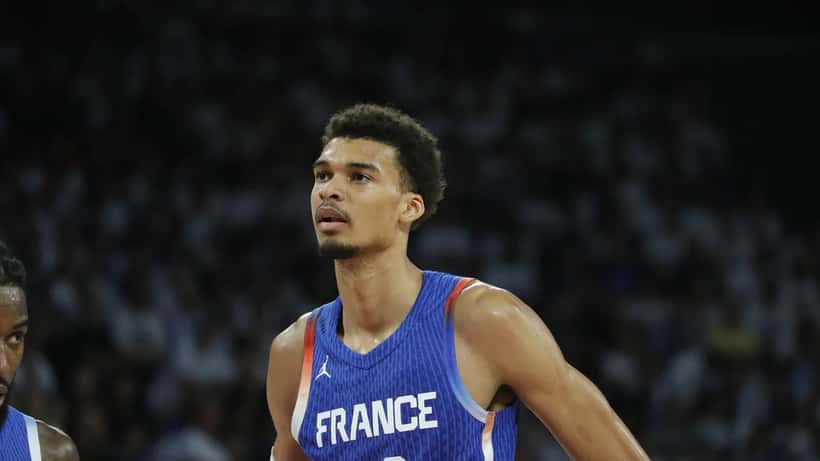
Victor Wembanyama slipped driving to the basket in the second quarter of Game 2 against the Portland Trail Blazers and hit his chin hard on the hardwood. He left the game, entered the NBA's concussion protocol, and was officially ruled out for Game 3. Five days later, on Sunday, the Spurs' 22-year-old star had cleared every stage of that protocol and started Game 4.
The speed of his return surprised many observers. The average NBA recovery time for a concussion is 7 to 10 days, according to figures cited by sports medicine reporters covering the playoffs. Wembanyama completed his in fewer than five. For doctors watching the progression closely, his recovery also highlights something that does not always translate from elite sport to everyday life: what a proper concussion assessment looks like, and when a head knock requires more than paracetamol and rest.
What the NBA's Concussion Protocol Actually Involves
The protocol used in the NBA is a structured, multi-stage process that has been refined over the past decade in response to growing evidence about the long-term consequences of repeated brain injury. It is not a single test and a thumbs-up. It works in phases:
Within the first 24 hours, a player undergoes a neurological examination and is prohibited from any significant physical activity. Rest is mandatory — not just from sport but from activities that place cognitive load on the brain, including prolonged screen time and reading.
After 48 hours from the time of injury, the return-to-participation process can begin — but only if the player is entirely symptom-free. The stages escalate progressively: light stationary cycling, then jogging, then agility drills, then non-contact team work, and finally full contact. A focused neurological exam accompanies each step, and any return of symptoms resets the process to an earlier stage.
The final clearance decision is made by the team's physician, not the player and not the coaching staff.
Wembanyama completed cardio work within 24 hours, increased his activity through Thursday to Saturday, and received both team medical sign-off and league clearance on Sunday. That timeline was possible because he had no setbacks at any stage — which is not the norm, even for elite athletes in peak physical condition.
Why Concussions Are Different from Other Injuries
Head injuries are unique in sports medicine for a reason that is not immediately obvious: the organ being injured is also the organ assessing the injury. A player with a hamstring strain can usually describe clearly what they feel and where. A player with a concussion may genuinely believe they are fine — and be wrong.
This is not stubbornness or machismo. It is a physiological consequence of how the brain responds to a sudden impact. Symptoms including headache, pressure, visual disturbance, confusion, nausea, and sensitivity to light or sound can be subtle or delayed by hours. Some players report that their most significant symptoms did not appear until the following morning.
For amateur and recreational athletes — weekend footballers, club rugby players, cyclists, and gym-goers — this creates a specific danger. Unlike an NBA player, who is surrounded by sports medicine physicians, physiotherapists, and neurologists, most amateur athletes make the return-to-play decision themselves, usually on the touchline, usually too quickly.
Research published in sports medicine literature has consistently found that second-impact syndrome — a second concussion occurring before full recovery from a first — can produce catastrophic neurological consequences, including permanent cognitive impairment. The risk is not proportional to the severity of either impact. A seemingly mild second knock during incomplete recovery can be devastating.
When Should You Go to A&E — or See a Doctor?
NHS guidance on concussion sets out clear criteria for seeking emergency care. You should call 999 or go to A&E immediately if, after a head injury, you or someone with you experiences:
- Loss of consciousness, even briefly
- Seizure or convulsion
- One pupil noticeably larger than the other
- Repeated vomiting
- Clear fluid from the ears or nose
- Weakness, numbness, or slurred speech
- Extreme drowsiness or difficulty staying awake
If none of these apply but symptoms persist — ongoing headache, difficulty concentrating, memory gaps, light sensitivity, sleep disturbance, or mood changes lasting more than 24 to 48 hours — a GP assessment is the appropriate next step.
For athletes competing in contact sports at any level, UK sports medicine doctors recommend that a formal concussion assessment is conducted before any return to training or competition, regardless of how mild the initial impact appeared. This assessment typically involves standardised tools such as the Sport Concussion Assessment Tool (SCAT6), which evaluates memory, balance, and symptom severity.
The Lesson from Wembanyama's Protocol
What Wembanyama's recovery demonstrated is that a structured protocol — with clear progression criteria, mandatory rest at each stage, and objective medical sign-off — is not excessive caution. It is what medically appropriate concussion management looks like.
Across UK contact sports, the implementation of similar protocols has improved significantly in the past five years. Rugby union introduced its Head Injury Assessment (HIA) system, which has generated both praise and controversy. Football remains a subject of debate: amateur and youth leagues vary enormously in their concussion awareness and response capacity.
For context on how UK sport is handling these questions at the elite level, see our coverage of concussion in rugby at the Six Nations 2026 and the Feyi-Waboso HIA protocol controversy.
Finding Sports Medicine Support in the UK
For amateur athletes, club coaches, and parents of children who play contact sports, access to the same quality of medical support that Wembanyama received is more achievable than many assume. A GP specialising in sports medicine can:
- Conduct a formal concussion assessment using validated tools
- Advise on a structured return-to-play protocol tailored to the individual's sport and level
- Identify whether ongoing symptoms require specialist neurological referral
- Provide documentation for school, club, or employer if time off is required
ExpertZoom connects UK athletes and their families with sports medicine GPs, physiotherapists, and neurologists who can assess head injuries and oversee safe return-to-participation processes. Getting the return-to-play decision right is not about being cautious — it is about making an informed medical decision with someone qualified to make it.
