 Phoebe Wilson
On March 14, 2026, Wales defeated Italy 31-17 at Cardiff's Principality Stadium in front of tens of thousands of roaring fans. The Guinness Six Nations Championship match showcased the sport's raw power, tactical brilliance, and physical courage. Yet beneath the celebration lies a sobering reality that elite rugby cannot ignore: concussion remains the most common serious injury in the game, and the long-term consequences are only now becoming clear.
As amateur players across the UK lace up their boots for weekend matches, the question isn't just about winning. It's about protecting the brain from invisible damage that could last a lifetime.
The Six Nations and the Invisible Danger
The Six Nations is the most-watched annual rugby union tournament in the Northern Hemisphere, drawing tens of millions of viewers each year. Matches at venues like Principality Stadium — with its capacity of approximately 74,000 spectators — represent rugby at its finest. The stadium is one of Europe's largest, and in August 2026, it will host the FA Community Shield for the first time in 20 years, underscoring its importance as a premier sporting venue.
But the spectacle of elite rugby masks a less visible crisis. Every high-impact tackle, every collision at the breakdown, and every aerial contest carries the risk of traumatic brain injury. While professional players benefit from immediate medical assessments and world-class rehabilitation, thousands of amateur and youth players across the UK face the same risks with far fewer safeguards.
According to a study published in 2024, rugby players have a 2.5 times higher risk of developing early-onset dementia compared to the general population. This finding has sent shockwaves through the rugby community, prompting urgent questions about how the sport protects its participants at every level.
What Happens to the Brain During a Rugby Tackle
Concussion is a mild traumatic brain injury caused by a blow to the head or a violent shaking of the body. In rugby, this can occur during tackles, scrums, rucks, or accidental collisions. The brain, which floats in cerebrospinal fluid inside the skull, can shift suddenly upon impact. This movement causes chemical changes in brain cells and can stretch or damage nerve fibres.
The immediate symptoms are well-documented: dizziness, confusion, headache, nausea, and sensitivity to light or noise. But the real danger lies in what happens next. If a player returns to the field before the brain has fully healed, a second impact — even a minor one — can cause catastrophic damage. This phenomenon, known as second-impact syndrome, can lead to permanent disability or death.
Professional rugby has introduced strict protocols to mitigate these risks. Yet amateur players often lack access to the same medical oversight, and weekend warriors may dismiss symptoms as part of the game's rough-and-tumble nature.
Warning Signs You Should Never Ignore
Concussion symptoms can appear immediately or develop over hours or days following an injury. If you or a loved one plays rugby — whether at elite, amateur, or youth level — watch for these red flags:
Physical symptoms: Persistent headache, balance problems, blurred vision, ringing in the ears, fatigue, or sensitivity to light and noise.
Cognitive symptoms: Difficulty concentrating, memory problems, confusion, or feeling mentally "foggy."
Emotional symptoms: Irritability, sadness, anxiety, or mood swings that seem out of character.
Sleep disturbances: Sleeping more or less than usual, or difficulty falling asleep.
Any of these symptoms following a head injury requires immediate medical attention. Do not wait. Do not assume it will pass. The brain is not like a muscle that bounces back with rest — it requires careful assessment by a qualified healthcare professional.
For amateur players and parents of young rugby enthusiasts, the stakes are especially high. Schools and local clubs may not have access to the medical resources available to professional teams. This is where seeking expert advice becomes critical.
The HIA Protocol: What Elite Rugby Does Right
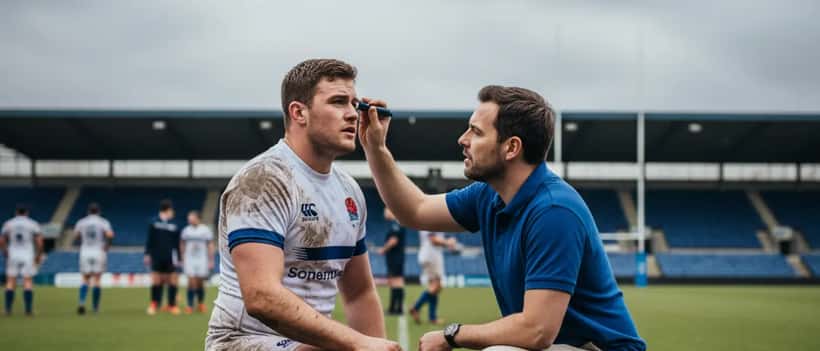
World Rugby introduced the Head Injury Assessment (HIA) protocol to address concussion risks at the professional level. Under this system, any player suspected of sustaining a concussion must be immediately removed from play. A trained medical professional then conducts a series of tests, including memory checks, balance assessments, and neurological evaluations.
If a player fails the HIA, they are not allowed to return to the match. They must follow a graduated return-to-play protocol, which can take days or weeks depending on the severity of the injury. This stepwise approach ensures the brain has time to heal before the player is exposed to further risk.
The HIA protocol has undoubtedly saved careers and lives. However, it is not foolproof. Some concussions are difficult to detect in the heat of competition, and players themselves may downplay symptoms to stay on the field. Moreover, the HIA is designed for elite rugby, where medical staff are present at every match. Amateur players rarely have such support.
This gap in care is where sports medicine specialists and neurologists play a vital role. If you suspect a concussion, do not rely on self-diagnosis. Seek a professional assessment as soon as possible.
Weekend Warriors: When to See a Sports Medicine Expert
Amateur rugby players, youth athletes, and weekend warriors face unique challenges when it comes to concussion care. Unlike their professional counterparts, they may not have immediate access to medical staff during matches. Symptoms can be subtle, and the culture of toughness in rugby can discourage players from reporting injuries.
If you or your child has sustained a head injury during a rugby match, consult a sports medicine specialist or neurologist without delay. These experts can perform comprehensive assessments, including cognitive testing and imaging if necessary. They can also guide you through a safe return-to-play protocol tailored to your specific situation.
Post-concussion syndrome — a condition where symptoms persist for weeks or months — requires specialised care. UK sports medicine specialists are trained to manage these cases, helping patients recover fully and reducing the risk of long-term complications.
For parents of young rugby players, vigilance is essential. Children and adolescents are particularly vulnerable to concussion because their brains are still developing. A single undiagnosed concussion can have lasting effects on academic performance, mood, and overall health.
On ExpertZoom, you can consult a sports medicine doctor or neurologist quickly and confidentially. Whether you are a weekend player, a parent, or a youth coach, getting expert advice after a head injury is always the right call. The brain is your most important organ — treat it accordingly.
Medical Disclaimer: This article is for informational purposes only and does not constitute medical advice. If you suspect you or someone else has sustained a concussion, seek immediate evaluation by a qualified healthcare professional. Do not use this information to self-diagnose or delay appropriate medical care.
