 Abigail Clarke
UFC 328 was already one of the most anticipated cards of 2026, but a press conference earlier this week turned the fight's build-up into headline news for different reasons. Khamzat Chimaev landed a kick on Sean Strickland during what was supposed to be a promotional event, triggering a near-brawl that required UFC security to intervene. The middleweight title is on the line tonight at the Prudential Center in Newark, New Jersey — with Chimaev a heavy -550 favourite defending against a former champion who has nothing to lose.
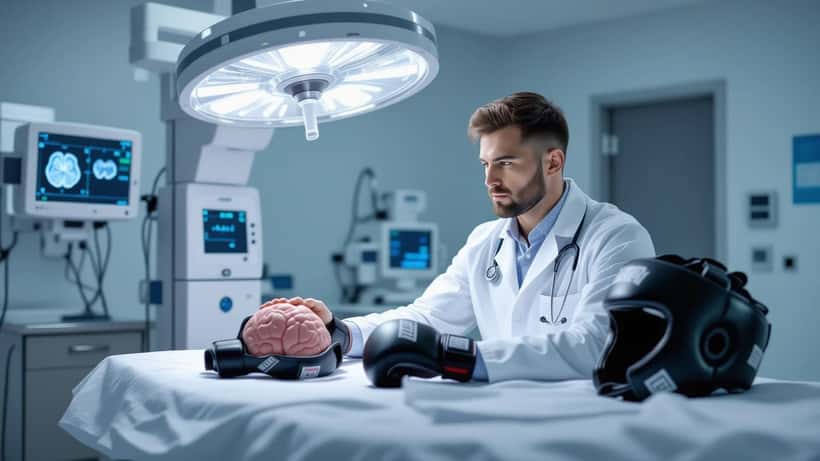
The drama on stage, while spectacular, is also a reminder of something that sports medicine specialists and neurologists have been raising for years: the cumulative physical cost of professional mixed martial arts is substantial, and the most serious damage often cannot be seen from the outside.
What Tonight's Fight Means Medically for Both Athletes
Khamzat Chimaev won the UFC middleweight title at UFC 319 in August 2025. Tonight is his first title defence, and the Strickland matchup is not a cautious one. Both fighters are known for high-volume striking and a willingness to absorb significant contact in pursuit of dominance.
A professional MMA fight at championship level typically involves between 25 and 50 minutes of potential contact, spread across five five-minute rounds. Neurological research on contact sports has consistently shown that the concern is not only knockout blows — it is the accumulation of subconcussive impacts that escape immediate detection but contribute to long-term neurological changes.
NHS guidance on head injury and concussion confirms that repeated concussive events, even mild ones, can increase the risk of cognitive impairment and mood disorders in the years following a career in contact sports. As the NHS notes on head injury and concussion, even apparently minor impacts can have cumulative effects that are not immediately visible. The risk is not hypothetical — it is the central reason why medical clearances, neurological baseline testing, and ringside physician protocols exist.
The Gap Between Athletic Peak and Long-Term Wellbeing
Khamzat Chimaev is 30. Sean Strickland is 33. Both are competing at the physical peak of professional MMA careers. But the medical literature on combat sports — and boxing in particular, where the data goes back further — is consistent in identifying the years immediately after a fighter's active career as a critical window for neurological health monitoring.
Sports medicine research has consistently documented the pattern across multiple combat disciplines: fighters who performed well on in-competition medical screenings often showed measurable neurological differences from non-combat athletes when tested three to five years after retirement. The screenings conducted on fight night capture acute trauma. They do not capture the slower accumulation of subconcussive contact across hundreds of training sessions and dozens of professional bouts.
For a UK fighter, or a British fan working in combat sports coaching, physical therapy, or gym instruction, the question is not only about elite champions. Amateur and semi-professional fighters are subject to the same underlying biology, without the medical support infrastructure that surrounds UFC title challengers.
What Professional Fight Contracts Leave Out
UFC fighter contracts are among the most scrutinised in professional sport, but they have historically provided limited long-term medical provisions beyond an athlete's active competition period. Healthcare obligations tied to combat-sports injuries sustained during the contract term are not always guaranteed to extend into retirement — and in many cases, the burden of managing long-term neurological health falls on the fighter themselves.
In the UK, amateur boxing and combat sports are regulated by national governing bodies. But regulation covers competition safety protocols, not post-career care. A recreational fighter in Birmingham or Glasgow who trains seriously for three years and then steps away from the sport is not enrolled in any systematic monitoring programme.
That gap is where individual medical advice becomes genuinely important.
When to Seek Medical or Specialist Advice After Combat Sports
Whether you are a professional following a UFC-level career, a dedicated amateur, or a parent with a child training in martial arts, there are specific indicators that warrant a conversation with a specialist rather than a GP's standard concussion protocol.
Persistent headaches following training or competition, changes in sleep pattern or mood, difficulty with word retrieval or concentration, and episodes of dizziness in the weeks following contact are all signs that a neurological assessment is worth pursuing. A sports medicine specialist, rather than a general practitioner, will be better positioned to conduct baseline comparisons and advise on returning to training safely.
For fighters who are active, neurological baseline testing — conducted before and after a competitive season — is increasingly recommended by sports medicine professionals. In the UK, private sports medicine clinics offer this testing, but access through a specialist referral is the most structured route.
See also how UK combat sports injuries have been covered in Moses Itauma's rise: what boxing really does to fighters' health and UFC London 2026: the injuries behind elite MMA and what amateur fighters should know.
The Bigger Picture for UK Combat Sports Fans and Coaches
Tonight's UFC 328 card will draw significant UK viewership and attention. But beyond the immediate spectacle of a title fight, events like Chimaev versus Strickland are an opportunity to reflect seriously on what the sport demands physically — and what responsible participation at every level looks like.
For coaches, trainers, and gym owners working with fighters in the UK, the duty of care around repeated head contact is both a professional responsibility and, increasingly, a legal one. British governing bodies and insurance frameworks are evolving to reflect the growing evidence base around subconcussive trauma in combat sports.
The best time to establish a clear picture of an athlete's neurological health is before problems become apparent — not after. A sports medicine specialist can advise on testing protocols, return-to-sport guidelines following concussion, and the warning signs that require urgent assessment.
ExpertZoom connects UK athletes, coaches, and concerned parents with vetted sports medicine specialists and neurologists across the country. If you are involved in combat sports at any level, a specialist consultation is a practical investment in long-term health.
This article provides general health information only. It does not constitute medical advice. If you are concerned about symptoms following a head injury or contact sport, consult a qualified healthcare professional promptly.
