 Mark Roberts
UK Snow Returns Tuesday 24 March: How to Protect Your Home Before the Cold Hits
After a week of unusually mild temperatures — with the Foehn effect bringing an exceptional 21°C to parts of England — the UK is facing a sharp reversal this week. Snow is forecast for Tuesday 24 March 2026 across Scotland, northern England and Wales, with up to 14cm expected in parts of Gairloch. If you own a home, the next 48 hours matter.
What the Met Office Is Forecasting
The Met Office has issued snow and ice warnings for several regions, with conditions deteriorating from Monday night. Forecasts from WXCharts predict snow flurries reaching northwestern England by Tuesday morning, covering Cumbria, Manchester and Stoke-on-Trent. Scotland and northeastern coastlines face the heaviest accumulations — up to 14cm in Gairloch and significant depths across Aberdeenshire.
This follows an already difficult winter: earlier in 2026, Storm Goretti deposited 30cm of snow in central England in a matter of hours. Tomintoul in Moray recorded 52cm, and Oyne in Aberdeenshire reached 50cm. The Met Office logged a low of -13.3°C at Braemar. March snow after a warm spell is a known pattern — but the swing from 21°C to freezing in under a week creates specific risks for buildings that have not been maintained since winter.
The Hidden Risks of March Snow After a Warm Spell
A warm period followed by a sudden freeze is more damaging to homes than a steady cold winter. Here is why:
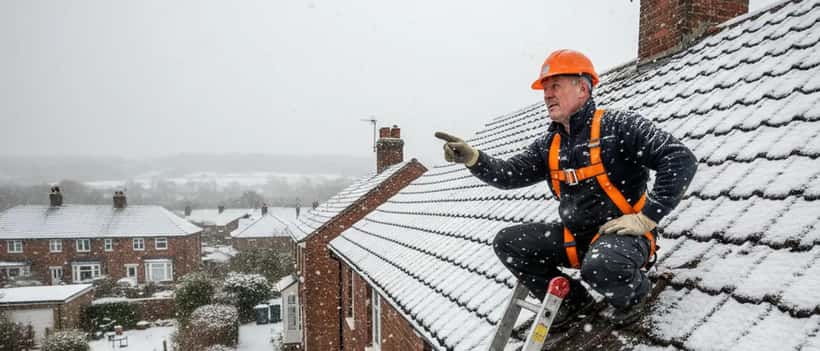
Roof tiles and flashings. Thermal expansion and contraction cycles loosen ridge tiles, lead flashings and mortar pointing. A hard frost after warmth can crack materials that have already expanded. Weight from 10cm of wet snow on an older roof adds significant stress to gutters and fascia boards.
Gutters and downpipes. During the warm spell, spring debris — leaves, moss, bird nests — accumulates in guttering. Add heavy snow or rain followed by freezing, and blocked gutters ice over, causing water to back up under roof felt. This is one of the most common causes of water ingress after a winter cold snap.
Pipes in unheated spaces. Pipes in loft spaces, garages and outbuildings are particularly vulnerable when temperatures drop rapidly after a mild period. A pipe that has thawed and expanded can burst within hours of a sudden frost.
Garden walls and pointing. Brick and mortar absorb moisture during warmer rain. When a freeze follows, that moisture expands and accelerates spalling or crack propagation in pointing.
What to Do Before Tuesday
Tradespeople across affected regions are already reporting high demand for emergency callouts. The steps you can take yourself in the next 24 hours:
- Clear your gutters of any spring debris. Even a partial blockage can divert water toward your fascia boards or behind your wall.
- Lag exposed pipes in unheated spaces — foam pipe insulation is inexpensive and takes minutes to fit.
- Check your roof from the ground using binoculars. Look for missing tiles, lifted flashings or visible gaps in ridge mortar.
- Know where your stopcock is before any pipe bursts. A burst pipe in a freezing emergency requires you to act in seconds.
- **Check your home insurance** covers sudden freeze damage and understand your excess before making a claim.
When to Call a Professional
If your roof has not been inspected in more than three years, now is the time to book a survey — before the snow arrives, not after. A qualified roofer can identify loose or cracked tiles that will not survive the added load of wet snow. Similarly, a heating engineer can check your boiler pressure and pipework before your system faces the strain of sustained cold after a warm period.
Some emergency repairs cannot wait for a quote. A roofer or tradesperson accessed through a verified platform can provide a rapid assessment and carry out emergency repairs before the worst of the weather hits.
After the Snow: What Damage to Look For
Once the snow clears, inspect these areas carefully:
- Roof line for dislodged tiles or lifted flashings (look for dark staining on ceilings below)
- Gutters for sagging or detachment caused by ice weight
- Brickwork for fresh cracks or white salt deposits (efflorescence), indicating water penetration
- Any newly damp patches on internal walls or ceilings — act within 48 hours to prevent mould
According to insurers, water ingress claims following freeze-thaw events are among the most costly and slowest to resolve, particularly when structural damp has set in before the homeowner notices. Early intervention is always cheaper than remediation.
Finding a Trusted Tradesperson Quickly
Emergency callouts during a cold snap are the moment when rogue traders most commonly operate. Verify that any tradesperson you engage is registered with a recognised trade body — a Gas Safe registered engineer for heating, a NICEIC-approved contractor for electrical work, a member of the National Federation of Roofing Contractors for roof repairs.
Expert Zoom connects you with verified home and building specialists for rapid consultation. Whether you need a roofing assessment, a plumbing check or structural advice, a qualified expert can give you a clear picture before the snow settles and the damage compounds.
Stay warm, check your gutters, and do not leave it until Tuesday.
