 Phoebe Wilson
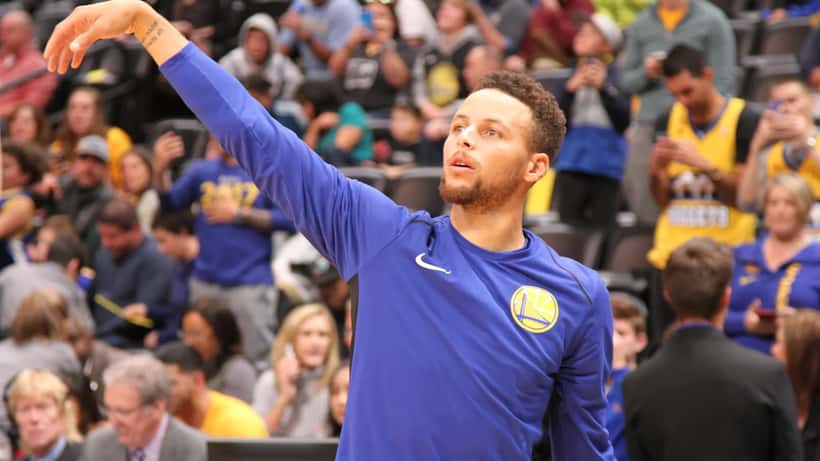
Stephen Curry returned to the Golden State Warriors court on Sunday 6 April 2026, ending a 27-game absence caused by a right knee injury — patellofemoral pain syndrome combined with a bone bruise. His comeback is a masterclass in what it truly takes to recover from a serious knee problem, and there are lessons here for every amateur basketball player.
Two Months, One Knee: What Happened to Curry
On 30 January 2026, Stephen Curry left the court during a Warriors game and did not return. Doctors diagnosed patellofemoral pain syndrome — a condition affecting the cartilage under the kneecap — along with a bone bruise in his right knee. Over the following two months, Curry underwent a carefully managed rehabilitation programme under the Warriors medical team.
The Warriors struggled enormously in his absence, posting a 9–17 record while he was sidelined. His return against the Houston Rockets on 6 April was greeted with enormous relief, though Coach Steve Kerr confirmed that Curry would be limited to approximately 25 minutes and would not play on consecutive nights while the medical team manages his return to full fitness.
His return was deliberately staged: weeks of conservative rest, followed by gradual loading, scrimmage sessions, and monitored intensity. This is not accidental — it reflects the evidence-based approach that sports medicine specialists recommend for patellofemoral conditions.
What Is Patellofemoral Pain Syndrome?
Patellofemoral pain syndrome (PFPS) is one of the most common knee complaints seen by sports medicine doctors, accounting for around 25 % of all knee injuries in athletes, according to data from the National Institute for Health and Care Excellence (NICE). It causes pain at the front of the knee, typically worsened by running, jumping, squatting, or sitting for extended periods.
PFPS is particularly prevalent in basketball players because of the repeated jumping, pivoting, and sudden deceleration the sport demands. In amateur and recreational players — who often lack the conditioning programmes and recovery protocols of professionals — the risk is even higher.
A bone bruise, which occurs when small amounts of blood and fluid accumulate in the bone marrow following trauma or repeated stress, adds a layer of complexity. Unlike a fracture, bone bruises do not show on standard X-rays — they require an MRI to detect. Healing typically takes between 6 and 12 weeks, but returning too quickly can lead to permanent joint damage.
The Three Mistakes Amateur Basketball Players Make
Curry's two-month recovery might seem long for what some people would dismiss as "just a knee ache." But sports medicine specialists see these three patterns repeatedly among recreational players who do not follow professional protocols:
1. Playing through pain. Unlike muscle soreness, patellofemoral pain is a signal that cartilage is under abnormal stress. Continuing to train or play on an undiagnosed PFPS can cause the cartilage under the kneecap to deteriorate, eventually leading to patellofemoral osteoarthritis. In a player over 40, this can become a permanent, debilitating condition.
2. Self-diagnosing via internet searches. PFPS can mimic patellar tendinopathy, meniscus tears, and even early-stage arthritis. A proper clinical examination — including assessing movement mechanics, muscle imbalances, and footwear — is necessary to determine the root cause. Treating the wrong diagnosis means weeks of wasted effort and potentially worsening the injury.
3. Stopping too soon in recovery. Once pain subsides, many amateur players believe they are ready to return. But pain relief does not equal tissue healing. Bone bruises in particular remain vulnerable long after symptoms disappear. A structured return-to-sport programme, designed by a qualified sports medicine doctor or physiotherapist, reduces the risk of re-injury by up to 50 %, according to research published in the British Journal of Sports Medicine.
When Should You See a Sports Medicine Doctor?
If you play basketball or any court sport and experience the following, a consultation with a sports medicine specialist is warranted:
- Pain at the front of the knee during or after play that persists for more than two weeks ;
- Swelling around the kneecap that does not resolve with ice and rest within 48 to 72 hours ;
- A sensation of the knee "giving way" during lateral movements or jumps ;
- Pain when climbing stairs, squatting, or sitting for extended periods ;
- Any direct blow to the knee during a fall or collision.
A sports medicine consultation typically involves a detailed history, physical examination, and — where necessary — imaging such as an ultrasound or MRI. Early diagnosis is the single most effective way to prevent a short-term problem from becoming a long-term one. UK sports medicine experts have previously outlined similar injury prevention principles for amateur athletes that apply equally to basketball players.
The Amateur Lesson From a World-Class Return
The Warriors managed Curry's return with a strict minutes restriction and a no-consecutive-games protocol. For an amateur basketball player, the equivalent would be gradually increasing playing time over two to four weeks, taking extra rest days, and not returning to full competitive intensity until strength and movement mechanics have been assessed as normal.
A sports medicine doctor can build this return-to-play plan for you — accounting for your age, fitness level, and the specific demands of your sport. It is not a luxury reserved for NBA stars. In the UK, sports medicine consultations are available both on the NHS (through a GP referral) and privately, with many specialists offering same-week appointments.
Curry's knee told a story that every weekend player should read. Patience, professional guidance, and a structured return are not signs of weakness — they are what keep you on the court for the long term.
Medical disclaimer: This article provides general information only and does not constitute medical advice. If you are experiencing knee pain or any sports injury, please consult a qualified healthcare professional or sports medicine doctor before returning to physical activity.
