 Eleanor Vaughan
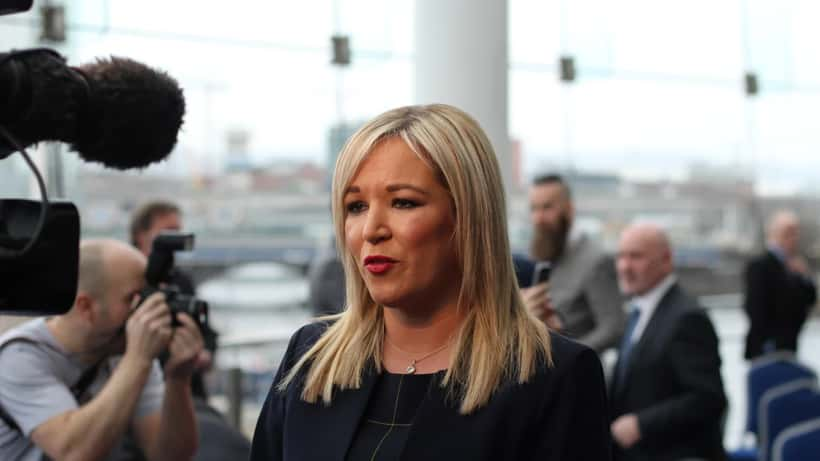
Northern Ireland's First Minister Michelle O'Neill confirmed on 9 October 2026 that she had been contacted by police for interview under caution following a protest that blocked an Orange Order march on the Garvaghy Road in Portadown — the first time in 28 years the route had been granted to the parade by court order. The Democratic Unionist Party immediately demanded prosecutions, and Sinn Féin now faces a formal police probe that has shaken Stormont. For millions of UK citizens watching from across the water, the incident raises a pressing question: what are your legal rights if you attend a protest that later becomes the subject of a criminal investigation?
Why the Drumcree march triggered a legal crisis
The Garvaghy Road dispute has deep roots. Since 1998 — the same year the Good Friday Agreement was signed — the Parades Commission for Northern Ireland had consistently blocked the Orange Order from marching through the nationalist Garvaghy Road area in Portadown. For nearly three decades, that determination held.
In October 2026, Northern Ireland's High Court overturned the Parades Commission's longstanding ruling, granting the Orange Order the legal right to proceed on the route. Sinn Féin politicians, including First Minister O'Neill, attended or participated in a counter-protest that physically blocked the march. The PSNI (Police Service of Northern Ireland) subsequently contacted several representatives for interview under caution.
The DUP's demands went further: they argued O'Neill may have breached the ministerial code — which prohibits ministers from acting in ways that obstruct lawful court orders — on top of any potential criminal liability for the obstruction itself. O'Neill denied wrongdoing, and Sinn Féin argued the march route violated the spirit of the Good Friday Agreement.
Under the Public Processions (Northern Ireland) Act 1998, the Parades Commission has the power to impose conditions on marches. When a court order supersedes that determination, any direct breach of it carries significant legal risk — not just for high-profile politicians, but for ordinary attendees caught up in the situation.
This is not merely a Northern Ireland story. Questions about the intersection of cross-border law, protest rights, and UK legal frameworks also extend to the broader UK-Ireland relationship — as explored in our earlier reporting on what a Taoiseach visit to Downing Street means for cross-border legal rights.
What "interview under caution" actually means for UK citizens
Being called for a police interview under caution is a specific legal status. It is not an arrest, and it does not mean criminal charges have been filed. However, it is far from routine: it signals that police have reasonable grounds to believe you may be a witness to — or potentially a suspect in — a criminal offence.
During such an interview, the standard caution applies: "You do not have to say anything. But it may harm your defence if you do not mention when questioned something which you later rely on in court." That final clause is critical: in certain circumstances, choosing silence can be used against you if the case proceeds to trial.
For public figures like O'Neill, the stakes extend beyond criminal law. Ministers are subject to the ministerial code, and any adverse finding by an independent adviser — let alone a criminal charge — can trigger formal calls for resignation. The DUP has already made clear that outcome is their objective.
What are your legal rights at a UK protest?
Under the Human Rights Act 1998, which incorporates Article 11 of the European Convention on Human Rights, UK residents have a right to peaceful assembly. This is a qualified right: the state can impose restrictions where necessary for public safety, prevention of disorder, or the protection of others' rights.
The critical legal distinction is between lawful protest and obstruction. Under the Public Order Act 1986 (applicable in England and Wales) and equivalent Northern Ireland legislation, deliberately obstructing a lawful procession or preventing a court-authorised march from proceeding may constitute a criminal offence.
If contacted by police after attending a protest in the UK, you have three core rights:
- Legal representation — you can request a solicitor before answering any questions, and this right applies whether you are arrested or attending voluntarily
- The right to silence — though the caution warning means partial silence can be noted
- The right to know the alleged offence — police must explain why you are being questioned
For most peaceful protesters, attendance alone is not sufficient grounds for a criminal investigation. But context, individual actions, and any active court orders in place at the time matter enormously.
Concrete case: When a court order changes everything
Take the situation faced by James, a 38-year-old community organiser from Belfast who attended the Garvaghy Road counter-protest on 9 October 2026. He had no prior criminal record. He had not read the High Court determination permitting the march. He stood in the road with a group of roughly 200 people for three hours, physically preventing the Orange Order from proceeding — believing he was exercising a lawful right to protest.
If James was not individually identified and left before any PSNI dispersal order was formally issued, the probability of personal prosecution is low. In comparable Northern Ireland protest situations — including incidents from the 2013 Drumcree standoffs — fewer than 12 individuals from crowds of several hundred faced charges. Anonymous attendance in a large, non-violent gathering typically falls below the prosecution threshold.
If James was filmed or named, however, his position changes sharply. Under Article 19 of the Public Order (Northern Ireland) Order 1987, deliberately obstructing a lawful procession carries a maximum fine of £1,000. If the obstruction involved physical contact, aggression, or property damage, charges could escalate to disorderly behaviour — with fines up to £5,000 or a custodial sentence of up to three months.
The financial and reputational stakes extend further. Even a minor public order conviction in Northern Ireland appears on standard DBS (Disclosure and Barring Service) checks for a defined period — a serious issue for anyone working in education, healthcare, or finance. A pre-interview consultation with a solicitor — typically costing between £150 and £350 per hour in Northern Ireland — can identify whether:
- The court order was properly publicised before the event
- Any dispersal notices issued were legally valid
- James's individual conduct crosses the criminal threshold
In many protest investigation cases, that legal consultation before the interview prevents the worst outcomes. Without it, individuals routinely make admissions they later regret, or waive procedural rights they did not know they had.
What to do if police contact you after a protest
Whether you are a First Minister or a first-time protester, the procedure if you receive a police contact letter or phone call is the same: do not respond without first seeking legal advice. This is not about guilt — it is about protecting your rights from the moment the process starts.
A qualified solicitor can assess whether the interview is voluntary or compelled, review any relevant court orders, advise on whether answering questions helps or harms your position, and — if procedural rights were violated at any stage — challenge the interview's legitimacy before a word is spoken.
The Drumcree situation is extraordinary in political scale, but the underlying legal principles apply to any UK citizen who attends a demonstration and later faces police scrutiny. Northern Ireland's legal landscape is particularly complex: the Good Friday Agreement, the Human Rights Act 1998, the Public Processions Act 1998, and domestic public order legislation all interact — and specialist legal advice is not optional when they do.
If you attended a protest in Northern Ireland or anywhere in the UK and have concerns about your legal position, a platform like Expert Zoom connects you with qualified solicitors who can advise within 24 hours. Getting the right legal view early is almost always cheaper — and less stressful — than managing the consequences of getting it wrong.
This article addresses general legal principles and public information only. It does not constitute legal advice. If you are personally involved in a police investigation, consult a qualified solicitor.
