 Eleanor Stone
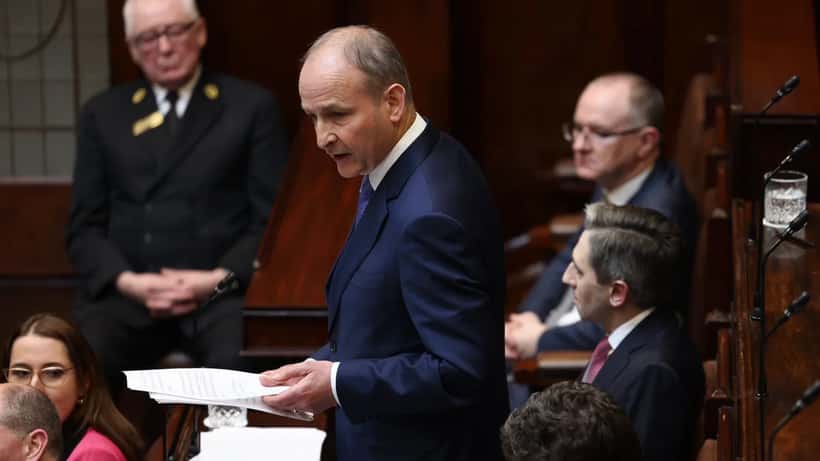
Taoiseach Micheál Martin arrived in Manchester on 17 September 2026 to meet UK Prime Minister Andy Burnham — becoming the first foreign head of government to visit No 10 North, Burnham's newly established northern office. It was the first formal UK-Ireland summit since Burnham took power in July, and the agenda was substantial: Northern Ireland, a delayed EU-UK reset summit now scheduled for November, mutual trade ties, and the procedural framework for a future Irish border poll. Martin called the encounter an opportunity to "inject momentum" into the UK-Ireland partnership.
For the millions of people who live, work, own property, or have family ties across the UK-Ireland border, that momentum has a price tag. When two governments begin renegotiating the rules of engagement between their countries, the downstream legal and financial effects touch everything from employment contracts and rental income to citizenship rights and cross-border business structures. The next 90 days — the window before the EU-UK summit — may be the most important planning period since the Trade and Cooperation Agreement was signed in December 2020.
What the Martin–Burnham Summit Actually Covered
The bilateral at No 10 North was the first of its kind in two respects. It was the first summit since Burnham relocated formal prime-ministerial functions to Manchester as part of his commitment to "rebalance power and control" away from London — a symbolic shift that Ireland's government clearly wanted to acknowledge by making the journey north. And it was the first substantive engagement between the two governments since Trump, speaking in early September, publicly expressed support for Irish unification — a statement that immediately raised the political temperature around border poll procedures and Good Friday Agreement rights.
On the agenda: strengthening UK-Ireland trade and security cooperation, Northern Ireland's political institutions, legacy matters under the Good Friday Agreement, and preparation for the EU-UK summit expected in November. Ireland currently holds the rotating presidency of the European Union, making Dublin the de facto interlocutor between Brussels and London for the next several months. That is an unusual degree of Irish leverage in UK-EU negotiations, and both leaders appear intent on using it.
The talks were described as constructive, with Burnham's side expected to agree a joint communiqué on defence cooperation in the coming weeks. For ordinary citizens, the significance lies not in the diplomacy itself but in what it signals: the legal landscape between the UK and Ireland is about to shift again, and the shifts are likely to accelerate rather than slow.
What This Means for UK Residents with Irish Connections
The Good Friday Agreement, now approaching its 28th anniversary, was constructed for a UK inside the European Union. Every update since 2016 has been incremental — patching over inconsistencies as Brexit, the Northern Ireland Protocol, and the Windsor Framework created new friction points. The November EU-UK summit, if it produces substantive changes to trade arrangements or border procedures, could be the first moment since 2020 where the legal baseline genuinely resets.
For a UK resident with an Irish employer, a property in Northern Ireland, or an Irish passport application in progress, this is not background noise. A legal expert specialising in cross-border UK-Ireland matters can map exactly which rules apply to your situation today and flag where those rules are likely to change before the year's end. The question is not whether to seek advice — it is how quickly to do so before the November summit moves the goalposts.
Citizens considering an Irish passport — demand for which has reportedly increased sharply since Trump's September remarks — should note that entitlement under the Good Friday Agreement must be formally established. Documentation requirements are strict and processing times at the Irish Passport Office are currently running at 12 to 16 weeks for standard applications. A consultation with a solicitor familiar with citizenship and nationality law can confirm eligibility and prevent costly errors in the paperwork.
If you already hold cross-border property or business interests and have navigated previous rounds of rule changes without specialist advice, the UK-EU summit implications already set out in legal guidance from earlier this year are worth revisiting in light of this week's summit, given that Ireland's EU presidency changes the dynamic of who is driving the agenda in Brussels.
When Someone's Belfast Flat Becomes a Tax Question
Here is a concrete situation that illustrates the stakes. A British national purchased a two-bedroom flat in Belfast's Cathedral Quarter in 2021, currently renting it out at £1,200 per month while living in Glasgow and working remotely. Under current arrangements, that rental income is declared straightforwardly as UK income for HMRC purposes, and the landlord pays tax at the relevant rate with no cross-border complication.
The same landlord also receives small payments from a co-working space they co-own in Dundalk, in the Irish Republic, just across the border — roughly €400 per month. That income is declared separately under Irish tax law, and a tax accountant handles the dual filing.
Now suppose the November EU-UK summit introduces a revised framework for Northern Ireland trade that reclassifies property rental income from properties within 25 kilometres of the Irish border as "cross-border economic activity" for VAT and income-reporting purposes. The Belfast flat, three kilometres from the border zone of relevance, suddenly falls within scope.
If the new rules take effect on 1 January 2027 — a reasonable implementation timeline for a November agreement — this landlord has approximately 10 weeks to restructure how income is declared, potentially to transfer beneficial ownership to an appropriate legal vehicle, and to verify that their existing mortgage conditions do not prohibit the reclassification. Missing the window means operating under the old framework while HMRC and Revenue Ireland both have grounds to investigate — a dual-jurisdiction inquiry that can take 18 months to resolve and typically costs more in professional fees than the tax originally owed.
A single consultation with a cross-border legal specialist, booked now, identifies the exposure and outlines the remediation steps. Waiting until January 2027 means responding to letters from two tax authorities simultaneously with no prior planning in place.
Three Questions to Ask a Legal Expert Before the November Summit
Is your employment contract still compliant? Mutual recognition of professional qualifications is reportedly on the Martin–Burnham agenda. If you hold qualifications recognised in both the UK and Ireland and your contract was written before the last round of post-Brexit updates, it may understate your entitlements — or create ambiguity about which jurisdiction's employment law applies in a dispute.
Is your Northern Ireland property correctly registered and taxed? The rules for properties close to or straddling the Irish border are among the most technical in UK property law. Conveyancing solicitors who completed your purchase may not have flagged cross-border obligations that have emerged since 2020. A review now is substantially cheaper than a correction later.
Have you formalised your Good Friday Agreement citizenship rights? Residents of Northern Ireland are entitled under the Agreement to identify as British, Irish, or both — but entitlement is not automatic, and the documentation requirements are strict. With Irish passport applications taking up to 16 weeks, a consultation now ensures you are not caught waiting during a period of rapid rule change.
What to Do Before November
The Martin–Burnham summit is not a crisis — it is an opportunity, and a narrow one. Two governments with genuine goodwill and shared interest are working to reset a relationship that has been strained for a decade. The likely outcome of the November EU-UK summit, shaped in part by Ireland's EU presidency, is a more cooperative framework that simplifies cross-border life for most people.
But simplified does not mean seamless, and transition periods always create exposure for those who have not planned ahead. For anyone with UK-Ireland legal or financial interests — from Northern Ireland landlords to Glasgow-based Irish citizens — the 10-week window before the November summit is the time to act.
Legal experts with cross-border UK-Ireland expertise are available for direct consultations on ExpertZoom. An hour of specialist advice now can clarify your position, identify any immediate actions required, and ensure that whatever the November summit produces, you are already prepared for it.
Disclaimer: This article covers legal and financial topics for general information purposes only. It does not constitute legal advice. For guidance on your specific situation, consult a qualified solicitor or legal professional.
According to the Belfast Agreement published by the UK Government, the right to hold British or Irish citizenship — or both — is a cornerstone guarantee of the Agreement, but exercising that right correctly requires documentation that many residents have never formally established.
format_used: Expert reaction
