 Eleanor Vaughan
Israeli footballer Sayed Abu Farchi was shown a red card during the UEFA Nations League Group B clash between Israel and Austria on 24 September 2026 after simulating a gun with the corner flag in his goal celebration — a moment that has gone viral and reignited debate about the rights and responsibilities of professional athletes when it comes to expression on the pitch.
What Happened in Vienna
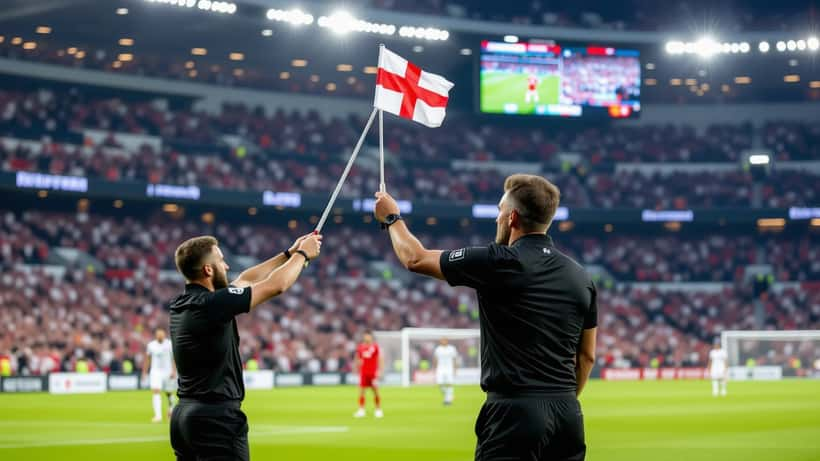
Abu Farchi, a 20-year-old forward who recently completed a reported $6 million move from Maccabi Tel Aviv to Colorado Rapids in MLS, had just scored an equaliser for Israel against Austria when he picked up the corner flag and mimed firing a rifle toward the crowd. The referee, applying FIFA's Laws of the Game, immediately issued a second yellow card — converting it to a red — citing unsporting behaviour and a provocative gesture.
The incident unfolded in front of a packed Vienna crowd and was broadcast to millions across Europe. Within hours, the clip had been viewed tens of millions of times on social media, dividing opinion sharply: some viewers saw it as a defiant political statement, others as a reckless act of provocation. UEFA's disciplinary bodies will now determine what further sanction, if any, follows the automatic red card.
This is not the first time a goal celebration has landed a professional footballer in serious trouble. In 2023, a Premier League forward was banned for five matches by The FA after a gesture deemed insulting to opposition fans. In 2019, an England international received a one-match ban and a £50,000 fine after opposition supporters alleged provocation during a fixture at a rival ground. The pattern is clear: celebrations that edge into political, violent, or inflammatory territory carry genuine professional and financial risk.
UEFA and FA Disciplinary Rules: Where Is the Line?
Under FIFA's Laws of the Game — specifically Law 12 — a player who makes a gesture that is provocative, derisory, or inflammatory is committing misconduct and must be cautioned, or sent off if the act rises to offensive, insulting, or abusive conduct. The European governing body, UEFA, applies its own Disciplinary Regulations on top of these for Nations League, Champions League, and European Championship fixtures.
The key distinction in sports law is between expression and provocation. Holding arms wide in celebration is expression; simulating a firearm — particularly in the current political climate — can be categorised by match officials as a deliberate attempt to incite or demean. That determination is highly fact-specific and is precisely where sports lawyers earn their fees.
In English football, The Football Association applies its own Code of Conduct on top of international rules. According to The FA's misconduct and discipline framework, a red card in an affiliated match automatically triggers a minimum three-match suspension at the level of play where it was incurred. For international matches, the governing body of the competition — in this case UEFA — handles subsequent bans, which can range from one to ten additional matches or beyond.
Crucially, players and clubs retain the right to appeal disciplinary decisions within strict time windows. For UEFA matches, an appeal must generally be lodged within three days of the decision being communicated. Appeals require legal grounds: procedural error, new evidence, or a sanction disproportionate to the offence.
Why This Matters for British Footballers and Clubs
The Abu Farchi incident resonates particularly in Britain, where the football authorities have taken an increasingly firm stance on gestures perceived as inciting violence or carrying inflammatory political messaging. Over the past three years, The FA has investigated more than 40 cases involving goal celebrations — an increase of over 60% compared with the 2021–22 season, according to FA annual review data.
Amateur and semi-professional footballers are not immune. The FA's jurisdiction extends to all affiliated competitions, from the Premier League down to Sunday park football. A gesture that earns a red card in a local league cup final is governed by the same fundamental rules as one in the UEFA Nations League — and the consequences for an amateur player, such as a multi-match ban during a cup run, can be just as severe in relative terms.
For clubs, the stakes are higher still. A manager who fails to adequately brief players on the boundaries of acceptable celebration — particularly in politically charged fixtures — could find the club facing a regulatory fine or a written warning if the FA determines the club failed to ensure a player's conduct met the expected standard.
As sports law solicitors have noted in similar cases, even a short clip viewed out of context can change how a disciplinary panel characterises a gesture. The international attention on the Abu Farchi red card is a reminder that in the era of ubiquitous smartphone footage, no celebration — at any level — is truly private. For further context on how legal rights intersect with international football incidents, see our coverage of Omar Artan and the 2026 World Cup referee travel ban.
Concrete Case: An Amateur Player Banned Mid-Season
Consider a scenario that mirrors dozens of real cases handled by sports law solicitors in England each year. A player in a County FA Sunday league, frustrated after a contentious refereeing decision, scores a late equaliser in a local derby and mimics a throat-slash gesture toward the opposition bench. The referee issues a straight red card under Law 12, citing an offensive gesture. The County FA subsequently upgrades the charge to "use of offensive, abusive, or insulting behaviour."
Under FA Regulations for the 2026–27 season, the consequences break down as follows:
- Automatic suspension for a standard red card: 3 matches minimum.
- Upgraded charge (offensive/abusive conduct): minimum 6 matches, rising to 10 if the panel finds aggravating factors such as targeting a specific individual or group.
- Bond/fine: Amateur players face a standard bond of £30 for basic misconduct, rising to £100–£250 for aggravated offences. Clubs may face a further £50–£150 fine if found to have failed to control the player.
- Appeal timeline: A Not Guilty plea must be submitted within seven calendar days of receiving the charge. Appealing a sanction after a hearing requires lodging an appeal within three working days of the decision, at a cost of £30.
If this player receives a six-match ban at the midpoint of a 22-game season, that represents 27% of the remaining fixtures — over a quarter of the season wiped out by three seconds of poor judgement. At semi-professional level, where appearance fees run £75–£150 per match, the direct financial cost can reach £900 before any legal expenses are added.
The if/then rule in plain English: if the gesture is categorised as "offensive or abusive" rather than merely "unsporting," the ban doubles and a fine automatically attaches. That categorisation is decided not by the player, but by a disciplinary panel reviewing video evidence and the referee's written report. A solicitor with FA disciplinary experience can challenge the categorisation itself — arguing, for instance, that the gesture was ambiguous or that the referee's account contains procedural inaccuracies — and a successful challenge of that kind halves the ban and removes the fine.
How to Challenge a Red Card or Disciplinary Charge
Whether playing in a UEFA competition or an amateur county cup, the process for challenging a misconduct charge follows the same core steps.
Preserve all evidence immediately. Video footage, witness statements from teammates and officials, social media clips. Time limits are short — three to seven days depending on the governing body — and late evidence can be ruled inadmissible.
Understand the specific charge. "Unsporting behaviour" and "offensive/abusive conduct" carry different sanctions and different legal thresholds. A written defence that conflates the two is one of the most common errors made by unrepresented players.
Request a personal hearing. In cases with video evidence, a hearing — where you can challenge the referee's report directly and call witnesses — generally produces better outcomes than a written submission alone.
Raise the proportionality argument. Both UEFA and The FA are required to apply sanctions that are proportionate to the offence. If a player with a clean disciplinary record receives a sanction substantially above the standard tariff for a first offence, that disparity is legally challengeable, and disciplinary panels have reduced sanctions on proportionality grounds in multiple documented cases.
When a Sports Law Solicitor Makes the Difference
The Abu Farchi case will be handled by professional legal teams at UEFA level, with the resources of an MLS club and an international federation behind the player. But the same principles that will govern his appeal — evidence preservation, charge categorisation, and proportionality — apply at every level of English football.
A solicitor experienced in FA and UEFA disciplinary proceedings will know the exact procedural timelines, the evidentiary weight given to different types of video, and the precedents most persuasive to a specific County FA panel. That expertise is often the difference between a three-match ban and a six-match ban, or between a modest fine and a substantial one.
If you, your player, or your club are facing a disciplinary charge arising from a goal celebration or an on-pitch gesture, consulting a sports law specialist before submitting any response is the single most cost-effective step available. The initial consultation typically costs far less than the financial exposure of an uncontested six-match ban at semi-professional level.
This article is for informational purposes only and does not constitute legal advice. Disciplinary rules and sanction tariffs change each season; always consult a qualified sports law solicitor for guidance specific to your situation.
