 Phoebe Wilson
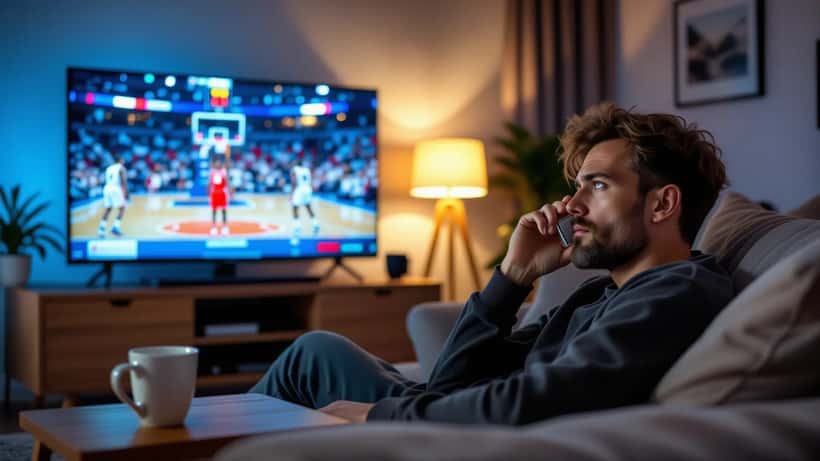
The Houston Rockets trailed the Los Angeles Lakers 3-0 before winning Game 5 on 29 April 2026, and they forced Game 6 on 1 May — sending hundreds of thousands of UK fans scrambling to decide whether to stay up until 3am to watch history unfold. The Rockets are attempting what no team in NBA history has ever achieved: a comeback from 3-0 down. For UK viewers, that drama comes with a health cost that doctors say is worth understanding before you set the alarm.
The Rockets-Lakers Series: Why UK Fans Are Losing Sleep
Game 6 of the Western Conference first-round playoff tipped off at 9:30pm Eastern Time on 1 May — that's 2:30am in London. A potential Game 7 on 3 May would follow the same pattern. With Kevin Durant nursing an ankle bone bruise for the Rockets and Austin Reaves absent for the Lakers, every possession is unpredictable, making it genuinely difficult to switch off.
According to the NHS, adults need between 7 and 9 hours of sleep per night to maintain healthy cognitive and physical function. Staying up until 3am to watch sport — then waking at the normal time — cuts that window to 4 or 5 hours. Do that two or three nights running during a playoff series and the cumulative deficit starts to affect your body in measurable ways.
What Happens to Your Body When You Stay Up for American Sports
The science on sleep deprivation and sports viewership is less studied than sleep deprivation in athletes, but the physiological mechanisms are identical. A 2025 analysis published in Frontiers in Physiology found that a single night of sleep restriction reduces reaction time, impairs decision-making, and disrupts hormonal regulation.
Specifically, even one night of poor sleep can:
- Reduce testosterone levels by up to 25%, affecting mood, energy, and muscle recovery in men
- Elevate cortisol, the stress hormone, which leads to restlessness and makes it harder to fall asleep even when you do go to bed
- Suppress melatonin production through screen exposure in the 30-60 minutes before attempting sleep
- Raise blood pressure due to a combination of cortisol, caffeine consumed during the game, and emotional arousal from close scores
For people with existing cardiovascular conditions, late-night emotional sporting events carry a documented risk. Research has repeatedly shown spikes in cardiac events during major sporting occasions — particularly among men in the 40-60 age bracket who watch alone and in high-arousal states.
The Compounding Problem: It's Not Just One Game
What makes the playoffs specifically problematic for sleep health is the sequence. If the Rockets force a Game 7, UK fans face two consecutive late-night events within five days. A single night of poor sleep disrupts the circadian rhythm enough that catching up the following night becomes difficult — the body's internal clock does not reset instantly.
"Most people think they can pay back a sleep debt at the weekend," says the general clinical consensus. "But the research suggests chronic short sleep has lasting metabolic effects that don't fully reverse with a single lie-in."
For working adults with early starts, the practical calculation is stark: watching both remaining games means potentially arriving at work running on under 5 hours of sleep twice in one week. For those doing physical work or driving long distances, that is not just an inconvenience — it is a safety consideration.
Five Strategies Sports Fans Use to Manage the Conflict
You do not necessarily have to choose between your sleep and the Rockets. Here are the approaches that sports medicine professionals and sleep specialists commonly suggest:
- The spoiler-proof blackout: Turn off social media notifications, record the game, and watch it at 7am the next morning. The emotional engagement and dopamine reward are largely the same whether watched live or on a 6-hour delay.
- The strategic nap: A 20-30 minute nap taken before 3pm can partially offset the cost of a late night without creating sleep inertia. Avoid napping after 4pm.
- The first half only: Watch tipoff through halftime (roughly 90 minutes), then go to bed. You get the game context and highlights are available by morning.
- Shift your sleep window: If your work allows, adjusting your entire schedule by 90 minutes for one week around a playoff series minimises disruption. This works best for those with flexible start times.
- Screen-free final 30 minutes: After the game ends, avoid scrolling through post-game analysis on your phone. The blue light and emotional processing extend the arousal state and delay sleep onset by an average of 40 minutes.
When to See a Doctor
If you find that irregular sleep around sporting events — or for any reason — is affecting your daily function, concentration, or mood for more than two weeks consecutively, it is worth discussing with a GP. Sleep disorders including insomnia and delayed sleep phase syndrome are increasingly common in the UK and are often under-diagnosed in people who attribute their fatigue simply to "staying up too late."
A GP or sleep specialist can assess whether your sleep disruption is purely behavioural or has an underlying clinical component. For those experiencing symptoms like excessive daytime sleepiness, regular waking in the night, or snoring that disturbs a partner, a consultation is strongly advised regardless of the playoff schedule.
You can explore expert health consultations through ExpertZoom, where UK-based GPs and health specialists are available for advice on sleep and lifestyle concerns.
More on late-night sports medicine and athlete health can be found in our earlier piece on LeBron James and elite athletic longevity.
This article provides general health information only. It does not constitute medical advice. Consult a qualified healthcare professional for advice specific to your circumstances.
