 Grace Davies
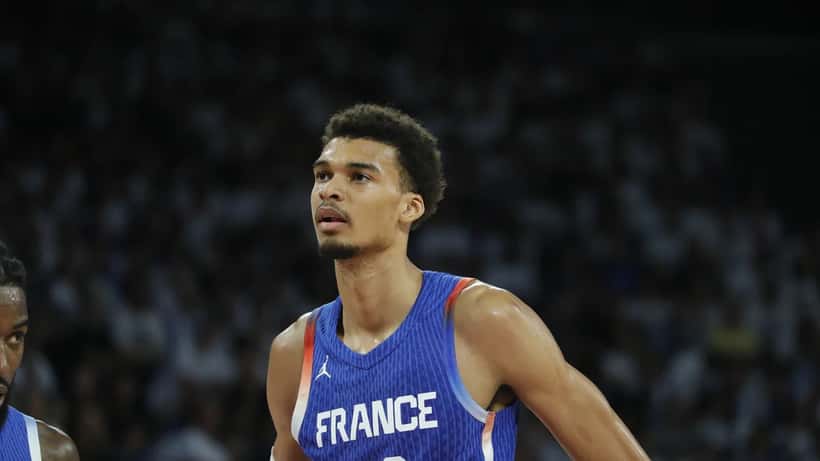
Victor Wembanyama scored 26 points and grabbed 12 rebounds in his NBA Finals debut on 3 June 2026, yet the 22-year-old French phenom shot just 6-of-21 from the field as the New York Knicks beat the San Antonio Spurs 105-95 in Game 1. The 28.6% shooting from a player who hit 47% during the regular season has triggered a debate among UK sports psychologists about how elite athletes process Finals pressure — and what amateur and weekend players in Britain can learn from it.
What happened in Game 1
The Knicks trailed by 14 points in the third quarter before Jalen Brunson dropped 13 of his 30 points in the fourth, including a corner three-pointer with two minutes left that sealed the win. Karl-Anthony Towns added 18 points and 12 rebounds. For San Antonio, Wembanyama was efficient on the boards and from the line but missed 15 shots, including several open looks within his usual range, according to the ESPN box score.
The Knicks now lead the series 1-0 and have won 12 straight playoff games — only the third team in NBA history to reach that mark, joining the 1999 Spurs and 2015 Warriors. Game 2 tips off Friday in San Antonio.
Why elite shooters miss under pressure
UK sport and exercise psychologists describe what happened to Wembanyama as a textbook case of "paralysis by analysis" — when a skill normally performed automatically becomes consciously controlled under heightened arousal. Research published by the British Association of Sport and Exercise Sciences (BASES) has consistently shown that shooting accuracy drops when working memory is loaded with self-monitoring thoughts rather than left to the cerebellum's motor programmes.
A 2025 study tracking biomechanical variables in elite basketball found that increased forearm and shoulder muscle tension under perceived pressure shortened the release point by an average of 4-6 centimetres. For a seven-foot-four player like Wembanyama whose shot relies on a high, fluid release, even small mechanical changes can move an open jumper from "swish" to "iron."
Cognitive scientists also point to what they call attentional narrowing. When the stakes feel existential — a global audience, a Finals debut, a generational expectation — the brain prioritises threat detection over spatial calculation. Peripheral vision contracts, depth perception subtly distorts, and the rim appears smaller. None of this is laziness or a lack of skill. It is a predictable, measurable response of the human nervous system.
What amateur athletes in the UK can learn
You do not need to be a Finals starter to feel this. UK club players preparing for promotion matches, marathon runners chasing a London time, county cricketers facing a first-team debut — all describe the same physiology. Heart rate climbs above 160, breathing shallows, the hands feel detached.
Sports psychologists working with Team GB athletes recommend three practical interventions backed by published evidence:
- Slow exhalation breathing: a six-second out-breath activates the parasympathetic nervous system and pulls heart rate down within 60-90 seconds.
- Pre-shot routines: a fixed, identical sequence of actions before each shot or attempt reduces the cognitive bandwidth available for intrusive thoughts.
- Process focus over outcome focus: thinking "follow through, hold the wrist" works; thinking "make this shot or we lose" does not.
If your club coach is not trained in performance psychology, a chartered sport and exercise psychologist registered with the Health and Care Professions Council (HCPC) can build a tailored programme. Many work remotely across the UK and accept patients funded through occupational health schemes.
When pressure becomes a mental health issue
There is a difference between a bad shooting night and a clinical anxiety problem, and the line matters. Persistent symptoms — racing thoughts before every training session, sleep disruption, avoiding the sport you used to love, panic attacks before competition — are not character flaws. They are anxiety, and they are treatable.
The NHS provides free assessment and treatment for anxiety disorders through the NHS anxiety and panic attacks service, accessible via your GP or self-referral to NHS Talking Therapies in England (equivalent services exist in Scotland, Wales and Northern Ireland). Cognitive behavioural therapy (CBT) remains the first-line evidence-based treatment and is delivered in courses of six to twelve sessions.
For athletes who want a faster route or sport-specific expertise, private practice is an option. A registered sport psychologist typically charges £80-£150 per session in London, less elsewhere, and many offer block packages timed to a season or competition cycle. Some private medical insurance policies cover sport psychology under their mental health benefits — worth checking before paying out of pocket.
Next steps if performance anxiety is affecting you
Watching Wembanyama miss 15 shots on the world's biggest stage should be a reminder, not a comfort. Elite athletes train this skill exactly because it is hard. If pressure is costing you results, joy, or sleep, the answer is the same whether you play in Madison Square Garden or for a Sunday league side in Sheffield — get help from a qualified professional.
Connect with a chartered sport psychologist or mental health consultant through Expert Zoom to talk through your situation, agree a plan, and start working on the mental side of your game with the same seriousness you bring to the physical side. Wembanyama will likely shoot 50% in Game 2. The reason will not be luck. It will be the work done between games — and that work is available to you too.
