 Abigail Clarke
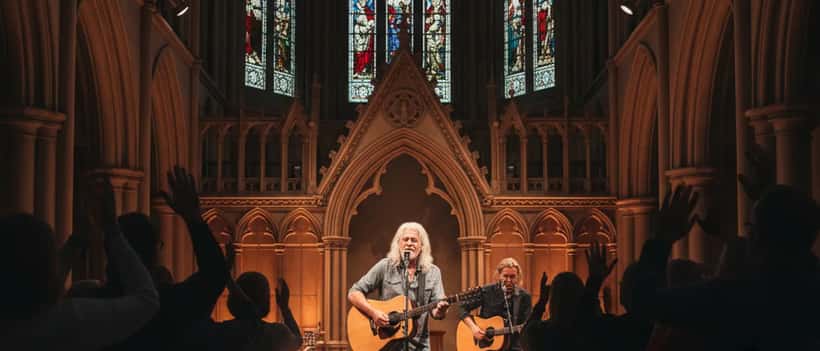
Robert Plant, the 78-year-old former Led Zeppelin vocalist, is currently mid-way through his Spring Fever 2026 tour with his band Saving Grace — 15 shows across the United States running from 14 March to 7 April 2026. At venues ranging from Nashville's Ryman Auditorium to New York's Cathedral of St. John the Divine, Plant performs nightly with a voice that, according to critics, remains compelling and distinctive. The question audiologists are asking: how does a man who stood on some of the loudest stages in rock history still have functional hearing at 78?
Robert Plant in 2026: still performing at 78
Plant's Spring Fever 2026 tour follows the release of his critically acclaimed album Saving Grace in September 2025 — named Ultimate Classic Rock's top rock album of the year. The format is intimate: smaller venues, acoustic and semi-acoustic arrangements, Americana and blues roots music. A deliberate contrast to the ear-splitting volumes of his Led Zeppelin years.
This shift in musical approach may not be coincidental. Plant was exposed to extraordinary sound levels throughout the 1970s. Led Zeppelin's concerts were among the loudest ever measured — the band held the Guinness record for loudest concert at one point. According to Action on Hearing Loss, prolonged exposure to sounds above 85 decibels causes progressive noise-induced hearing loss (NIHL). Rock concerts routinely exceed 110 dB.
Plant has spoken in interviews about protecting his voice, but he has been characteristically private about his hearing health. What's notable is that he is still performing — and adapting intelligently to do so.
Noise-induced hearing loss: the science behind the damage
Noise-induced hearing loss is one of the most preventable forms of hearing impairment, yet it affects an estimated 11 million people in the UK alone. The mechanism is well understood: hair cells in the cochlea, responsible for converting sound vibrations into nerve signals, are physically damaged by excessive sound pressure. Unlike many other cells in the body, cochlear hair cells do not regenerate.
The damage accumulates silently. Early NIHL often presents not as hearing loss but as tinnitus — a persistent ringing or buzzing — or difficulty distinguishing speech in noisy environments. Many people do not seek audiological assessment until the damage is significant.
Key risk factors for hearing damage:
- Occupational exposure: musicians, construction workers, factory workers
- Recreational exposure: concerts, nightclubs, headphone use at high volumes
- Age-related amplification: presbycusis (age-related hearing loss) compounds pre-existing NIHL
- Duration and frequency: a 90-minute concert at 110 dB carries greater risk than a brief loud noise
The NHS recommends audiological screening for anyone with significant noise exposure history or persistent tinnitus.
What audiologists want rock fans over 50 to know
For the generation that grew up attending Led Zeppelin, Rolling Stones and Queen concerts in the 1970s and 1980s, the hearing bill is starting to arrive. Audiologists report a measurable increase in patients aged 55-70 presenting with NIHL combined with age-related hearing decline.
The clinical picture is often more complex than simple hearing loss: spatial hearing (the ability to localise sounds) degrades first, followed by high-frequency discrimination. In practical terms: you can hear someone speaking but struggle to follow a conversation in a restaurant, or miss consonants in quick speech.
Signs that warrant an audiological assessment:
- Frequently asking people to repeat themselves
- Turning up the TV volume higher than others prefer
- Difficulty hearing on the phone
- Persistent tinnitus (ringing, buzzing, or hissing)
- Feeling that speech sounds muffled
A comprehensive audiological assessment typically takes 45 to 60 minutes. It includes pure-tone audiometry, speech discrimination testing, and tympanometry. Early intervention — including custom hearing protection, sound therapy for tinnitus, or hearing aids — is significantly more effective than late-stage management.
Plant's longevity on stage: a case for adaptation
What Plant demonstrates, whether intentionally or not, is the value of adaptation. Moving from stadium rock to intimate Americana tours reduces acoustic exposure. Working with a smaller band and acoustic instrumentation limits the sound pressure levels he is subjected to nightly. His voice — the instrument he cannot replace — appears protected by years of careful vocal coaching and the natural pruning that comes with singing music that requires subtlety rather than volume.
For the rest of us, Plant's career is a reminder that exposure management is possible at any age. Custom-moulded ear protection, available from audiologists, attenuates harmful frequencies while preserving music quality. High-fidelity musician earplugs can reduce overall volume by 15-25 dB without distorting sound.
When to see an audiologist
If you attended live music regularly in the 1970s, 1980s or 1990s — or if you work in a noisy environment, use headphones extensively, or experience any of the warning signs listed above — a baseline audiological assessment is worth scheduling.
Robert Plant at 78 is still performing, still recording, still adapting. The science behind preserving hearing into later decades is clear: early assessment, appropriate protection, and informed management make a measurable difference. An audiologist can provide the same tailored approach to your hearing health that Plant's career suggests he has applied to his voice.
This article is for general information purposes. For personalised advice, consult a registered audiologist or hearing specialist.
