 Rebecca Shaw
Robert Irwin, the 22-year-old son of the late Steve Irwin, is trending globally in April 2026 after it emerged he declined a meeting with Prince Harry and Meghan during their Australian visit — citing his role as Prince William's Earthshot Prize ambassador. But beyond the royal drama, Irwin's growing international profile is doing something quieter and more significant: reigniting the UK public's fascination with wildlife, exotic animals, and the specialist veterinary care they require.
From Screen to Enclosure: How Wildlife Stars Shape Pet Choices
The Irwin family has spent three decades making wildlife accessible and exciting to global audiences. Robert, who hosts I'm a Celebrity Get Me Out of Here in Australia and won Season 34 of Dancing With the Stars, regularly shares close encounters with animals ranging from pythons and crocodiles to cassowaries and wombats — accumulating millions of followers on social media.
The impact on UK pet trends is real. Each time a wildlife personality brings exotic species to mainstream attention, UK shelters and specialist veterinary practices report increased enquiries from people who have acquired — or are considering acquiring — exotic animals. Reptiles, birds of prey, sugar gliders, hedgehogs, and even primates have all seen interest spikes following high-profile media appearances.
The problem, as veterinary professionals note, is that the care requirements of exotic animals are vastly more complex than those of dogs or cats — and many UK owners discover this too late.
What UK Law Says About Exotic and Wild Animals
The Dangerous Wild Animals Act 1976 regulates the keeping of specified wild animals in the UK. If you want to legally keep a species on the Act's schedule — which includes big cats, certain primates, venomous snakes, and large crocodilians — you must obtain a licence from your local council. Licences are not granted automatically: inspectors assess whether you have appropriate housing, safety measures, and access to veterinary care.
For animals not on the schedule — such as many reptiles, parrots, or meerkats — no licence is required, but owners still have obligations under the Animal Welfare Act 2006, which requires that all animals in captivity have their five welfare needs met: a suitable environment, appropriate diet, ability to express normal behaviour, housing with or apart from other animals as appropriate, and protection from pain, injury, disease, and suffering.
The gap between "legally allowed to own" and "properly equipped to care for" is where many UK exotic pet owners find themselves — often when their animal becomes ill and a standard vet cannot help.
The Specialist Vet Problem
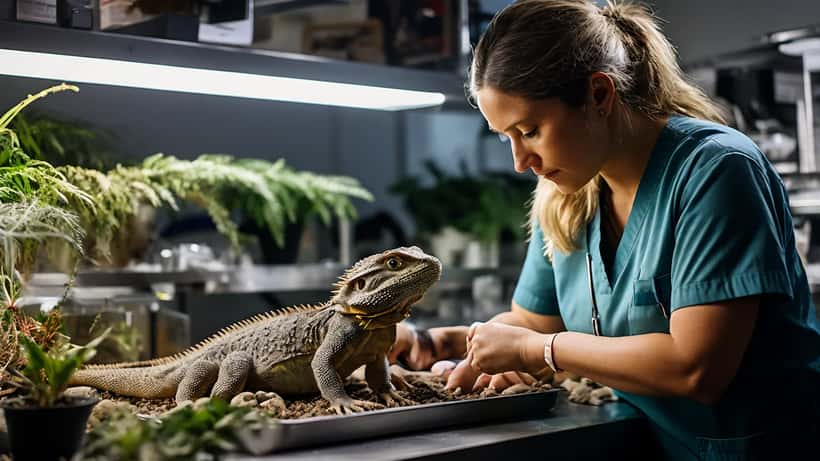
Not all veterinary practices treat exotic animals. General practice vets are trained primarily in companion animals (dogs and cats) and farm animals. Exotic species — particularly reptiles, birds, small mammals like degus or chinchillas, and wild-caught or rehabilitated animals — require veterinary professionals with specialist training in exotic animal medicine.
The Royal College of Veterinary Surgeons (RCVS) recognises specialists in zoo and wildlife medicine, and there are a growing number of exotic animal veterinary practices in the UK. However, access is uneven: rural areas in particular may have no exotic specialist within a viable travel distance.
This creates a practical crisis when exotic animals fall ill. Common issues UK exotic pet owners report include:
- Reptile respiratory infections: Often caused by incorrect temperature gradients in enclosures — a setup problem a specialist can identify and correct.
- Metabolic bone disease in reptiles: Results from insufficient UVB lighting or calcium deficiency; preventable with correct setup guidance, treatable if caught early.
- Psittacine beak and feather disease in parrots: A highly contagious viral disease for which there is no cure, only management — early diagnosis is critical.
- Dental disease in rabbits and guinea pigs: Frequently missed by general vets, which can progress to severe pain and secondary illness.
The cost of exotic veterinary care is also significantly higher than standard pet care. CT scans, anaesthesia, and surgical intervention for small or unusual animals often require specialist equipment not found in general practices.
What Robert Irwin's Profile Means for Wildlife Conservation in the UK
Robert Irwin's role as Prince William's Earthshot Prize ambassador is not merely ceremonial. The Earthshot Prize funds solutions to environmental problems across five categories: protecting and restoring nature, cleaning the air, reviving the oceans, building a waste-free world, and fixing the climate. Irwin's involvement gives the prize a high-profile, younger-demographic audience — connecting conservation science to popular culture in a way that formal environmental messaging rarely achieves.
For UK wildlife charities and veterinary professionals working with native species — hedgehogs, bats, badgers, foxes — this kind of ambassadorial visibility matters. The British Hedgehog Preservation Society and the Wildlife and Wetlands Trust regularly report that high-profile media moments drive spikes in public engagement, volunteering, and donations.
The broader message Irwin embodies — that wildlife is worth knowing, protecting, and caring for — resonates with UK audiences in a way that policy documents do not.
Practical Guidance for UK Exotic Pet Owners
If you own or are considering an exotic animal in the UK, veterinary specialists recommend the following:
Before acquiring: Research the animal's full life expectancy, housing requirements, and specialist veterinary needs. A bearded dragon can live 10-15 years; a large parrot, 50-80 years. The commitment extends far beyond the purchase price.
Find a vet before you need one: Identify an exotic animal specialist in your area before your animal falls ill. Emergency situations are not the time to discover there is no local specialist. The British Veterinary Association maintains resources to help owners locate appropriate care.
Check licensing requirements: If your chosen species is on the Dangerous Wild Animals Act schedule, consult your local council before acquiring. Unlicensed ownership carries criminal penalties.
Join specialist communities: Reptile, bird, and small mammal keeper communities — both online and via local clubs — offer practical advice from experienced owners and can recommend trusted veterinary practices.
Consider insurance: Exotic animal insurance is available from specialist providers in the UK. Given the cost of specialist care, it is often worth the premium for species with complex health needs.
Whether you are inspired by Robert Irwin's passion for animals or already caring for an unusual pet, connecting with a qualified veterinary specialist is the most important step you can take for your animal's welfare. The gap between enthusiasm and expertise is where animals suffer — and where professional advice makes the difference.
