 Amelia Ward
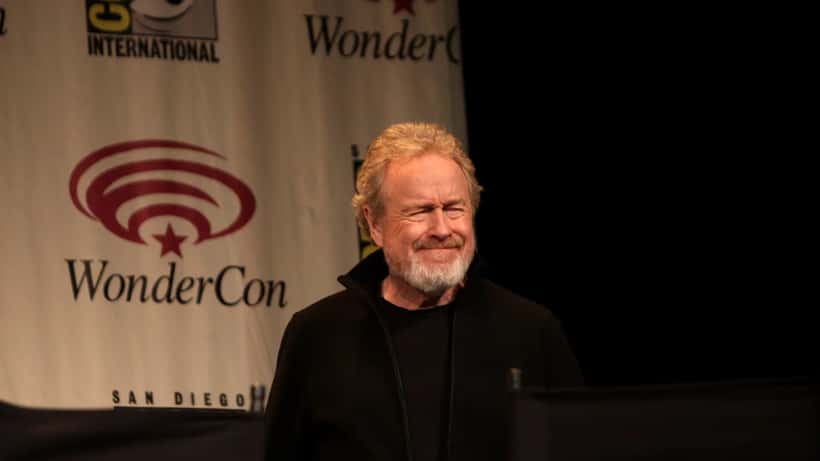
At 88 years old, Ridley Scott has been confirmed to direct Treasure Island — a major new blockbuster adaptation starring Hugh Jackman as Long John Silver — announced in June 2026. The Oscar-winning director also has eight further projects in active development, a pace that challenges filmmakers half his age.
The News That Stopped Hollywood
Scott's Treasure Island, written by Jack Thorne, pairs Hugh Jackman with the director responsible for Gladiator, Alien, and Blade Runner. Jacob Elordi is also reportedly in discussions for a supporting role. The announcement came just weeks after reports that Scott is pushing to direct the next Alien sequel himself — a creative hunger that shows no sign of slowing.
At 88, Scott is not simply still working. He is initiating ambitious, expensive new projects at an age when most professionals have long since retired. To the question Hollywood is quietly asking — how does someone function at this level at this age? — the answer lies in what health professionals call healthy cognitive ageing.
What Healthy Cognitive Ageing Really Means
Not all cognitive abilities decline in the same way or at the same speed. According to the UK Government's guidance on healthy ageing, published by the Office for Health Improvement and Disparities, some thinking skills peak in our early 30s, while others — including vocabulary, verbal reasoning, and reading comprehension — remain stable or even improve across the lifespan.
The same guidance notes that by 2035, over half of UK adults will be aged 50 or older. Understanding what thriving looks like at those ages has never been more relevant for families and carers across Britain.
Here are five indicators that an older person is ageing cognitively well — and the signs that should prompt a conversation with a GP.
1. They Remain Goal-Directed and Future-Focused
Scott has eight projects in development simultaneously. That level of sustained, forward-looking ambition is a hallmark of strong executive function — the brain's capacity to plan, sequence tasks, and stay motivated over time. Executive function is one of the first capacities to falter in early cognitive decline, which makes Scott's schedule genuinely telling.
If an older parent or relative has become uncharacteristically passive — abandoning projects they once cared about, or losing the ability to plan ahead — that shift deserves attention. A GP can help distinguish normal age-related slowing from early cognitive change, and earlier assessment almost always leads to better outcomes.
2. They Adapt to New People and Situations
Scott is working with Jack Thorne, a writer he has not previously collaborated with, and is in discussions with newer talent for Treasure Island. The ability to form new professional relationships and adapt to unfamiliar people reflects cognitive flexibility — one of the more resilient capacities of a healthy brain.
Research consistently finds that roughly 75% of the variability in how people age cognitively is attributable to lifestyle and environmental factors, not genetics alone. This means the capacity for social and cognitive flexibility is, for most people, something that can be actively maintained throughout life — not simply a lottery of inheritance.
Watch for an older relative who increasingly resists new situations, struggles to trust unfamiliar people, or has become rigidly fixed in routines in ways that feel out of character.
3. They Handle Complexity Without Shutting Down
Directing a major production requires holding vast complexity in mind at once — logistics, creative choices, financial constraints, cast dynamics, studio relationships. That capacity for multi-layered thinking reflects robust working memory and attentional control.
As of mid-2025, around 506,000 people in the UK had a formal dementia diagnosis, according to NHS records. That figure is significant — but so is the far larger number of people in their 80s and 90s who remain highly capable. Cognitive decline is not an inevitable consequence of reaching 80 or beyond.
The sign worth watching for: an older person struggling with tasks that used to be routine — managing household finances, following a recipe, navigating a familiar route. These functional changes tend to be more diagnostically meaningful than occasional memory slips.
4. They Seek Out Novelty and Challenge
Scott is not remaking a film he has already made. He is adapting a 143-year-old novel he has never tackled before, in a genre — swashbuckling adventure — he has not worked in previously. That appetite for novelty, for subjects requiring new research and new creative solutions, is one of the strongest predictors of cognitive longevity documented in the research literature.
The UK now has half a million people in their 90s — more than two and a half times the number in 1985. Many remain cognitively active precisely because they continued pursuing new challenges in later life, rather than retreating into repetition. Seeking stimulation is not a luxury; it is one of the most evidence-backed things an older person can do for their brain.
5. They Maintain Meaningful Social and Professional Ties
Scott works within a network of studios, producers, and creative collaborators. Sustained social and professional connection is among the most protective factors against cognitive decline. Social isolation in older adults is associated with significantly increased dementia risk — while engagement in purposeful work has the opposite effect.
If someone who was once active in a community, workplace, or social group has progressively withdrawn, this matters both as a possible symptom and as a contributing risk factor. A GP can assess whether withdrawal reflects depression — which is highly treatable in older adults — or an early cognitive shift that warrants further investigation.
William Shatner at 95 staying healthy and active is another example of this pattern: sustained engagement with professional purpose and social connection appears to be a key element of remarkable longevity.
When Should You Speak to a GP?
These five signs describe what healthy cognitive ageing can look like in practice. Their absence is not a diagnosis — it is a prompt to seek one.
The UK Government's healthy ageing guidance recommends regular health check-ins for adults over 75, particularly where family members have observed changes in memory, mood, or daily functioning over several months. A GP or cognitive health specialist can conduct a structured assessment, rule out treatable causes such as thyroid imbalance or vitamin B12 deficiency, and advise on practical next steps.
Ridley Scott directing Treasure Island at 88 is remarkable — but it is perhaps less of an anomaly than it appears. With the right conditions — purposeful work, social connection, intellectual challenge, and physical activity — the human brain can remain extraordinary well into later life. David Attenborough's active life at 99 points to the same conclusion from a very different field.
If you have concerns about an older relative's cognitive health, speaking with a health professional sooner is almost always better than waiting for a crisis to emerge.
This article is for informational purposes only and does not constitute medical advice. If you have concerns about cognitive health or possible dementia symptoms, please consult a qualified healthcare professional.
