 Abigail Clarke
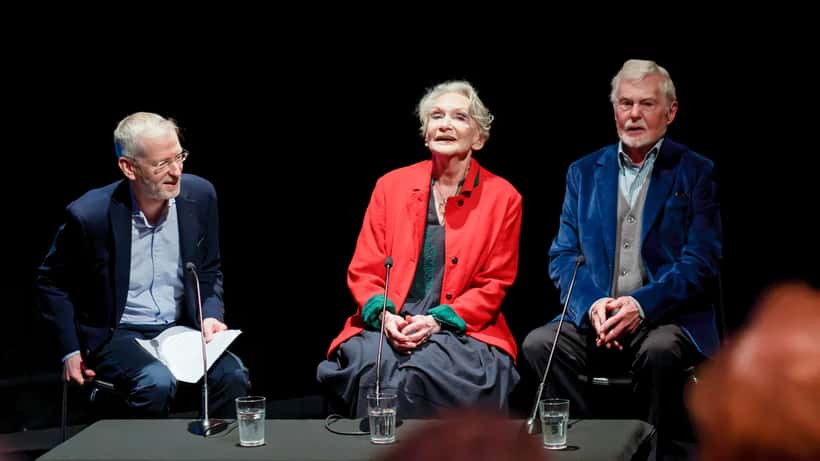
On Saturday 23 May 2026, Sir Derek Jacobi will take to the stage at East Cowes Town Hall for a special gala evening at Cowes Fringe, headlining an event called "A Knight to Remember" in conversation with long-time collaborator Richard Clifford. He is 87 years old. He is also appearing in cinemas this month in "Moss and Freud," playing the painter Lucian Freud opposite Ellie Bamber's Kate Moss. And he has audio drama recordings due for release by Big Finish Productions in 2026, reprising a role he has inhabited for years. At an age when most people have long since retired, Sir Derek is working — by choice and with evident purpose. What does that tell us about how the brain ages, and what should it prompt the rest of us to think about?
The Science of Staying Sharp
Cognitive decline is not an inevitable consequence of ageing. While certain changes in memory, processing speed, and mental flexibility are common in older adulthood, the degree to which those changes affect daily life is profoundly shaped by behaviour, environment, and health choices made over decades.
One of the most consistently supported findings in neuroscience is that cognitive engagement — remaining mentally active, learning new things, maintaining social connections, and having a sense of purpose — is associated with significantly better brain health outcomes in later life. According to the NHS guidance on staying healthy as you age, staying physically active is one of the most powerful things an older person can do to protect both cardiovascular health and cognitive function. The two are more closely linked than many people realise: what is good for the heart is generally good for the brain.
For professional performers like Sir Derek Jacobi, the demands of continued work are unusually comprehensive. Learning lines requires memory. Interpreting a character requires emotional intelligence and flexibility. Performing in public requires focus, coordination, and responsiveness to an audience. These are, in effect, a rigorous cognitive workout — conducted with purpose, meaning, and social engagement built in.
What "Cognitive Reserve" Actually Means
Scientists use the concept of "cognitive reserve" to describe the brain's resilience — its ability to manage deterioration or damage without visible symptoms. People with higher cognitive reserve can sustain more underlying brain changes before those changes affect their functioning.
Cognitive reserve is built up over a lifetime, through education, intellectual challenge, creative engagement, and social activity. It is not a finite resource. Evidence consistently suggests that activities that continue to challenge the brain — particularly those that require learning, social interaction, and a degree of novelty — continue to build reserve even in later life.
This is directly relevant to how we think about retirement, leisure, and purpose in our 70s, 80s, and beyond. A person who continues to engage with mentally demanding work, voluntary roles, creative projects, or complex hobbies is not simply passing the time. They may be meaningfully affecting the trajectory of their cognitive health.
The Warning Signs That Should Prompt Medical Advice
Sir Derek Jacobi's continuing activity is a source of genuine inspiration. But for many families, the experience of watching a parent or partner age is less a story of continued flourishing and more a process of managing growing concern about changes they cannot quite name.
The difference between normal ageing and the early stages of a neurodegenerative condition is not always obvious. Normal ageing may involve occasional difficulty retrieving a name or word, slower processing of complex information, and a tendency to find multitasking more effortful. These are annoying, but they do not typically disrupt daily functioning.
Signs that warrant a GP assessment include:
- Getting lost in familiar places or forgetting well-known routes
- Difficulty managing finances, medication schedules, or household tasks that were previously routine
- Significant personality or mood changes — increased anxiety, apathy, or irritability — without a clear external cause
- Trouble following conversations or losing track of familiar stories
- Repeatedly asking the same questions within a short space of time
A GP assessment is the correct first step. Depending on what it reveals, a referral to a memory clinic or neurologist may follow. Early diagnosis — whether of mild cognitive impairment, dementia, or another condition — significantly improves the range of treatment and support options available.
The Role of Creative and Social Engagement in Prevention
What Derek Jacobi's career illustrates is not simply longevity, but active longevity — continued participation in complex, socially embedded, creative work. Research published in academic journals on cognitive ageing consistently points to the same protective factors: staying connected to others, remaining purposeful, and engaging in activities that require genuine mental effort.
For those approaching or in retirement, the practical implication is not that everyone needs to take up acting. It is that the choices made about how to spend time genuinely matter for brain health. Learning an instrument, taking on a challenging new role in a voluntary organisation, engaging seriously with a creative or analytical hobby, or maintaining close social relationships all contribute to the reservoir of resilience that protects against cognitive decline.
Research into how maintaining an active mind at 86 affects brain health echoes these findings: the pattern across high-functioning older adults is consistently one of continued purpose and engagement, not passive withdrawal.
When to Consult a Health Specialist
If you are over 65, the single most effective step you can take for your long-term cognitive health is ensuring your cardiovascular health is well managed. High blood pressure, poorly controlled diabetes, high cholesterol, and smoking are all established risk factors for vascular dementia — the second most common form after Alzheimer's disease. Your GP can assess your cardiovascular risk profile and recommend interventions.
For those with a family history of dementia or neurodegenerative conditions, earlier engagement with a specialist — particularly for a baseline cognitive assessment — can be valuable. It establishes a reference point against which any future changes can be meaningfully measured.
And if you are a carer for an older relative who is showing changes in behaviour, memory, or personality, your own wellbeing matters too. Carer fatigue is a genuine health risk. Speaking to your GP about your situation — not just your relative's — is an important step in managing both.
The Larger Lesson
There is something quietly radical about a man of 87 choosing to perform in public, take on film roles, and commit to creative work — not because he has to, but because he finds it meaningful. In a culture that frequently treats retirement as the natural end of productive life, Sir Derek Jacobi's continued engagement is a counter-narrative worth taking seriously.
The brain responds to use. It responds to challenge, connection, and purpose. Not all of us will tread the boards into our late eighties — but all of us have choices about how much we ask of our minds in the years ahead. Those choices carry real consequences for the health outcomes that will eventually follow.
This article is for informational purposes only and does not constitute medical advice. If you have concerns about your own cognitive health or that of a family member, please consult your GP.
