 Rebecca Taylor
As British schools reopened their doors this September, millions of parents and children face a shadow that followed them back from last term: the Red vs Blue school wars. What began as a viral TikTok stunt in February 2026 has left a lasting psychological imprint on thousands of young people across London and beyond — and with the new school year underway, experts warn that unresolved anxiety could resurface in ways parents aren't prepared to recognise.
What the Red vs Blue Trend Did to Children — and Why It Isn't Over
The Red vs Blue school wars erupted in mid-February 2026, when TikTok and Snapchat accounts began posting split-colour graphics — red on one side, blue on the other — naming rival London schools and calling students to "war" at specific locations. Within days, the pattern spread from east London to Bristol, Cardiff, and the West Midlands.
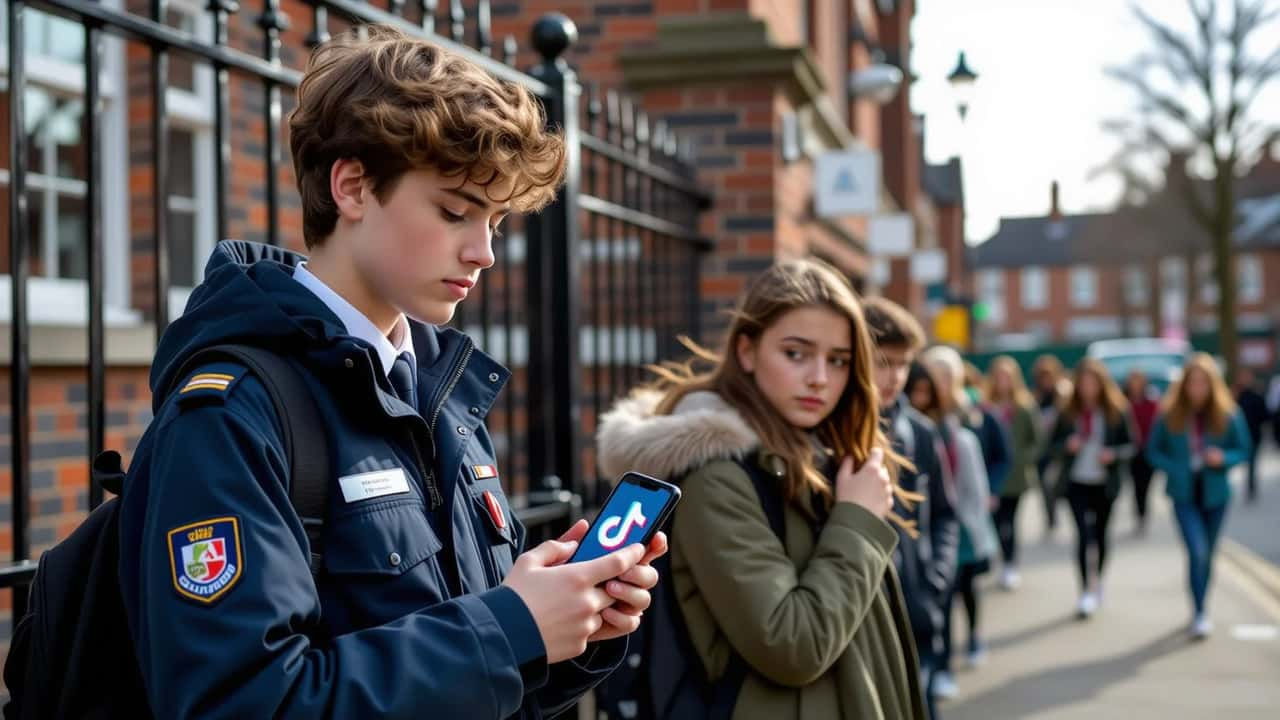
While the Metropolitan Police confirmed they received no verified reports of violence directly linked to the posts, the psychological damage was real and widespread. Young people reported constant fear of being ambushed, targeted, or filmed in a confrontation — even in areas where no incidents occurred. Schools cancelled after-school activities. Parents began escorting teenagers on journeys they had previously made alone.
According to the mental health charity CareIf, which published detailed guidance on the trend in March 2026, the most common psychological responses among affected young people included acute anxiety, low mood, emotional withdrawal, and hypervigilance — symptoms consistent with trauma-adjacent stress. "The brain doesn't distinguish between a perceived threat and a real one," the charity noted in its briefing. "Prolonged exposure to threatening content activates the same fear circuitry as direct danger."
The key word is prolonged. Many families assumed the anxiety would resolve naturally over the summer break. For some children it has. For others, the return to school is triggering a second wave.
Why September Is the Critical Window for Action
Child psychologists have flagged the school return as a high-risk period for delayed-onset anxiety. Months of summer holidays created psychological distance from the original trigger — but that distance can make re-entry into school environments feel suddenly threatening again, particularly for children who never fully processed what they experienced.
There is a documented pattern in NHS guidance on childhood anxiety disorders: stress responses that appear to resolve over school holidays frequently re-emerge within the first three to four weeks of term. Children who experienced intense fear during the Red vs Blue period — whether they were directly involved or simply exposed to the content — may present with:
- Reluctance or refusal to attend school, especially on afternoons when larger groups gather near school gates
- Sleep disturbances and intrusive thoughts about past incidents or content seen online
- Social withdrawal or sudden shifts in friendship groups as a form of self-protection
- Physical symptoms without a medical cause: headaches, stomach aches, or shortness of breath before the school day begins
If a child shows three or more of these signs persistently in the first two weeks of September, mental health professionals consider this a clinical indicator requiring early intervention — not reassurance, not patience, and not telling the child to "toughen up."
When School Anxiety Becomes a Crisis: A Case That May Sound Familiar
Consider a 14-year-old student in east London — let's call him Jamie — who was never involved in any confrontation, but watched dozens of Red vs Blue videos during February 2026 on his phone. At the time, his parents noticed he became quieter, started asking to be collected from school rather than walking home with friends, and stopped going to his Saturday football club. Over the summer holidays, he gradually seemed to return to his usual self.
Now, three days into the new term, his parents have received two calls from school. Jamie has reported feeling sick before afternoon classes, left early twice, and has stopped attending his football training sessions, which take place in a park near school at 5pm — the same kind of after-school, public-space setting that was named in Red vs Blue posts.
If his parents do nothing and attribute this to normal back-to-school nerves, research on adolescent anxiety patterns suggests there is a 60–70% likelihood his school avoidance will solidify into an entrenched pattern within eight weeks. Once school avoidance reaches that stage, intervention becomes considerably more complex, typically requiring more intensive therapy and, in some cases, part-time timetables agreed with the school.
If, however, Jamie's parents seek a professional assessment from a child psychologist within the first two weeks of symptoms appearing, the success rate for anxiety-related school avoidance in adolescents with structured cognitive behavioural therapy (CBT) combined with parental coaching runs above 75% — a dramatically better outcome, achieved simply by acting sooner rather than later.
The difference between these two trajectories isn't the severity of what Jamie experienced. It's the speed of the parental response.
Disclaimer: This article addresses general mental health themes. It is not a substitute for professional medical advice, diagnosis, or treatment. If you are concerned about a child's wellbeing, please consult a qualified healthcare professional.
The Social Media Problem Hasn't Gone Away
A significant complicating factor is that many young people remain exposed to residual Red vs Blue content — old videos, reshared posts, TikTok "anniversary" clips as the trend approaches its six-month mark. The NHS guidance on young people's mental health and social media makes clear that repeated exposure to threatening or violent content — even content a child knows is staged or exaggerated — keeps the nervous system in a sustained low-grade alert state.
For parents trying to assess exposure: if a child is spending more than one hour per day engaging with content related to school conflict, peer violence, or the original Red vs Blue clips, that is a meaningful threshold — meaningfully different from a single clip watched out of curiosity. It is worth a direct, non-judgmental conversation, framed around the child's feelings rather than the content itself.
Parents who navigated the original Red vs Blue period should also be aware that if your child experienced anxiety around the legal and safeguarding dimensions of the school wars trend, the emotional dimension often runs alongside unresolved questions about safety rules and consequences — both warrant attention.
When to Seek Help: A Framework UK Parents Can Actually Use
Mental health professionals working with schools and families recommend the "two-week rule": if a child's behaviour or emotional state has been noticeably different for more than two continuous weeks since term started — not just the first nervous few days — it warrants professional consultation rather than continued monitoring at home.
In the UK, the main access routes are:
- GP referral to CAMHS (Child and Adolescent Mental Health Services): the NHS pathway, currently carrying waiting times of 12–18 weeks in most English regions. Appropriate for moderate concerns where time is not urgent.
- School counsellors or educational psychologists: available in some schools at no cost, worth asking your child's head of year or the school's designated safeguarding lead.
- Private child psychologists: typically accessible within one to two weeks, with sessions ranging from £80 to £150 per hour. Many offer a free 20-minute initial consultation. For families where the anxiety is affecting school attendance, private access is often the faster and ultimately more cost-effective route.
A consultation with a child mental health expert can help you establish quickly whether what you're observing falls within the normal adjustment range — or whether your child needs structured, evidence-based support. Seeking a second opinion from a qualified professional is never an overreaction. Waiting until the situation escalates often is.
What Schools Are Doing — and the Gap Nobody Has Filled
Several London boroughs, including Southwark and Havering, issued specific safeguarding guidance to schools after the February 2026 outbreak, outlining protocols for classroom discussions on online safety, anonymous reporting systems, and pathways for teachers to flag students showing signs of distress.
What most of those protocols lack is a September review. The original crisis guidance was written for immediate response to an acute threat. It does not account for the delayed-onset anxiety that frequently emerges weeks or months after the trigger has passed — precisely when children re-enter the environments associated with that fear.
If your school has not yet communicated anything about mental health support for the new term, and particularly if your child's school was named in the original TikTok posts, it is entirely reasonable to contact school leadership and ask what provision is in place. You are not overreacting. Schools have a duty of care that extends to pupils' psychological safety, not only their physical safety — and September 2026 is the moment that duty is being tested again.
Connecting with a qualified expert through Expert Zoom's mental health advisory service gives you access to experienced child psychologists who can guide both the assessment and the conversation with your child's school, acting as your advocate in a system that can feel slow to respond.
