Bath Rugby face Saracens in a highly anticipated Gallagher Premiership Round 11 clash on 20 March 2026 at The Recreation Ground, Bath, with a 19:45 kickoff. The match showcases elite rugby talent including Bath's Finn Russell and Ben Spencer alongside Saracens' Owen Farrell and the returning Elliot Daly, inspiring millions of amateur players across England. But as the nation watches top-tier athletes compete, sports medicine experts warn that amateur rugby players face significantly higher injury risks than their professional counterparts.
Elite Match Highlights Injury Prevention Gap
Bath's lineup features Tom de Glanville, Henry Arundell, Ollie Lawrence, Finn Russell, captain Ben Spencer, and Alfie Barbeary. Saracens counter with Elliot Daly returning from injury recovery, Owen Farrell, captain Ivan van Zyl, and Tom Willis. Notably, Tobias Elliott makes his Premiership debut on the wing after completing his own injury recovery protocol, whilst Henry Pollock has been stood down from rugby with immediate effect.
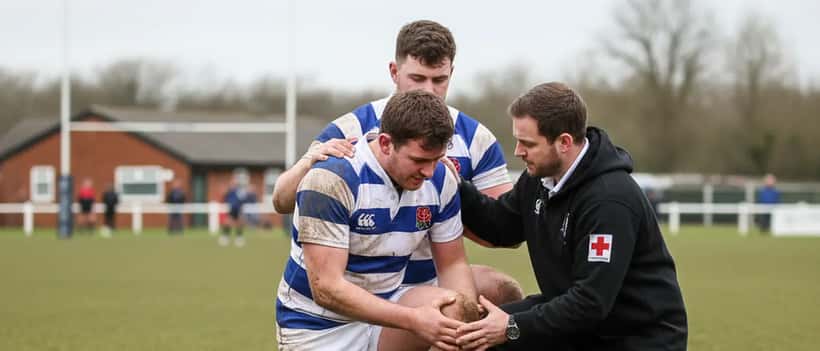
The professional setup these athletes enjoy includes dedicated physiotherapists, sports medicine physicians, strength and conditioning coaches, and immediate pitch-side medical assessment. Amateur players rarely have access to such comprehensive support, contributing to injury rates two to three times higher than at elite level according to World Rugby injury surveillance data.
Rugby Injury Statistics: What the Data Shows
Rugby union carries one of the highest injury rates of any contact sport, with approximately 81 injuries per 1,000 player hours documented at elite level. The injury profile breaks down into muscle strains and tears accounting for 30 percent of cases, contusions at 25 percent, ligament sprains at 20 percent, and fractures or lacerations comprising 15 percent.
With an estimated 8 million rugby players in England alone, the scale of potential injuries is substantial. Amateur players face heightened risk due to less refined technique, lower conditioning levels, and often playing through minor injuries that professionals would immediately address with medical teams.
Head and neck injuries remain the most serious concern. Concussion protocols established by World Rugby require immediate withdrawal from play when symptoms appear, followed by a minimum seven-day graduated return-to-play programme. Despite these guidelines, amateur rugby often lacks the trained personnel to recognise concussion symptoms immediately.
Most Common Rugby Injuries and Their Causes
Shoulder injuries frequently occur during tackles, with acromioclavicular joint separations and rotator cuff tears being particularly common. The force generated when players collide at speed, combined with the twisting motion inherent in tackles, places enormous stress on shoulder structures.
Knee injuries including medial collateral ligament and anterior cruciate ligament tears commonly happen in rucks and tackles where players become trapped with weight bearing down whilst their leg position becomes compromised. These injuries often require surgical intervention and months of rehabilitation.
Muscle strains dominate the injury statistics, particularly affecting hamstrings, quadriceps, and calf muscles. The explosive acceleration and deceleration demands of rugby, combined with the unpredictable nature of contact situations, create ideal conditions for muscle tissue damage.
Contusions or bruising injuries are virtually unavoidable in contact sport, though most resolve without specialist intervention. However, severe contusions can mask underlying fractures or compartment syndrome, a medical emergency requiring immediate surgical treatment.
When Amateur Players Should Seek Medical Advice
Immediate medical assessment is essential for suspected concussions, displaying symptoms including headache, dizziness, confusion, memory problems, or loss of consciousness. Delaying concussion evaluation risks second impact syndrome, a potentially fatal condition if a player suffers another head injury before full recovery.
Suspected fractures require urgent evaluation. Signs include immediate severe pain, visible deformity, inability to bear weight, or a snapping sound at impact. Shoulder dislocations, characterised by obvious joint displacement and severe pain, also demand immediate medical attention.
Players should consult sports medicine specialists within 48 hours for persistent joint swelling, ongoing pain limiting movement, or injuries not improving with basic rest and ice treatment. Early intervention prevents minor injuries developing into chronic problems requiring extensive rehabilitation.
Sports medicine doctors can provide comprehensive assessments including diagnostic imaging when necessary, personalised rehabilitation programmes, and evidence-based guidance on safe return-to-play timelines. Professional evaluation is particularly important for amateur players lacking access to regular physiotherapy support.
Prevention Strategies and Professional Guidance
Whilst tonight's Bath versus Saracens match showcases rugby at its finest, the contrast between elite player protection and amateur realities is stark. Professional teams invest heavily in injury prevention through strength programmes, technique coaching, and immediate medical response. Amateur players must take personal responsibility for injury risk management.
Proper warm-up routines, progressive training loads, adequate recovery time, and technique refinement all reduce injury likelihood. However, when injuries occur, seeking timely professional medical advice makes the difference between quick recovery and chronic problems.
Medical Disclaimer: This article provides general information only and does not constitute medical advice. Rugby injuries require individual assessment by qualified healthcare professionals. Always consult a doctor for diagnosis and treatment recommendations specific to your situation.
Whether you are an amateur player inspired by tonight's Bath versus Saracens clash or a coach seeking to protect your team, access to qualified sports medicine expertise is essential. Find experienced doctors who understand rugby injuries and can provide the specialist care needed to keep players safe and performing at their best.
