 Rebecca Taylor
England's government confirmed in July 2026 that the sale of high-caffeine energy drinks to anyone under 16 will be banned from April 2027 — a law that directly affects products including Prime, Red Bull, Monster, and Relentless. With an estimated 100,000 children in England drinking these products every day, health professionals are welcoming the legislation while warning parents not to wait for the law to act on their behalf.
What the New Law Actually Covers
The ban, which takes effect in April 2027, targets drinks containing more than 150mg of caffeine per litre. Under the new legislation, retailers across England — including online stores, vending machines, cafes, and restaurants — will be legally barred from selling these products to anyone under 16. Businesses that breach the rules face fines of up to £2,500.
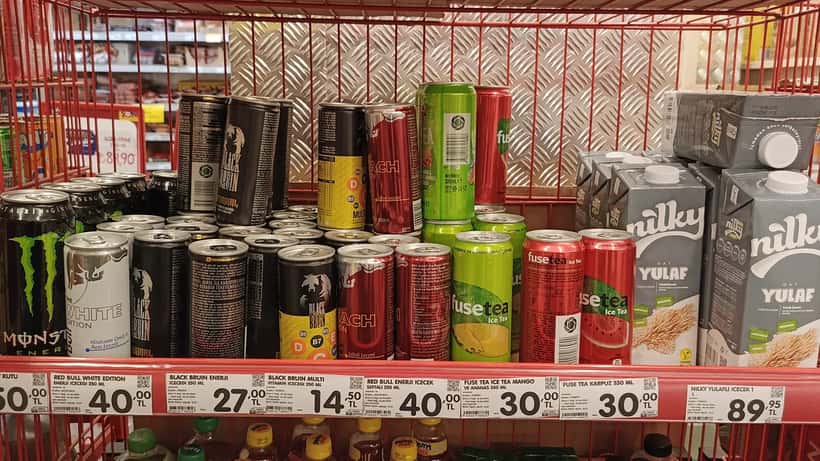
Products caught by the threshold are those that have dominated youth culture for the past several years. Prime Energy, co-created by YouTubers KSI and Logan Paul, contains 140mg of caffeine per 250ml can — nearly double the 80mg in a standard Red Bull and more than four times the caffeine in a can of Coca-Cola (34mg per 330ml). Monster, Relentless, and similar high-caffeine formulas will also fall within the ban.
What is not included matters: tea, coffee, standard cola drinks, and other low-caffeine soft drinks fall outside the ban's scope. The threshold specifically targets the high-energy formats marketed aggressively to young people and fuelled in large part by social media and influencer culture.
The legislation fulfils a pledge made in Labour's 2024 general election manifesto. In a recent survey, 75% of the British public supported the ban — one of the highest approval ratings for any food and drink restriction measure in recent years.
The Science Behind the Concern
Public health researchers have identified a consistent pattern between regular energy drink consumption by children and a cluster of serious health effects. The evidence covers sleep disruption, increased anxiety, poor school-time concentration, and in more serious cases, cardiac arrhythmias in young people with undiagnosed or mild heart conditions who are consuming caffeine far above safe thresholds.
A single 500ml energy drink — the standard format for most brands — can deliver the caffeine equivalent of two standard cups of coffee. For a 12-year-old, whose body processes caffeine more slowly than an adult's and whose cardiovascular system is still developing, this creates a meaningfully different physiological response. According to NHS guidance on diet and nutrition for children, the safe caffeine threshold for adolescents is approximately 2.5mg per kilogram of body weight per day — meaning a 40kg child should consume no more than 100mg total. A single Prime Energy drink already exceeds that limit.
Up to one in three children in the UK currently drinks at least one energy drink per week, according to data cited by health campaigners. For many, the habit is daily — tied to sports performance, late-night gaming, or social identity within peer groups.
A Real Scenario: What This Looks Like in Practice
Take a 14-year-old boy weighing 45kg. He has been drinking one 500ml Monster Energy per day for six months — a habit that started after several friends in his school football team began doing the same. At 160mg of caffeine per 500ml can, he is consuming 42% above his recommended safe daily maximum of 112.5mg, every single day.
Over those six months, his parents have noticed he is increasingly difficult to settle at night, his performance in early morning classes has slipped, and he has complained of heart pounding during training sessions twice in the past month.
Here is the critical if/then: if a child is consuming energy drinks daily at above-threshold levels and showing symptoms of sleep disruption, anxiety, or cardiac irregularity, then waiting for the 2027 law is not a medically safe strategy. The law restricts supply — it does not address the health consequences already building in children who have been regularly consuming these products for months or years.
A GP or paediatrician who knows about the energy drink consumption can make an accurate assessment. Without that disclosure, they may attribute the palpitations to over-exertion on the pitch or the poor sleep to exam stress. The energy drink habit is medically relevant information — and most parents do not mention it during GP visits because they do not know to.
If the palpitations are recurring, an ECG referral may be appropriate. If the anxiety is significant, a GP specialising in adolescent health can advise on whether a graduated caffeine reduction is needed and at what pace. Stopping abruptly after months of daily consumption can itself cause withdrawal headaches and fatigue for three to five days — a gradual step-down approach is clinically preferable.
What Retailers, Schools and Clubs Must Do
The government has placed enforcement responsibility on local authorities, with retailers themselves responsible for age verification at the point of sale — the same model as alcohol and tobacco. Businesses that fail to check ID and sell to an under-16 face the £2,500 fine.
Many UK secondary schools have already acted ahead of the law. Prime was banned from school canteens and vending machines in significant numbers of institutions as early as 2023, following its rapid rise in popularity among 11-to-15-year-olds. Youth sports clubs and after-school programs that currently serve or allow energy drinks at under-16 events will need to review their policies before April 2027 to avoid liability.
Online retailers will be required to verify age before completing a sale — extending the ban meaningfully beyond physical retail. This goes further than previous voluntary industry agreements, which health charities had criticised as inconsistently applied and poorly enforced.
The law applies to England. Scotland, Wales, and Northern Ireland are pursuing equivalent legislation separately, with the Scottish Parliament having already signalled support for a mirroring measure.
This legislative pattern — restricting access to stimulant or habit-forming products specifically marketed to young people — is one the UK government has pursued consistently. Comparable restrictions have recently been enacted around vaping and tobacco access for young people; you can read more about how those rules affect families in the UK tobacco and vaping ban for under-16s. The debate around digital platforms follows similar logic, with age-gating becoming an increasingly common legal tool — see the TikTok under-16 social media age restriction discussion.
What Parents Should Do Before April 2027
Health professionals are clear that the ban's April 2027 start date is not a reason to delay action. Three practical steps apply right now:
Establish what your child is actually consuming. Labels are often deceptive — manufacturers list servings as 250ml when the packaging is 500ml. Read the total can, not the per-serving figures. If your child is consuming one 500ml drink per day of a product above the 150mg/l threshold, they are exceeding safe daily caffeine limits.
Consult a GP if symptoms are already present. Heart palpitations, persistent difficulty sleeping, significant anxiety, or recurring headaches in a child who regularly drinks energy drinks is a reason to book an appointment now, not in eighteen months. Mention the energy drink habit explicitly — it may be the most relevant clinical fact in the consultation.
Get expert guidance on alternatives for young athletes. Many young people have started using energy drinks for pre-match energy or post-training recovery. A sports nutritionist or paediatric GP can advise on what actually works at that age — and what does not carry the same cardiovascular risk profile.
ExpertZoom connects UK families with qualified health professionals including GPs, paediatricians, and registered nutritionists for online consultations. If you are unsure whether your child's energy drink habit has already created a medical concern, speaking with a qualified professional is faster and more reliable than piecing together advice from product labels or social media.
YMYL disclaimer: This article is for general informational purposes only and does not constitute medical advice. If you have concerns about your child's health, please consult a qualified healthcare professional.
