 Eleanor Vaughan
Three fishermen set out from the Isle of Lewis on the night of Tuesday 13 October 2026. By 21:20, HM Coastguard had received the call no one wants to make: the vessel was overdue, with three men aboard, last reported off Port of Ness at the northern tip of Lewis. By early Wednesday morning, the body of one man had been recovered from storm-lashed waters. Two crew members remain missing as coastguard helicopters, RNLI lifeboats, and rescue teams battle gusts of up to 70 mph across the Outer Hebrides.
It is a tragedy that strikes at the heart of one of Scotland's most resilient coastal communities — and one that raises urgent legal questions that fishing families rarely know to ask in time.
A Disaster Off the Northern Tip of Lewis
The response was one of the largest search-and-rescue operations seen in the region in years. A coastguard aeroplane, two coastguard helicopters, six rescue teams, two RNLI lifeboats, a local vessel, and Police Scotland all mobilised through the night. Flights between the mainland and the Outer Hebrides were cancelled as an Atlantic storm drove winds to dangerous levels across the Minch.
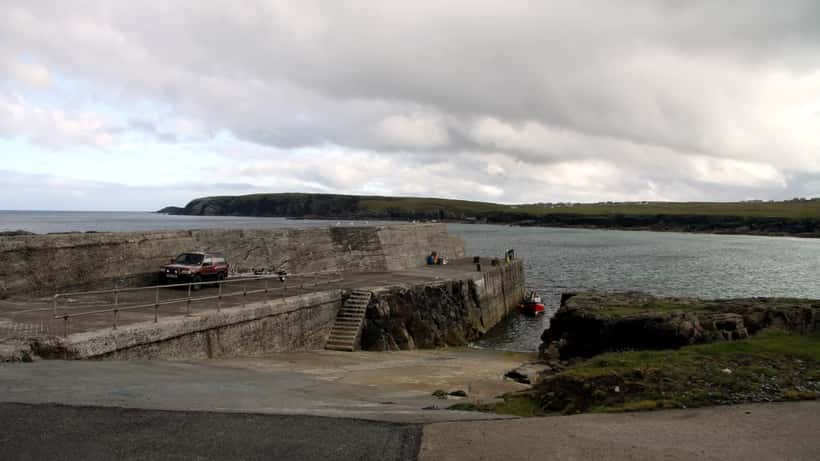
The vessel had last been reported from the Port of Ness area — a centuries-old harbour community at the northernmost tip of Lewis, where fishing remains central to local life. As of 14 October 2026, the cause of the sinking remains unknown. Police Scotland confirmed the recovery of one body at around 02:45 on Wednesday morning; formal identification had not yet taken place. Two men remain unaccounted for.
The Marine Accident Investigation Branch (MAIB), the independent body responsible for investigating UK maritime accidents, is expected to open a formal inquiry. Under its statutory powers, the MAIB will collect vessel records, communications logs, and equipment inspection histories — all documents that could later prove critical in any legal proceedings.
For families facing this kind of loss, the legal landscape can feel impossibly remote. It should not. UK maritime law contains robust protections for fishing crew — but those protections only activate if families act promptly.
When the Sea is a Workplace: The Legal Framework That Applies
Fishing is statistically the most dangerous occupation in the United Kingdom. The Health and Safety Executive records a fatal injury rate for commercial fishers approximately 50 times the national average across all sectors. Despite this, the legal rights of fishing families in the aftermath of a fatality are poorly understood, even within the communities most affected.
Three frameworks converge when a fisher dies at sea:
Employer liability and duty of care. Whether crew work under a formal employment contract or a share-fishing agreement, the vessel owner has obligations under the Health and Safety at Work Act 1974 and the Merchant Shipping and Fishing Vessels (Health and Safety at Work) Regulations 1997. If the vessel was not properly maintained, lacked required safety equipment, or was operated outside its certificated area in foreseeable storm conditions, a civil negligence claim is available.
Fatal Accident Inquiry (Scotland). In Scotland, workplace deaths — including those at sea — trigger a mandatory FAI under the Inquiries into Fatal Accidents and Sudden Deaths etc. (Scotland) Act 2016. The Procurator Fiscal investigates to establish cause, circumstances, and what, if anything, could have prevented the death. Families have the right to legal representation at an FAI, and legal aid may be available.
MAIB investigation. The MAIB's findings are published publicly, typically within 60 days for a preliminary report. Critically, MAIB reports are non-attributive — they do not assign legal blame — but their factual findings about equipment condition, regulatory compliance, and crew actions are routinely used as evidence in civil compensation claims. As illustrated in the aftermath of earlier UK maritime disasters, including the 2024 Bayesian superyacht sinking off Sicily, early legal engagement with MAIB findings can significantly strengthen a family's position.
A Concrete Case: What a Lewis Fishing Family Could Claim
Consider the situation of a 36-year-old crewman from Stornoway — a share-fisher, technically self-employed, earning approximately £27,000 a year from a small inshore vessel under a standard share agreement. He has a wife and two children under ten.
Share-fishing status matters here. Unlike an employee, a share-fisher cannot bring a claim directly under the Employer's Liability (Compulsory Insurance) Act 1969. However, the route to compensation is not closed — it is simply different. If the vessel owner failed to maintain mandatory safety equipment (an EPIRB emergency beacon, a life raft certified for the operating area, adequate flares), or if the vessel operated beyond its certificated weather limits, a common-law negligence claim is fully available regardless of employment status.
If negligence is established, the family's position is as follows:
- Loss of dependency: Under the Damages (Scotland) Act 2011, the court applies a dependency multiplier — typically two-thirds of net income for a surviving spouse with children — giving an annual loss figure of approximately £18,000. Applying Ogden Table actuarial discounts over a projected remaining working life of 31 years (to age 67), the resulting lump-sum claim falls in the range of £290,000–£410,000, depending on the discount rate set by the court.
- Bereavement awards: The spouse is entitled to a non-economic award of £14,200 under the 2011 Act. Each child under 18 at the date of death is entitled to a further award of £10,900.
- RIDDOR reporting failure: Any death in the workplace — including at sea — must be reported under the Reporting of Injuries, Diseases and Dangerous Occurrences Regulations 2013. Failure to report is itself a criminal offence, and a solicitor instructed early can ensure this obligation is enforced.
The threshold question in every case is whether the owner discharged their duty of care. A maritime solicitor reviewing vessel inspection records and the MAIB preliminary report can typically assess this within weeks — and often before the FAI process reaches its conclusion.
Scotland's Fatal Accident Inquiry: What Families Should Expect
The FAI process is unfamiliar to most families — and can feel intimidating at a time when grief is overwhelming. Understanding the timeline matters.
Following a referral from Police Scotland, the Procurator Fiscal will gather evidence over a period of months, potentially up to two years in complex maritime cases. The sheriff hearing the inquiry will establish the cause and circumstances of death and issue findings, including any recommendations to prevent future incidents.
Families are entitled to apply for civil legal aid to fund representation at the inquiry. The Scottish Legal Aid Board's means test is set at a level that accommodates many fishing families. Representation at an FAI does two things: it ensures the family's perspective is heard in the factual record, and it builds an evidentiary foundation for any parallel civil claim.
Crucially, the FAI and civil proceedings run concurrently. A family does not have to wait for an FAI conclusion before instructing a solicitor to pursue compensation — and in most cases, waiting is actively harmful.
The Window That Closes: Why Early Legal Action Matters
Maritime law solicitors specialising in fishing casualties report a consistent pattern: families in tight-knit island communities instinctively delay before seeking legal help. The impulse is understandable. But the practical consequences can be severe.
Scotland's limitation period for personal injury and fatal accident claims is three years from the date of death (or the date of knowledge of the cause of action). That window can feel remote in the immediate aftermath of a tragedy. It is not.
More urgently, vessel inspection records, crew agreements, and equipment maintenance logs can be difficult to recover once an investigation enters its formal bureaucratic phase. A solicitor instructed in the weeks following an incident can apply for a court order to preserve evidence before it is lost or overwritten.
The UK government's fishing vessel safety guidance, available at gov.uk/fishing-vessel-safety, sets out the minimum safety equipment required for vessels operating in UK waters — including emergency position-indicating radio beacons (EPIRBs), life rafts, and VHF communications equipment. These requirements define the legal baseline against which a duty-of-care argument is measured. If a vessel was not compliant with those requirements at the time of the incident, that non-compliance is potentially actionable.
What to Do If Your Family Has Been Affected
If you are connected to the crew of the vessel reported missing off Lewis, or if you face a similar situation in the future, four steps are worth taking as soon as circumstances allow:
- Instruct a maritime law solicitor with specific experience in fishing vessel fatalities. General personal injury practitioners rarely carry the admiralty law expertise these cases require.
- Request vessel documentation — the fishing licence, MCA certificate of registry, safety survey records, and any crewing agreement — while investigation files are still active.
- Register interest with the MAIB inquiry and request copies of interim reports as they are issued.
- Apply for FAI legal aid through the Scottish Legal Aid Board at the earliest opportunity. The threshold is means-tested but is frequently met by fishing families.
The waters off Port of Ness are among the most unforgiving in British waters. The families of those who work them deserve to know, in the worst of circumstances, that the law stands ready to fight alongside them. Consulting a specialist maritime solicitor is the first step in making that happen.
This article provides general information about UK maritime law and is not legal advice. If you or your family have been affected by a maritime incident, you should consult a qualified maritime law solicitor to obtain advice specific to your situation.
