 Eleanor Stone
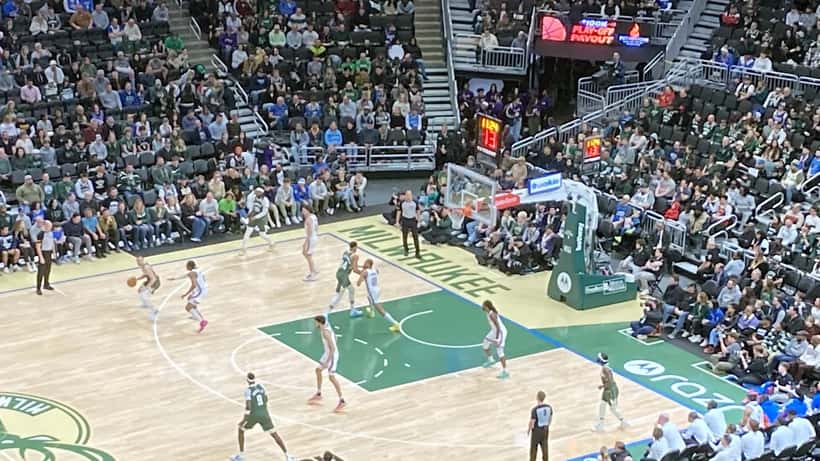
Oklahoma City Thunder's bench demolished San Antonio Spurs reserves 76-23 in Game 3 of the 2026 Western Conference Finals on 22 May. Jared McCain scored 24 points and Jaylin Williams added 18, propelling OKC to a 123-108 victory and a 2-1 series lead. For UK sports fans watching from afar, their performances raised a question rarely asked: what actually protects these bench players when their breakout moment transforms their market value overnight?
From Minimum Contracts to Maximum Impact
Jared McCain and Jaylin Williams are both on rookie-scale contracts — among the cheapest in the NBA. Yet in a single playoff game, they outperformed the entire opposition bench. In sports law, this creates what lawyers call the restricted free agency dilemma: the player has demonstrated star potential, but the team retains the right to match any outside offer.
Under NBA collective bargaining rules, restricted free agents can negotiate with any team at the end of their contract. However, their existing club holds the right of first refusal — meaning OKC can simply match any rival offer and retain the player at whatever price a competitor sets. For players like McCain and Williams, this effectively limits their negotiating power despite their on-court value.
UK sports professionals — from Premier League footballers to rugby professionals — face analogous constraints. In England's football pyramid, compensation frameworks between clubs govern whether a player can move freely. Understanding these mechanisms is exactly where sports lawyers become essential.
What Is Restricted Free Agency?
Restricted free agency is a legal mechanism that keeps players tied to their existing club during transition periods. In the NBA, it applies to players who have completed their first contract, typically two to four years. The key provisions are:
- The player can receive offers from other teams during the free agency window
- The existing club can match any offer, pound for pound
- If matched, the player must stay — or sit out the season without pay
- The club has a fixed window to decide whether to match
This balance between player freedom and club retention has been tested repeatedly in American courts. Several NBA players have challenged matching-rights clauses as anti-competitive under US antitrust law. Courts have consistently upheld the CBA framework, reinforcing that collective bargaining agreements take precedence over individual employment disputes in professional sport.
For UK audiences, the closest parallel is the solidarity mechanism in English football, governed by FIFA's Regulations on the Status and Transfer of Players. Any club seeking a contracted UK footballer must negotiate a transfer fee — or wait for contract expiry, at which point the player becomes a free agent and can negotiate directly.
The UK Legal Angle: Sports Contracts and Professional Advice
British sports professionals often discover contract complexities only when a dispute arises. The most common pressure points include the following.
Buyout clauses: Release clauses in UK football contracts can be triggered only under specific conditions. A clause that reads "£10m release fee" may exclude cup competitions or international appearances, leaving the player — or their agent — exposed when a transfer window opens.
Image rights: NBA stars increasingly negotiate separate image-rights agreements alongside their playing contracts. UK tax law treats image rights differently from salary, and HMRC guidance on sporting image rights is complex. Without specialist advice, athletes can face unexpected tax liabilities running into six figures.
Performance bonuses: Post-season bonuses that look straightforward on paper can become contentious when clauses are drafted ambiguously. When Jared McCain scored 24 points in a playoff game this week, his contract likely triggered performance clauses. The exact language determines whether a "playoff appearance" or "playoff performance" metric unlocks the bonus — a distinction that can mean thousands of pounds in equivalent UK contracts.
The ACAS guidance on employment contracts covers standard UK employment provisions, but sports-specific clauses require a qualified sports lawyer who understands both UK employment law and the relevant governing body's regulations.
OKC's Depth and the Business of Championship Teams
OKC Thunder's 2026 success is built on more than star power. Shai Gilgeous-Alexander's 26 points in Game 3 were expected from the two-time MVP candidate. The 76-23 bench advantage was not. General Manager Sam Presti has spent years building this squad depth through draft selections, two-way contracts, and careful roster management — all governed by intricate salary-cap rules.
For UK investors and business owners who follow sport, there is a lesson in OKC's approach: depth is an undervalued asset class. The Thunder's bench players collectively earn a fraction of what their combined playoff contributions are worth on the open market. Their contracts are, in effect, undervalued assets — a concept UK wealth managers recognise across sectors from commercial property to private equity.
How NBA player contracts work under UK employment law explored how star contracts interact with trade deadlines earlier this playoff season. OKC's bench situation is the mirror image: what happens when non-stars significantly over-deliver?
When Should a UK Sports Professional Consult a Lawyer?
Whether you are a semi-professional footballer in the National League or a full professional in the Premier League, there are four moments when legal advice pays for itself:
- Before signing any contract — not after. Clauses that appear standard may be club-favourable and disadvantage you when circumstances change.
- When your performance triggers a bonus clause — to ensure the club honours its contractual obligations fully.
- When a new club approaches you — to understand your rights and any obligations to your current employer before negotiations begin.
- When your contract approaches expiry — to maximise your position as a free agent and avoid a club-imposed qualifying offer that undervalues your contribution.
OKC's bench stars Jared McCain and Jaylin Williams will both face these decisions in the coming months. Their agents will have already briefed sports lawyers on optimal negotiating strategy before free agency opens in July.
UK sports professionals can access equivalent expertise. What Wembanyama's disputed goaltends reveal about sports dispute resolution examined how professional sport handles contested decisions — another area where specialist legal advice proves invaluable for athletes at all levels.
Take Action Before the Off-Season
The NBA off-season begins in July. For restricted free agents, every day from the end of the Finals to the opening of free agency matters. Agents are already modelling contract scenarios, clubs are assessing cap space, and players are preparing their cases for maximum value in what will be one of the most competitive free agency markets in years.
In UK football, the equivalent window opens in June. If you are a sports professional navigating an upcoming contract decision — or a business owner dealing with complex employment agreements — now is the time to understand your legal position clearly. A qualified sports lawyer can review your current contract, explain your rights under UK and governing-body law, and help you plan your next move with confidence.
