 John Green
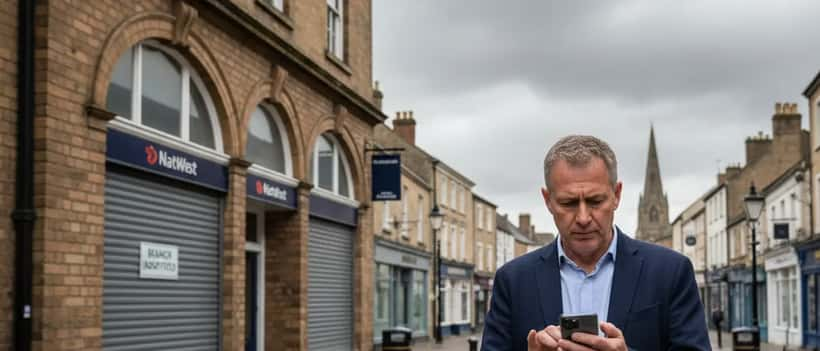
NatWest has confirmed 32 additional branch closures across the United Kingdom in 2026, as the bank accelerates its pivot toward digital banking. The announcement comes just weeks after NatWest raised mortgage rates by 15 basis points in early March 2026, tightening conditions for millions of existing and prospective homeowners. For customers who rely on in-person banking — particularly older adults, small business owners, and those in rural communities — these changes raise urgent questions about financial access and planning.
What Is NatWest Actually Doing in 2026?
The branch closures are part of NatWest's broader "Growing Together" strategy, which the bank unveiled at an event at 11 Downing Street with Chancellor Rachel Reeves on 10 March 2026. NatWest has pledged £10 billion in additional lending for first-time buyers and committed £2 billion to support UK exporters — but these headline numbers sit alongside a physical network that continues to shrink.
According to NatWest Group's own figures, the bank is also integrating with PEXA UK's digital property platform to speed up mortgage completions, and has sold its employment law and HR consultancy arm, Mentor, to Empowering People Group. The direction of travel is clear: fewer branches, more digital, more partnerships.
For most retail customers, the day-to-day banking experience will shift further online. For those unable or unwilling to make that transition, the impact could be significant — and the financial implications deserve careful attention.
The Mortgage Rate Rise: What It Means for You
The 15-basis-point increase NatWest applied in March 2026 to new business and remortgage products may seem small in percentage terms, but the real-world effect is concrete. On a £250,000 repayment mortgage with a 25-year term, a 0.15% rate increase adds approximately £19 per month — or £228 per year — to monthly repayments, depending on the product type.
More importantly, the broader UK mortgage landscape is under pressure. The Bank of England has held the base rate at 3.75%, but swap rates — which lenders use to price fixed-rate deals — have been rising, and NatWest is not alone in passing those costs on to borrowers. According to data from UK Finance, around 800,000 UK homeowners face fixed-rate deal renewals in 2026, many of whom secured deals at much lower rates in 2020–2021.
This means a significant proportion of UK homeowners will be refinancing into materially higher rates this year — often without adequate professional guidance on the options available to them.
When Should You Speak to a Financial Adviser?
A common misconception is that financial advisers are only for the wealthy. In reality, independent financial advice is most valuable precisely at moments of change — when a mortgage is due for renewal, when banking services are disrupted, or when you're reassessing how your money is managed.
Situations where a financial adviser can add immediate value:
- Your fixed-rate mortgage deal expires within the next 12 months and you want to compare the market comprehensively
- Your NatWest branch has closed and you're reconsidering your banking arrangements
- You're a first-time buyer navigating NatWest's £10 billion lending commitment and want to understand your options independently
- You're a small business owner whose banking relationship is changing due to branch closures
- You're uncertain whether your savings are in the most appropriate accounts given current interest rate conditions
A qualified independent financial adviser, regulated by the Financial Conduct Authority (FCA), is legally required to act in your interest — not in the interest of any particular bank or product provider. This distinction matters when the big banks are actively pushing customers toward digital-only services.
Digital Banking: Opportunity or Risk?
NatWest's integration with PEXA UK is a genuinely positive development for property transactions — digital completion of remortgages could reduce the process from weeks to days. For tech-comfortable customers, the bank's digital capabilities are improving.
However, the shift away from branches creates practical and security risks that a financial adviser or IT security expert can help you navigate. Banking fraud losses in the UK reached over £1.2 billion in 2024 according to UK Finance data, with digital channels accounting for the majority of fraud incidents. As more banking moves online, understanding how to protect your accounts becomes a genuine priority.
For older customers, those with disabilities, or anyone who relies on cash transactions, the branch closures represent a real loss of access — not just an inconvenience. The FCA has issued guidance requiring banks to consider the impact of closures on vulnerable customers, but enforcement remains inconsistent.
What a Financial Expert Can Do for You Now
Whether you're reviewing your mortgage, reassessing your savings strategy in a higher-rate environment, or simply trying to understand whether your current banking arrangements still make sense, the value of independent guidance is hard to overstate.
Expert Zoom connects you with qualified financial advisers and wealth management specialists who can assess your specific situation without the institutional bias of a high-street bank. A consultation can clarify your options on mortgages, savings, investments, and banking products — quickly, online, and on your schedule.
The big banks will continue to evolve in ways that suit their balance sheets. Getting independent advice ensures that the changes they make also work for you.
Disclaimer: This article is for informational purposes only and does not constitute financial advice. Always consult a regulated financial adviser before making financial decisions.
