 Sophie Robinson
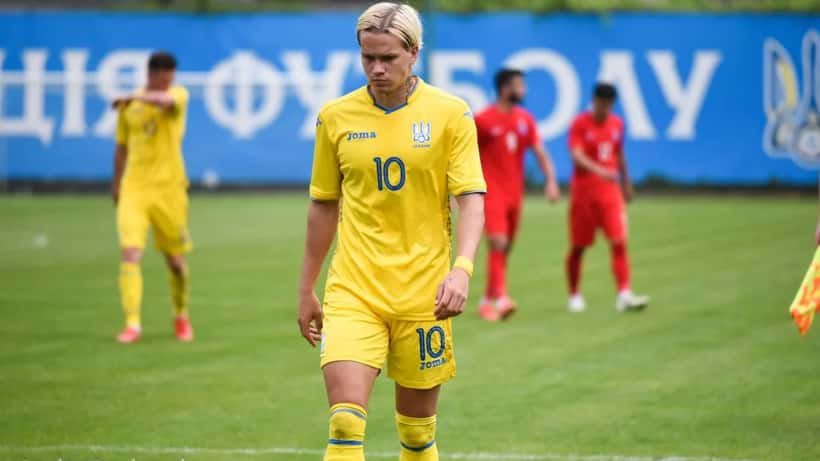
Mykhailo Mudryk's four-year doping ban was lifted on 30 July 2026 after the FA, WADA and the Chelsea winger reached a negotiated agreement — allowing him to return to competitive football immediately after 20 months on the sidelines. The resolution, triggered by a change to WADA's meldonium detection thresholds, raises urgent questions about how anti-doping law actually works and what any athlete — from Premier League stars to Sunday league players — can do when a positive test changes their life overnight.
What Happened and Why the Ban Was Dropped
Mudryk's case began on 22 October 2024, when an out-of-competition doping test detected a low concentration of meldonium — a substance commonly used in Eastern Europe to treat heart conditions and improve blood flow. The FA notified him of the finding on 4 December 2024 and immediately imposed a provisional suspension. A Regulatory Commission subsequently found that Mudryk had committed anti-doping rule violations (ADRVs) and imposed the maximum four-year period of ineligibility.
In April 2026, Mudryk lodged a formal appeal to the Court of Arbitration for Sport (CAS) in Lausanne — the supreme tribunal for international sports disputes. The appeal did not conclude via a full CAS hearing. Instead, the parties — the FA, Mudryk and WADA — reached a negotiated resolution on 30 July 2026, confirmed by the FA in an official statement published the same day.
The key to the resolution was a change to WADA's Technical Document TD2027MRL, which revised the minimum reporting level for meldonium in urine. Under the new threshold, the concentration detected in Mudryk's October 2024 sample would not have been reported as an ADRV if the sample were collected today. The parties agreed that, while this document is not retroactive, it provided sufficient basis to treat the period already served — approximately 20 months — as the full ineligibility term. Mudryk accepted that he had committed the rule violations as charged; he was not exonerated. But the science moved in his favour, and the law followed.
Meldonium: A Substance That Changed the Rules Once Before
This is not the first time meldonium has upended anti-doping enforcement. When WADA added meldonium to the prohibited list in January 2016, more than 170 athletes tested positive in the first months — many of them from former Soviet states where the drug is used medicinally and was not yet on the radar. Tennis player Maria Sharapova served a 15-month ban. WADA subsequently acknowledged that existing concentrations could remain detectable in urine for months after the drug was discontinued, and adjusted its guidelines.
In Mudryk's case, the substance was present at a low concentration consistent with historical or inadvertent exposure rather than performance enhancement. That distinction — between intentional doping and a technical positive — sits at the heart of anti-doping law, and it is where sports lawyers earn their fees.
The FA has confirmed that changes to the technical document, while not retroactive, demonstrate that the regulatory science underpinning the original charge has shifted materially. This is a legally significant concession. It means that the four-year sanction, while technically correct at the time it was issued, became difficult to defend on proportionality grounds before CAS.
How CAS Appeals Work — and Why They Are Not Just for Millionaires
The Court of Arbitration for Sport operates independently of national football associations and is the final arbiter in disputes involving international athletes. Any athlete charged with an ADRV by their national governing body has the right to appeal to CAS — but the window is narrow.
Under WADA's World Anti-Doping Code, adopted by the FA and all major sports bodies, an athlete must lodge a CAS appeal within 21 days of being notified of the Regulatory Commission's decision. Miss that deadline and the right of appeal is extinguished. There is no automatic extension for delay, financial hardship or lack of legal representation.
Critically, CAS jurisdiction is not limited to elite athletes. Any person subject to an anti-doping programme run by a WADA signatory — which includes virtually every national governing body in the UK — can appeal to CAS. An amateur cyclist, a masters swimmer, a university rugby player who tests positive under their federation's programme: all have the right to bring a CAS case. The practical obstacle is cost. A full CAS arbitration can cost between £50,000 and £150,000 once legal fees, arbitrator fees and translation costs are factored in. CAS does operate an ad hoc procedure for athletes of limited means, but access is not guaranteed, and the process is complex.
This is why early legal advice — within days of receiving a provisional suspension notice, not weeks — is critical.
Concrete Case: What If This Happened to a Semi-Pro Footballer in Sheffield?
Consider a 28-year-old semi-professional midfielder playing in the Northern Premier League. He takes a licensed supplement — a pre-workout product bought on Amazon — that contains a trace of a WADA-prohibited compound. He is tested after a Tuesday night match in February 2026. In April he receives a letter from the Football Association informing him of a positive finding and a provisional suspension.
Under the FA's anti-doping rules, he has 10 days to request a B-sample analysis and 14 days to respond to the charge. The Regulatory Commission hearing is scheduled for June. Without legal representation, he goes in alone, cannot effectively argue the source of the contamination, and receives a two-year ban.
He had 21 days from the date of the Commission's decision to appeal to CAS — but did not know this. The deadline passed. His appeal right is gone.
Had he consulted a sports law solicitor within 48 hours of receiving the original notice — before the hearing, not after — the outcome could have been different. A lawyer would have identified that the supplement in question had already been the subject of a contamination finding reported to Informed Sport (a third-party certification scheme). That evidence, submitted before the Commission, could have reduced the sanction to a reprimand or a six-month ban under Article 10.6 of the WADA Code, which provides for reduced sanctions where the athlete establishes no significant fault or negligence.
The financial stakes are real: a two-year ban for a semi-professional player earning £500 per week equates to approximately £52,000 in lost wages, plus the cost of the legal fight he didn't make. An early consultation with a sports lawyer — typically £200–£400 per hour — is a small outlay against that exposure.
What Any Athlete Should Do in the First 72 Hours After a Positive Test
Anti-doping cases move faster than most athletes expect. The provisional suspension can arrive within days of the notification letter, and every deadline that follows is strict. The steps that matter most happen before most players think to pick up the phone to a lawyer.
First, do not make any public statement. Anything said on social media or to a journalist before legal advice is taken can be used to undermine a future defence — particularly any admission about supplement use, travel or medical history.
Second, secure all supplement packaging, purchase records and medical prescriptions from the period in question. Chain of custody matters in anti-doping hearings. If you cannot account for every substance in your body at the time of the test, proving no significant fault becomes harder.
Third, request the B-sample analysis immediately. This must be done within 10 days of notification. The B-sample test is a safeguard, not a formality — there have been cases where B-sample results have differed from the A-sample, raising procedural issues.
Fourth — and most importantly — find a sports law solicitor with anti-doping experience, not a general practitioner. Anti-doping law is a specialist field. The WADA Code has 25 articles and multiple technical documents that interact in non-obvious ways. The meldonium threshold change that freed Mudryk was buried in a WADA Technical Document that most general practitioners would never know to look for.
Internal resources like FIFA appeal rights in disciplinary proceedings and career ban disciplinary rights for footballers provide useful context, but every doping case is fact-specific. A sports lawyer on ExpertZoom can advise within hours — often the difference between a suspended sentence and a career-ending ban.
The Mudryk case is not a story about guilt or innocence. It is a story about how anti-doping law, applied at its technical edges, can destroy careers on concentrations that the same science later decides were too small to matter. That is not an injustice unique to Premier League footballers. It happens at every level of sport — and it is almost always survivable with the right legal advice, taken soon enough.
This article is for informational purposes only and does not constitute legal advice. Anti-doping proceedings are governed by specific rules that vary by sport and governing body. If you have received a provisional suspension or anti-doping charge, consult a qualified sports law solicitor immediately.
