 Amelia Ward
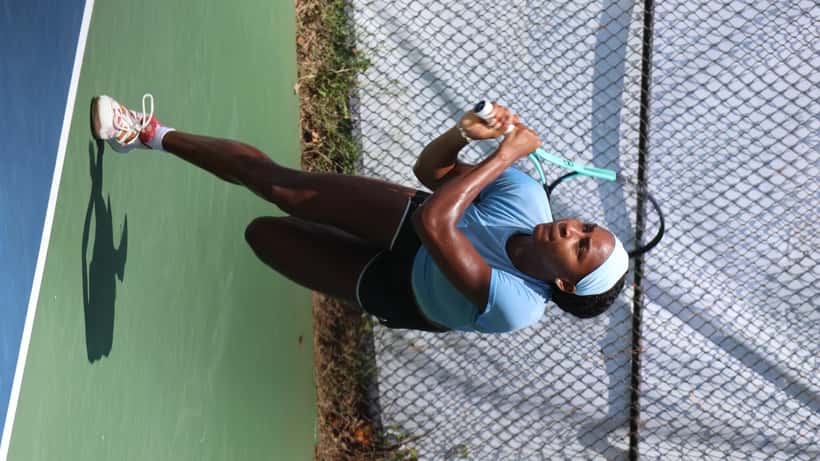
World number four Coco Gauff arrived at the 2026 Miami Open this week with one mission: play through the fear. At the BNP Paribas Open in Indian Wells just days earlier, on 15 March 2026, she was forced to retire mid-match after her arm went from "a firework going off" to "the whole arm being on fire." An MRI scan confirmed she could safely return to competition. But her experience — and the way she has managed it — carries important lessons for the millions of amateur tennis players who push through pain without ever speaking to a sports medicine specialist.
What happened to Coco Gauff at Indian Wells
Gauff, 21, is no stranger to pressure, but the nerve issue that forced her retirement at Indian Wells was sudden and severe. In her own words to the press ahead of Miami, the initial sensation was that of a firework exploding in her arm — followed by a spreading burning pain across the entire limb. She described feeling "complete shutdown" of function.
The MRI conducted in the days following her withdrawal showed no structural damage that would prevent competition, but the nerve symptoms were real and significant. Gauff confirmed the pain had "improved a lot" by the time she arrived in Miami for the tournament beginning this week, where she has a first-round bye as the fourth seed and faces Elisabetta Cocciaretto in the second round. She has described Miami as a "bucket list" tournament — having never advanced past the fourth round in six previous appearances — which adds emotional weight to her decision to compete.
What is a nerve injury in tennis and why does it matter?
The arm is richly innervated: three major nerve trunks — the median, ulnar, and radial nerves — run from the neck and shoulder all the way to the fingertips. In tennis, particularly the serving motion and overhead smash, these nerves are subjected to sudden traction, compression, and rotational forces that can irritate or inflame them. The condition is known as neurogenic arm pain or, when it involves the brachial plexus (the nerve network at the shoulder), brachial neuritis.
Symptoms typically include:
- Sudden sharp or burning pain that radiates down the arm
- Numbness or tingling in the hand or fingers
- Weakness in grip or shoulder rotation
- Pain that worsens with specific movements (serving, backhand, reaching overhead)
The critical point is that nerve injuries do not always show up on standard X-rays or even routine MRI scans — which is why many amateur players who experience these symptoms assume they have a muscle strain and continue playing, often making the injury significantly worse.
The amateur tennis risk: why you're more vulnerable than you think
Elite players like Gauff have biomechanical coaches, physiotherapists on-site, and immediate access to MRI scanning. The average club tennis player does not. Studies published in the British Journal of Sports Medicine have found that amateur tennis players sustain upper limb injuries at rates comparable to semi-professional athletes — but are far less likely to seek timely professional assessment.
The most common errors amateur players make when experiencing arm pain:
Ignoring the early warning signs. A tingling sensation after a long session, or mild weakness the morning after playing, is often dismissed as fatigue. These can be early signs of nerve compression or repetitive strain that will worsen with continued play.
Self-diagnosing as tennis elbow. Lateral epicondylitis (tennis elbow) is genuinely common, but nerve-related pain is frequently misidentified as tennis elbow and treated incorrectly — with rest and anti-inflammatory cream — when the actual issue requires nerve-specific rehabilitation or even specialist assessment.
Returning too soon after symptoms resolve. Like Gauff, amateurs who feel better after a few days of rest may conclude the problem has gone. In reality, nerve irritation can recur with the same force-pattern that caused it, often with greater severity the second time.
When should you see a sports medicine specialist?
A useful rule of thumb from sports medicine practice: if arm pain changes how you move, seek advice before your next session.
Specific red flags that require prompt medical attention:
- Pain described as burning, electric, or radiating (rather than the dull ache of muscle soreness)
- Any numbness or loss of sensation in the hand or fingers after playing
- Noticeable weakness — for example, difficulty gripping the racket, opening jars, or typing after a session
- Pain that wakes you at night
- Symptoms that appear above the elbow rather than just at the elbow or wrist
A sports medicine doctor or physiotherapist specialising in upper limb conditions can assess nerve conduction, identify whether the issue originates in the neck, shoulder, elbow, or wrist, and provide a structured return-to-play plan that accounts for your specific game style and training load.
What Gauff's approach teaches us
Gauff's decision to get scanned before returning — rather than guessing whether she was ready — is exactly the right approach. She had access to a team that could make that call. Amateur players can access the same quality of advice through sports medicine consultants without needing a professional contract.
On Expert Zoom, you can connect with sports medicine doctors and physiotherapists for online consultations — getting expert guidance on arm pain, training modifications, and return-to-sport protocols without waiting weeks for an NHS referral or paying for unnecessary tests. If you play tennis regularly and have felt anything similar to what Gauff described, don't wait for your next painful match to act.
Disclaimer: This article is for general informational purposes and does not constitute medical advice. If you are experiencing acute arm pain, numbness, or weakness, seek prompt assessment from a qualified healthcare professional.
Sources: Sports Illustrated (March 2026); Tennis.com (March 2026); British Journal of Sports Medicine
