 Eleanor Vaughan
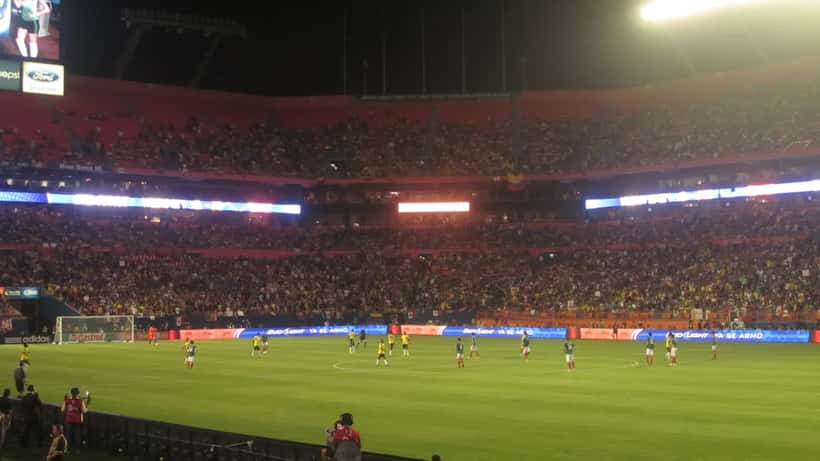
Colombia drew 1-1 with Mexico on Saturday, 26 September 2026, in front of a sold-out M&T Bank Stadium in Baltimore, Maryland. Luis Suarez opened the scoring in the first half before Gilberto Mora levelled for Rafael Márquez's side — the new Mexico head coach's first game in charge of the national team. The result will register as a footnote in both nations' football calendars. But for at least one English Premier League club, those ninety minutes in Maryland were watched with white-knuckled anxiety. Crystal Palace's Daniel Muñoz started the full match for Colombia. Every tackle he made, every sprint he attempted, represented a financial and legal liability his club was entirely powerless to prevent.
The Match That Put English Clubs on Edge
The Baltimore friendly sits within a wider September 2026 international window — the fourth break since the World Cup ended earlier this year. For the Premier League, these pauses have become a recurring source of frustration. Clubs surrender their best players to national associations for matches played in far-flung locations, under conditions they cannot inspect, with medical protocols they cannot control.
Márquez, appointed as Mexico's manager just weeks before the fixture, fielded a largely experimental squad in Maryland. Hirving Lozano, Jorge Sanchez and Johan Vasquez were among those named in the starting eleven, with Armando Gonzalez leading the attack. Colombia, meanwhile, selected from a group of players competing at the highest levels of European football — including several whose Premier League clubs will have followed proceedings in Baltimore with considerable apprehension.
Daniel Muñoz has established himself as one of Crystal Palace's most reliable performers since arriving from the Belgian league. At 28, he is at the peak of his powers and a player whom Palace would be reluctant to lose even for a short period. Saturday's Baltimore fixture was, from a contractual standpoint, entirely beyond the club's control. Under FIFA regulations, they were compelled to release him. The question is: what happens when things go wrong?
Why Clubs Cannot Simply Refuse to Release Players
Under FIFA's Regulations on the Status and Transfer of Players, which are reflected in The FA's player release policies, every professional club worldwide is obliged to release players called up by their national association, including for friendly matches and warm-up games. The obligation is categorical.
A club that withholds a player without proper medical certification risks sanctions from its national football association, an adverse FIFA ruling, and potentially domestic points deductions. The only recognised basis for refusal is where the player holds a medically verified injury preventing participation — a bar that is deliberately high, requiring formal documentation and club physician sign-off.
"Clubs frequently feel they should have more say over friendlies, particularly those played in North America or Asia after long-haul flights," says the prevailing view in UK sports law practice. "But FIFA's framework doesn't distinguish between a qualifier and a showpiece friendly. The release obligation applies equally."
This means that when the September window arrives, Premier League clubs lose control of players worth hundreds of millions on the transfer market — dispatching them to destinations and conditions about which they have no say whatsoever. The turf at M&T Bank Stadium, the travel fatigue from the transatlantic flight, the hydration protocols at the team hotel: all fall outside any English club's sphere of influence.
The FIFA Club Protection Programme: Gaps That Matter
FIFA does operate a Club Protection Programme designed to compensate clubs when players sustain injuries during official international fixtures. In theory, it provides salary-based financial cover while the injured player remains unavailable. In practice, the protection contains significant limitations that many UK clubs underestimate.
First, the programme only activates after 28 consecutive days of incapacity. A player who misses three weeks with a hamstring strain or a bruised rib falls entirely outside FIFA's coverage window — the club absorbs the salary cost without recourse. Second, the maximum compensation payable under the programme currently stands at €7.5 million per player per incident. For Premier League players with multi-year contracts and annual salary packages that approach or exceed this level, the gap between the FIFA payment and the club's actual financial exposure can be substantial. Third, the programme covers base salary only. Image rights payments, commercial partner obligations, squad performance bonuses, and loan replacement costs sit entirely outside its scope.
According to FIFA's own published figures, the Club Protection Programme paid approximately €18.7 million in total compensation across all participating competitions in the most recent reporting period. Divided across every eligible club and every level of professional football, this underlines how selective the programme's coverage genuinely is.
If Muñoz Had Been Stretchered Off: A Concrete Scenario
Consider a different version of Saturday in Baltimore. In the 67th minute, Daniel Muñoz lands awkwardly following a challenge and clutches his right knee. The scan confirms an anterior cruciate ligament tear — a standard recovery window of nine to twelve months.
If the injury had occurred as described, Crystal Palace would face the following picture immediately:
Muñoz earns a reported £45,000 per week at Palace. Over a nine-month absence — roughly 39 weeks — his salary alone would cost the club approximately £1.755 million. The FIFA Club Protection Programme would cover that salary, but only from day 29 of incapacity. Palace would carry the first four weeks entirely themselves: a direct cost of around £180,000 before the programme activates.
Beyond wages, Palace would face the market for a replacement right-back. Premier League loan fees for a comparable player typically range from £800,000 to £1.5 million for a full season — a cost the CPP does not address at all. Add in the loss of Muñoz's commercial contribution to Palace's regional marketing activities and the full financial impact moves well beyond two million pounds.
Now consider the same scenario if Palace had taken out a specialist supplemental insurance policy, as a growing number of top-flight clubs now do. Specialist sports insurers — primarily through Lloyd's of London syndicates — offer products that cover salary from day one, include loan replacement costs, and extend to image rights revenue. Annual premiums for a player of Muñoz's profile typically run to £30,000–£80,000 per year. Measured against a potential liability exceeding £2 million, that is a straightforward calculation. Without such a policy, Premier League clubs are accepting significant uninsured exposure every time an international window opens.
For existing Premier League articles on FIFA's enforcement framework during international tournaments, see also our earlier piece on the yellow card suspension rules that applied during Colombia's World Cup 2026 campaign.
What UK Clubs — and Players — Can Do Right Now
The legal landscape is not without options. Sports law solicitors in the UK can advise clubs across three distinct areas of protection that the FIFA framework alone does not provide.
Contractual clauses. Player contracts can include provisions governing how injuries sustained on international duty interact with bonus structures, commercial obligations and fitness return protocols. These clauses must align with FIFA's mandatory release rules — but they can substantially improve a club's position in the event of a dispute about a player's condition upon return. Poor drafting here creates its own liability.
Supplemental insurance. As noted above, the FIFA Club Protection Programme should be treated as a floor, not a ceiling. Clubs that have not reviewed their player insurance arrangements since the World Cup ended are carrying unnecessary risk heading into the autumn.
Medical documentation protocols. The only legal basis for refusing to release a player is a well-evidenced medical certificate demonstrating existing injury. Clubs that invest in robust pre-window fitness assessments — and document them properly — are better placed to invoke this exemption when it genuinely applies. Without documentation, any attempt to withhold a player will fail at the first FIFA challenge.
For individual players, the calculus is different but equally important. International duty obligations exist alongside your club contract, and disputes about fitness, workload or post-injury pay can arise from either direction. A sports law solicitor can review your contract and your obligations to both your national association and your club before a dispute develops.
The Baltimore result will be forgotten by Monday. But the legal and financial exposure it illustrates is live for every Premier League club with an international in their squad — and the November window is less than six weeks away.
This article is for informational purposes only and does not constitute legal advice. For guidance tailored to your specific situation, consult a qualified sports law solicitor.
