 Rebecca Taylor
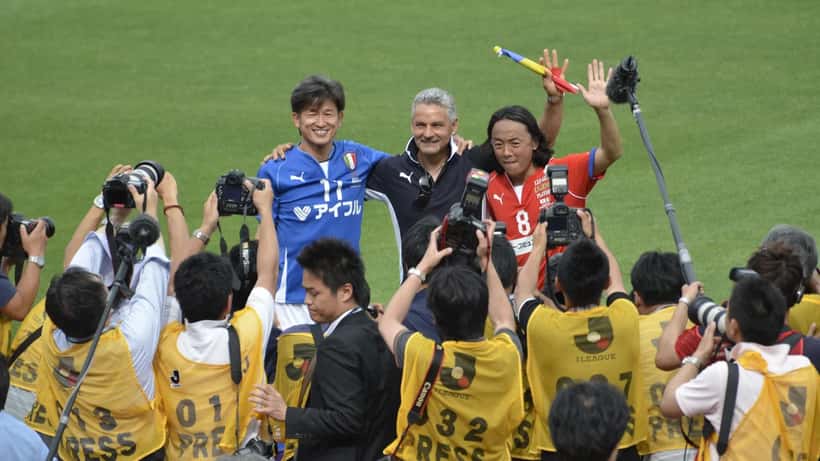
When Kazuyoshi Miura struck the ball into the net in the 52nd minute on Saturday 26 July 2026, the football world stopped to take notice. The goal — scored for Fukushima United in a 7-0 Emperor's Cup rout of Iwaki Furukawa — was his first competitive strike in nearly four years. Miura was 59 years old.
The world's oldest professional footballer, nicknamed "King Kazu", has spent four decades defying the logic of ageing. But his latest milestone raises a question that extends far beyond sport: what does it actually mean to maintain athletic capability into your late 50s and early 60s, and when should the rest of us — weekend footballers, recreational runners, gym regulars — be seeking professional health guidance to do the same?
Health notice: this article discusses exercise, cardiac health and ageing. It is intended for information purposes only and does not constitute medical advice. Consult a qualified health professional before changing your exercise routine, especially if you have any existing health conditions.
The Numbers Behind the Legend
Kazuyoshi Miura began his professional career in 1986, the same year Halley's Comet made its most recent appearance. He is currently in his 42nd professional season, playing on loan from Yokohama FC for third-division Fukushima United. His contract has been extended through June 2027 — meaning Miura will still be a contracted professional footballer well into his 60s.
The records are mounting at an unusual pace. On 19 April 2026, Miura set a J-League record as the oldest player to appear in an official match, at 59 years, 1 month and 24 days. His previous competitive goal came in November 2022 for Suzuka PG — a gap of approximately 44 months before Saturday's strike. In those four years, he continued training, continued competing, and continued drawing fans across Japan and beyond.
These are not merely impressive statistics. They represent a physiological puzzle that sports medicine researchers worldwide are actively studying.
What Sports Science Actually Says About Ageing After 50
The dominant view in exercise physiology has long held that elite athletic performance peaks between the ages of 25 and 35, then declines steadily. Muscle mass decreases by roughly 3–8% per decade after 30, a process known as sarcopenia. Cardiovascular efficiency, reaction time, and recovery speed all follow similar downward trajectories.
Yet Miura's case — and a growing body of research on so-called "master athletes" — challenges the steepness of that decline. Studies published in the Journal of Ageing and Physical Activity have found that master athletes aged 50–69 who maintain structured training retain substantially more fast-twitch muscle fibre than age-matched sedentary adults, and show significantly slower functional decline. The key variables are consistency, recovery management, and — critically — professional oversight.
NHS physical activity guidelines for older adults recommend at least 150 minutes of moderate aerobic activity per week, combined with muscle-strengthening exercises on two or more days. But elite longevity like Miura's goes far beyond these baselines. It typically involves bespoke programming: nutritional monitoring, physiotherapy, cardiovascular screening, and joint health assessments, all coordinated by specialists who understand how ageing bodies respond differently to load, stress and recovery.
Miura reportedly trains twice daily under a regime adapted specifically for his recovery profile at 59. That personalisation is not incidental to his career longevity — it is arguably the primary mechanism behind it.
The Real Risks of Going It Alone Past 50
For the millions inspired by Miura to push their own athletic limits, that inspiration is valuable. The caution is equally important.
Amateur athletes in their 50s face a physiological risk profile fundamentally different from those in their 30s. Cardiac events during exertion are significantly more common in men over 50, accounting for the majority of exercise-related deaths in the UK. Tendon injuries take substantially longer to heal and carry a higher re-injury rate. Bone density loss means that a stumble which would be trivial at 35 can result in a serious fracture at 58.
The deeper problem is that many recreational athletes significantly overestimate how well they know their own body's limits — and many GPs, while excellent at general health, are not trained to design sport-specific programmes for older patients. That is precisely the gap that sports medicine specialists, physiotherapists, and sports cardiologists exist to fill.
A comprehensive health consultation for an older active adult typically covers: a resting and exercise ECG to screen for cardiac arrhythmia, a VO2 max or functional threshold assessment, joint mobility and stability screening (particularly hips, knees, and lumbar spine), blood biomarkers including inflammatory markers and vitamin D levels, and personalised training load guidance. NHS referrals are available through a GP, though private sports medicine clinics across the UK offer faster access and more sport-specific expertise.
The 56-Year-Old Who Feels Fine — But Shouldn't Wait
Consider this scenario: a 56-year-old man who has played Sunday league football for two decades, trains twice a week, and considers himself fit — but has noticed over the past three months that it now takes four to five days to fully recover after a match, rather than two. He also experienced mild chest tightness during a warm-up in June 2026 that passed after he stopped to rest.
Under current NICE clinical guidelines, unexplained chest tightness during exertion in any adult over 40 warrants a cardiac assessment — regardless of how fit that individual feels or how quickly the symptom resolved. A standard assessment includes a 12-lead ECG, blood pressure monitoring, and potentially an echocardiogram. If an underlying arrhythmia or structural issue is detected, appropriate management can begin immediately. If the heart is structurally clear, the consultation provides confidence that is itself clinically useful.
The recovery time shift is equally informative. Moving from 48-hour to 96–120-hour recovery after moderate exertion at age 56 is a measurable physiological signal. It may indicate elevated systemic inflammation, hormonal changes affecting muscle repair, or sub-optimal sleep quality — all of which are addressable with targeted expert guidance.
Here is the if/then logic that applies: if this individual gets a full health assessment and receives a tailored training programme, he can realistically continue playing competitive Sunday league football into his late 60s — much as Miura does at 59 through managed rather than improvised physical maintenance. If he continues pushing through without assessment, the probability of a preventable injury or cardiac event over the next five years increases materially, according to British Heart Foundation data on exercise-related cardiac incidents in men over 50.
Cost context: a private sports medicine consultation in the UK typically ranges from £120 to £250 for an initial assessment. A six-session physiotherapy programme for optimising training load runs approximately £350–£480. Those figures compare favourably against the costs — financial, physical, and psychological — of a preventable injury that sidelines someone for six months or longer.
Miura has reportedly undergone regular cardiac monitoring, physiotherapy, and nutritional management throughout his career. His longevity is not a mystery. It is the visible result of decades of expert-managed physical maintenance, applied consistently.
What to Do Next
Kazuyoshi Miura's goal at 59 should not simply be consumed as a feel-good headline. It is a data point about what is possible when athletic ambition is matched with professional expertise — and a reminder of what gets missed when it is not.
For UK adults who want to stay active into their 50s and 60s, the NHS provides a starting point: GP referrals for cardiac screening are available without charge, and most surgeries can facilitate a basic musculoskeletal assessment. For faster access or more sport-specific guidance, a private consultation provides a comprehensive baseline within days.
ExpertZoom connects you with qualified health professionals — including sports medicine doctors, physiotherapists experienced with ageing athletes, and sports cardiologists — who can assess your individual situation and provide personalised recommendations. Whether you are returning to sport after a break, managing persistent soreness, or simply asking whether your training is appropriate for your age and health profile, a professional consultation gives you clarity and a workable plan.
King Kazu will still be on the pitch at 60. With the right expert support, many more of us can stay in the game.
