 Amelia Ward
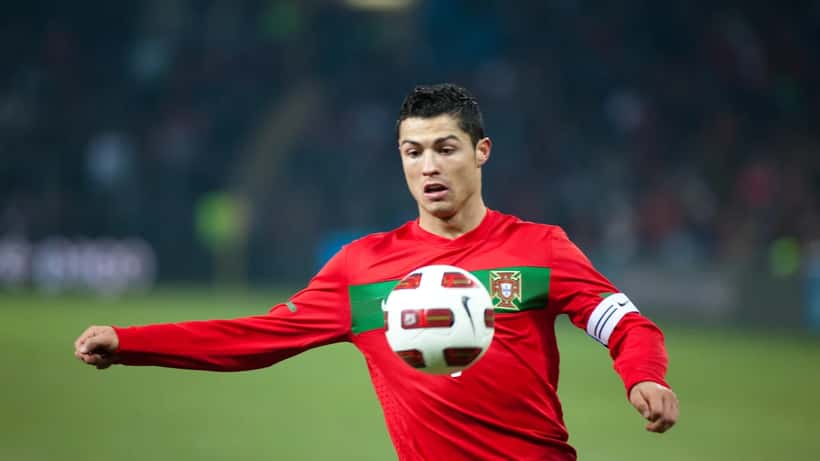
When Cristiano Ronaldo trudged off the pitch on 18 June 2026 after Portugal's 1-1 draw with the Democratic Republic of Congo, statisticians were already building a case. The 41-year-old forward managed just 29 touches in 90 minutes — his fewest in any full international appearance — and failed to register a single shot on target. Across the UK, millions of football fans watching the World Cup asked the same question: what do those numbers actually mean for an athlete of his age?
The Draw That Reignited a Physiological Debate
Portugal's 1-1 result at NRG Stadium in Houston — João Neves heading the opener on five minutes before Yoane Wissa equalised just before half-time — became less a football result and more a Rorschach test. Ronaldo's supporters cited his unmatched positional intelligence and ability to create space. His critics pointed to 29 touches, zero attempts on goal, and an inability to hold off the press. The real answer, according to sports medicine professionals, lies in five measurable domains that determine whether an athlete in their 40s can still compete at the highest level.
Why 41 is a Physiological Watershed in Elite Football
Peak aerobic capacity (VO₂ max) declines by roughly 1% per year after the age of 30 in elite athletes, accelerating noticeably after 40, according to research published by the British Association of Sport and Exercise Medicine (BASEM). At 41, Ronaldo is competing against a biological baseline that even the most disciplined training regime can only partially offset. Yet the science is nuanced: certain physical attributes — reading the game, set-piece positioning, distribution accuracy — can remain elite well into a player's 40s with targeted specialist support.
1. Sprint Distance and High-Intensity Output
The most visible marker of decline in an ageing forward is total high-intensity running distance. Elite forwards in their mid-20s typically cover 2–3 km of high-intensity movement per match. A sports medicine assessment compares an athlete's current output against their own career-peak data — not a population average — to track meaningful change. If Ronaldo's high-intensity distance has dropped significantly from his 2016–2018 benchmarks, it signals the need for a structured load management programme tailored to tournament football.
2. Ground Contact Time and Tendon Resilience
One of the subtler signs of ageing in explosive athletes is increased ground contact time — how long the foot stays on the surface during a sprint. Longer contact signals reduced elastic energy return from the Achilles and patellar tendons. Sports medicine specialists use force-plate analysis to quantify this invisible shift long before it becomes a visible performance dip. For context, Thibaut Courtois's remarkable WC2026 comeback after ACL reconstruction was built on precisely this kind of tendon resilience monitoring across 18 months of rehabilitation.
3. Cognitive Processing Speed Under Match Pressure
Cognitive decline in elite athletes is less discussed but equally significant. In a congested midfield, an ageing forward's ability to scan, decide, and execute can shrink by critical milliseconds. Neurocognitive testing — measuring reaction time and decision speed under simulated match pressure — is now a standard component of the comprehensive athlete assessments that sports medicine consultants conduct in the UK. Ronaldo's brain at 41 is competing against players statistically 15–20 years younger; that gap has measurable consequences in tight defensive situations.
4. Muscle Mass Retention After 40
Maintaining fast-twitch muscle fibre mass becomes exponentially harder after 40 without targeted intervention. Sports medicine specialists monitor body composition quarterly using DEXA scanning, adjusting training loads and nutrition accordingly. Ronaldo's famously rigorous diet and sleep discipline may slow this process, but they cannot reverse it entirely. A specialist assessment tracks whether the balance between muscle retention and injury risk is sustainable across another two to three months of tournament football. Marc Cucurella's story of playing consecutive WC2026 matches under expert management illustrates how this monitoring can make the difference.
5. Recovery Rate Between Matches
Perhaps the most tournament-critical factor is how quickly a 41-year-old recovers between games. Elite players in their mid-20s typically return to full training within 48 hours of a 90-minute match. For athletes in their 40s, full physiological recovery can require 72–96 hours. With Portugal facing three group-stage matches in nine days in Group K, a sports medicine consultant would advise on microdosing training sessions, cold-water immersion protocols, and sleep scheduling — interventions proven to shorten recovery windows without compounding injury risk.
What This Means for British Athletes Over 40
Ronaldo's 2026 World Cup campaign is, inadvertently, a masterclass in why recreational and competitive athletes over 40 in the UK benefit from specialist input. Whether you are a weekend footballer, a masters-level runner approaching 50, or a cyclist who has noticed your recovery slipping after hard efforts, the five criteria above — high-intensity output, tendon health, cognitive processing speed, muscle mass, and recovery rate — are the benchmarks a sports medicine expert uses to build an honest, data-driven picture of your performance trajectory. The question is not whether decline is happening. The question is whether it is being managed.
This article is for informational purposes only and does not constitute medical advice. Consult a qualified sports medicine professional before modifying your training programme.
If you are over 35 and questioning whether your training matches your body's current needs, ExpertZoom connects you with certified sports medicine specialists across the UK who can assess your individual profile and help you compete sustainably for years to come.
