 Phoebe Wilson
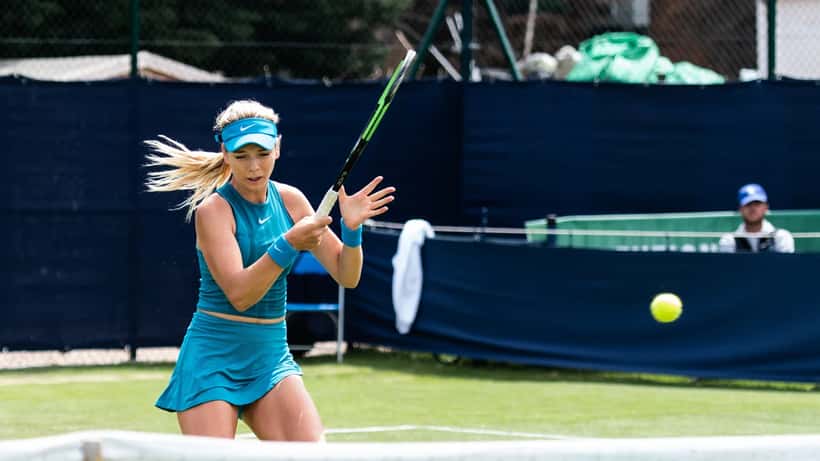
British tennis player Katie Boulter is competing at the Italian Open in Rome this week, taking on Eva Lys in the first round on 6 May 2026. But the tournament comes with a question mark: at the Merida Open earlier this season, Boulter overcame a dramatically troubled serve to beat Beatriz Haddad Maia — landing only 36 per cent of her first serves, recording nine double faults, and having her serve broken five times before winning 6-4 6-4. For most recreational tennis players watching at home, the sight of an elite professional struggling with something as fundamental as a serve raises a familiar question: at what point do serving difficulties stop being a technique problem and start being something a doctor should look at?
The Serve Is the Most Demanding Shot in Tennis
The tennis serve places enormous stress on the shoulder, elbow, and wrist. It involves external rotation of the shoulder at speeds that can exceed 120 mph in professional players, combined with rapid internal rotation and follow-through forces that travel through the elbow and into the forearm. Even at amateur level, where serve speeds are far lower, the repetitive nature of the motion makes serving one of the most common sources of overuse injury in the sport.
Common serve-related conditions include:
- Rotator cuff tendinopathy: Inflammation or micro-tearing of the tendons that stabilise the shoulder joint
- Shoulder impingement syndrome: Pinching of tissue between shoulder bones, causing pain on overhead movements
- Tennis elbow (lateral epicondylalgia): Pain on the outer elbow that is aggravated by racket sports
- Wrist extensor tendinopathy: Often a secondary issue following repeated grip and impact forces
What makes these conditions difficult to self-diagnose is that they can begin as vague discomfort — slightly off timing on the serve, a sensation of the arm "going loose," or unusual double faults — long before the pain becomes unmistakable.
When Technique Problems Have a Physical Cause
Serving issues at elite level are not always mechanical or psychological. Boulter's struggles at Merida have not been attributed publicly to any specific injury. But sports medicine specialists frequently see a pattern: a player begins losing precision or power on the serve, blames their technique, works harder in training, and discovers weeks or months later that they have been training through an injury that has progressively worsened.
According to the NHS physiotherapy guidance, early intervention from a qualified physiotherapist is consistently associated with better outcomes for musculoskeletal conditions. Waiting until pain becomes severe often means longer recovery periods and, in some cases, the need for more invasive treatment.
For recreational tennis players, the problem is compounded by the fact that GP appointments are limited and GPs are not always specialists in sports biomechanics. A sports medicine specialist or musculoskeletal physiotherapist can assess your serve mechanics, identify biomechanical contributors to injury risk, and offer targeted rehabilitation — rather than simply advising rest.
Warning Signs That Your Serve Needs Medical Attention
You do not need to be a professional to take your tennis health seriously. Consider booking a consultation with a sports medicine specialist or physiotherapist if you notice:
A sudden or gradual decline in serve accuracy without any obvious change in technique, equipment, or practice volume.
Pain on ball strike or follow-through — especially if it is located in the shoulder, elbow, or forearm. Even a mild, intermittent ache that appears specifically during serving is worth investigating.
Weakness or instability on overhead movements, such as difficulty lifting the arm above shoulder height or a feeling that the shoulder is "clicking" or "catching."
Double faults in excess of your normal rate, particularly when they are associated with altered serve motion — changing your toss position, shortened backswing, or avoiding full arm extension — which can be subconscious compensations for pain.
Pain that persists for more than two weeks, even at rest or after a few days off court.
The two-week rule is a useful threshold: acute sports injuries that are purely mechanical typically improve significantly with rest and ice within 14 days. If yours does not, there is likely a structural element that warrants professional assessment.
Clay Courts, Fatigue, and the Transition Risk
Katie Boulter's appearance at the Italian Open comes mid-way through the clay court season — a surface transition that presents particular risks for serve-dependent players. Clay is slower than hard court, which means rallies last longer, physical demands increase, and serves are more frequently neutralised by opponents. Players who rely heavily on their serve as a weapon often unconsciously increase effort on clay, adding force to compensate for reduced effectiveness.
That increased physical effort, combined with the cumulative fatigue of a long season, makes the clay transition a period when overuse injuries frequently emerge. UK players who hit the clay courts at their local clubs in spring face a similar dynamic: playing longer rallies on a different surface after a winter of indoor hard court play.
If you are returning to clay courts in May or planning a summer of outdoor tennis, this is an ideal moment for a pre-season physical check with a sports medicine professional — not because something is necessarily wrong, but because prevention is significantly cheaper and faster than treatment.
How a Sports Medicine Expert Can Help
A sports medicine specialist or musculoskeletal physiotherapist can offer several types of support that go beyond what a standard GP appointment provides:
- Biomechanical assessment: Video analysis of your serve to identify movement patterns that increase injury risk
- Strength and conditioning advice: Targeted exercises to support rotator cuff function and shoulder stability
- Tendon load management: Guidance on training volume and intensity that allows tissue to adapt without tipping into overload
- Rehabilitation programmes: Structured recovery plans if an injury is already present
For competitive club players and those who play more than twice per week, an annual check-in with a sports medicine professional is a reasonable investment — comparable to having a car serviced before a problem develops, rather than after breakdown.
Expert Zoom connects you with qualified sports medicine specialists and physiotherapists across the UK who can assess your specific situation and help you continue playing the sport you enjoy. Whether you are dealing with a nagging shoulder issue or simply want to make sure your serve is not causing damage you cannot yet feel, a specialist consultation is the place to start.
This article is for general informational purposes and does not constitute medical advice. If you are experiencing pain during sport, consult a qualified healthcare professional.
