 Amelia Ward
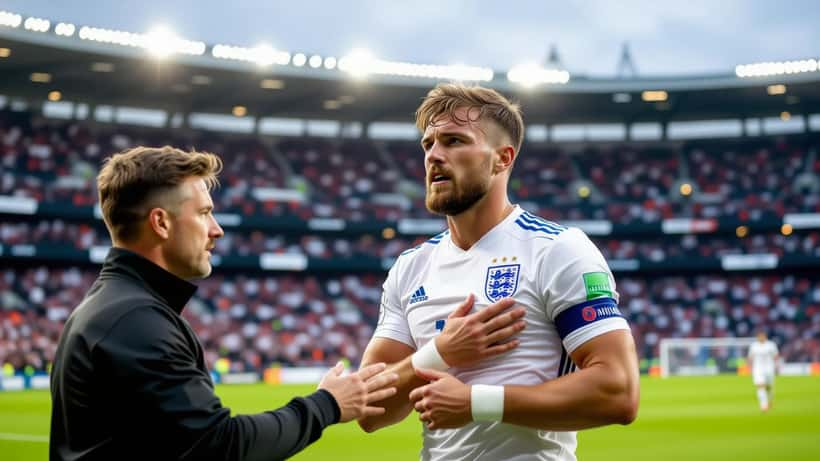
England's Jude Bellingham scored twice against Norway in the World Cup 2026 quarter-final on 11 July, yet the lasting image was not a goal but a grimace: the Real Madrid midfielder repeatedly clutching his left shoulder after a collision, then rubbing it while speaking to medical staff during a cooling break. It is the same shoulder he had surgically stabilised after the 2025 FIFA Club World Cup, and his availability for England's semi-final against Argentina now hangs on how the joint responds.
For millions watching, the moment carried a familiar dread. Shoulder problems rarely arrive once and leave. Bellingham first dislocated the joint during an awkward fall in a LaLiga match against Rayo Vallecano, played most of a season around it, then went under the knife to fix it. That surgery was supposed to close the chapter — which is exactly why the on-camera discomfort against Norway has raised eyebrows.
Why a stabilised shoulder can still ache
The shoulder is the most mobile joint in the body, and that mobility comes at a cost: it is also the most frequently dislocated. Once the joint has come out of its socket, the surrounding ligaments and the ring of cartilage that deepens the socket — the labrum — are often stretched or torn. Surgery tightens and reattaches these structures, but it does not restore a shoulder to factory condition.
According to the NHS, a dislocated shoulder can take several months to heal fully, and the joint may remain more prone to future dislocations even after treatment. Recurrence rates are highest in young, athletic men who return to contact activity — precisely Bellingham's profile. A footballer who dives, falls, and braces against opponents week after week is loading a repaired joint in the exact way that risks re-injury.
Importantly, discomfort after surgery is not automatically a sign of failure. Scar tissue, altered muscle patterns, and the sheer physical demand of elite sport can all produce soreness in a shoulder that is structurally sound. The difficulty — for a player and for anyone recovering from the same injury — is telling ordinary post-surgical stiffness apart from a warning that the repair is under threat.
The signs that should prompt a professional review
You do not need to be a World Cup semi-finalist to face this decision. Shoulder dislocations are common in amateur football, rugby, cycling and skiing, and the recovery questions are the same at every level.
A specialist would typically want to reassess a repaired or recovering shoulder if you notice any of the following:
- A sensation that the shoulder is slipping, catching, or about to "pop out", especially when the arm is raised and rotated outward
- Sudden loss of strength or a dead-arm feeling after impact
- Recurring pain that returns each time you resume the activity that caused the original injury
- Numbness, tingling, or pins and needles down the arm, which can indicate nerve involvement
- Swelling or visible deformity around the joint
Any of these justify pausing and seeking advice rather than pushing through. The instinct to "play on" — visible in Bellingham's determination to stay on the pitch against Norway — is understandable, but repeated dislocations progressively damage the joint and can lengthen the eventual recovery. The same judgement call recently surrounded another England injury scare, a reminder that even celebrations carry risk at this level.
Return-to-play is a decision, not a date
The pressure on an England player to be available for a World Cup semi-final is immense, and it compresses a decision that normally unfolds over weeks into a matter of days. That is why elite medical teams use graded return-to-play protocols rather than a fixed calendar. Range of motion is tested first, then strength, then sport-specific movements under load, before any contact is allowed.
The same principle applies to a weekend footballer. A physiotherapist or sports doctor can build a staged rehabilitation plan — restoring mobility, then rebuilding the rotator cuff and shoulder-blade muscles that stabilise the joint — so that return is based on measurable readiness, not on how the shoulder feels on a good day. Rushing back before that strength is rebuilt is one of the most common reasons a repaired shoulder dislocates again — a lesson that also applies to longer lay-offs, as Gavi's ACL recovery has shown.
For those managing an old injury without ongoing care, an assessment can also clarify whether further imaging or a surgical review is warranted. A shoulder that dislocates repeatedly despite surgery sometimes needs a different procedure, and identifying that early prevents months of frustration.
What Bellingham's scare teaches the rest of us
Whether or not Bellingham lines up against Argentina, his situation is a public case study in a private dilemma faced by thousands of recovering patients: when is soreness just soreness, and when is it the joint asking for help? The honest answer is that you often cannot tell from the outside — which is the whole point of getting it checked.
If you have dislocated a shoulder, had it repaired, or feel a recurring instability that never quite settles, a consultation with a physiotherapist, sports doctor or orthopaedic specialist can turn guesswork into a plan. On Expert Zoom you can connect with health professionals who assess shoulder injuries and recovery, so a decision as important as returning to sport is made on evidence rather than adrenaline.
A World Cup semi-final will be decided in ninety minutes. A shoulder, treated properly, can serve you for decades — and that is the longer game worth winning.
This article is for general information and does not replace personalised medical advice. If you have a shoulder injury or concern, consult a qualified healthcare professional.
