 Abigail Clarke
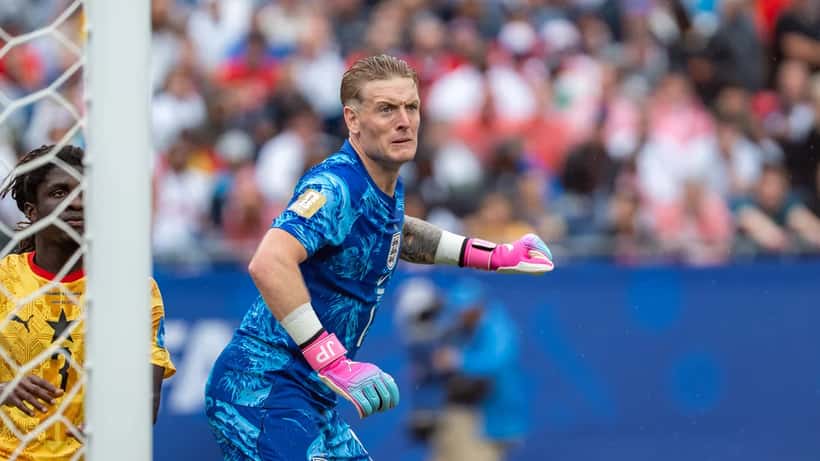
England goalkeeper Jordan Pickford kept a clean sheet as the Three Lions defeated DR Congo 2-0 in the Round of 32 on 1 July 2026 in Atlanta, sending Gareth Southgate's successor Thomas Tuchel's side into the last 16 of the 2026 FIFA World Cup. Goals from Jude Bellingham (62') and Harry Kane (67') — Kane's 11th World Cup goal, a new England record — gave the headlines to the outfield stars. But it is Pickford, at 32 years old and now one of the most experienced goalkeepers at this tournament, whose performance raises a question sports health professionals are increasingly focused on: what does it genuinely take, physically and mentally, to stand between the posts at the world's biggest sporting event?
The Moment Pickford Told the World He Was Ready
Before kick-off against DR Congo, Pickford spoke with characteristic directness about the possibility of a penalty shootout further down the road. "It's about execution, repetition and that's what we're prepared for," he said. "Everyone's got their own routines, own preparations for it." The FA's long-established penalty programme — built on systematic video analysis, psychological conditioning and high-repetition rehearsal — has made England significantly more competitive in shootouts than they once were. Pickford is its best-known product.
The composure Pickford displayed against DR Congo — maintaining concentration across 90 minutes when the ball barely troubled him, yet remaining immediately ready when called upon — reflects a level of physical and mental preparation that sports medicine specialists spend careers trying to optimise.
Why Goalkeeping Is a Distinctive Health Challenge
Most football injury data focuses on outfield players: hamstring tears, ankle sprains, ACL ruptures. The goalkeeper's profile is markedly different. Research tracked by the Football Association's medical department has highlighted the following patterns specific to keepers:
- Hand and finger injuries are far more common than in any other position. Goalkeeper gloves provide some protection, but repeated high-velocity ball contact and diving falls generate cumulative stress on the small bones and ligaments of the hand.
- Shoulder and rotator cuff problems arise from breaking falls on hard artificial pitches and from the mechanics of high, stretched saves — exactly the type Pickford produced during England's group stage.
- Psychological load is structurally different from that of outfield players. Periods of low-intensity activity followed by sudden high-stakes explosive action create a specific cognitive-physiological pattern that sports health experts now study in depth.
The Mental Toll Nobody Talks About
Penalty shootouts at major tournaments have been described by sports psychologists covering the 2026 World Cup as an exercise in "inhumane" pressure. The goalkeeper is statistically at a disadvantage: most penalties are scored. Yet the keeper is expected to project certainty, study movement cues in a fraction of a second, and remain emotionally available to rally teammates if a spot-kick goes in.
Pickford has built a reputation — partly through his 2018 World Cup heroics and continued England service — for thriving in exactly this environment. But his own words acknowledge the preparation behind that appearance of calm: deliberate, structured, and supported by specialists.
For amateur and recreational goalkeepers watching Pickford at this World Cup, the mental performance dimension is often the least-discussed aspect of what makes the position uniquely demanding. Whether you're saving penalties for a Sunday league side or returning to football in your 40s, the cognitive demands of playing in goal — concentration management, error recovery, pre-match routine — are areas where expert support can produce tangible improvements.
World Cup Conditions Add Extra Strain
England's run at the 2026 World Cup is taking place across venues including Atlanta, where summer temperatures and humidity place additional physiological demands on players. For goalkeepers, who generate intense bursts of explosive lower-body effort while managing longer periods of relative inactivity, thermoregulatory management is a specialist concern. Hydration strategies, warm-up protocols between saves, and recovery interventions between matches are areas where sports medicine practitioners work closely with elite keepers throughout a tournament.
The England squad's sports science and medical team will be carefully managing Pickford's workload and recovery across what could be several more high-pressure matches. That level of structured expert support is the foundation beneath the calm on the pitch.
For context on England's full tournament run so far — including the fitness challenges posed by the group stage venues — it is worth noting that England comfortably topped their group before this round of 32 victory in Atlanta.
What Recreational Goalkeepers Should Know
England's performances at this World Cup are driving real interest in football participation at grassroots level across the UK. Adults returning to playing — and particularly those taking up goalkeeping — benefit significantly from being aware of the position's specific health demands before they arise rather than after injury has already occurred.
The NHS advises that adults returning to or increasing sporting activity should take particular care with joint protection, appropriate warm-up and cool-down protocols, and early professional assessment of any recurring pain rather than training through discomfort. For goalkeepers, the wrist, shoulder and knee are the priority areas. Early-stage intervention almost always produces better outcomes than delayed treatment.
The mental performance side matters equally. Self-referral to a sports psychologist or performance coach is increasingly accessible outside professional football structures, and the techniques — breathing control, pre-performance routines, concentration anchoring — transfer directly to competitive amateur sport.
When to Consult a Sports Health Expert
Watching Jordan Pickford at the 2026 World Cup is a reminder that elite performance rests on an invisible foundation of expert support. For anyone playing sport at any level in the UK, the following situations warrant a specialist consultation:
- Recurring wrist, finger or shoulder discomfort that does not resolve with a week's rest
- Loss of confidence or concentration following an error on the pitch — a sports psychologist or performance coach can address this directly
- Returning to sport after a break of six months or more, particularly if you are 35 or older
- Pre-season preparation for a new campaign, where movement screening can identify and address imbalances before they cause problems
According to NHS Sport and Exercise Medicine guidance, appropriate professional support for sports-related health issues is available through both NHS referral pathways and private sports medicine practitioners across England. The right expert at the right time can extend both performance and enjoyment of sport significantly.
England's Moment — and What It Inspires
With England through to the last 16 of the 2026 World Cup, Jordan Pickford will be called upon again. His ability to deliver calm, technically excellent goalkeeping match after match is the product of years of structured health and performance support. The fans watching from home in their millions are being shown what expert-backed athletic preparation looks like at its finest.
If this tournament has inspired you to play more sport, get back on a pitch, or finally take that recurring shoulder problem seriously, consider what the right expert consultation could do for your own performance and wellbeing.
This article contains general health information. For personal medical advice, always consult a qualified healthcare professional.
