Who Could England Play in the Round of 32 at the 2026 World Cup?
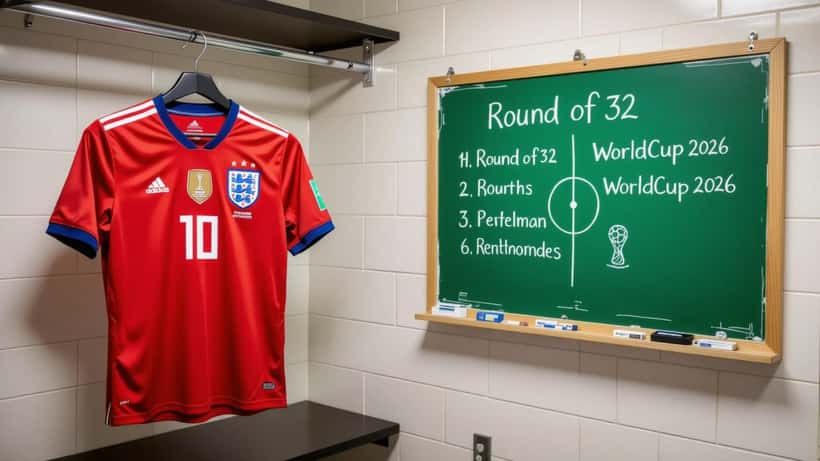
As the 2026 FIFA World Cup moves through the group stage, England fans are already looking beyond the final whistle of Matchday 3 and asking one question: who could England play in the Round of 32? With the tournament expanded to 48 teams and a new knockout bracket format, the path through the first knockout round is less predictable than ever. For a squad that has reached the latter stages of the last two major tournaments, the Round of 32 is not just a formality — it is where momentum is made or broken.
This article breaks down the possible opponents, the format that decides them, and what each matchup could mean for England’s hopes of ending the long wait for international silverware.
How the 2026 World Cup Round of 32 Works
The 2026 tournament is the first World Cup to feature 48 teams. The group stage is split into 12 groups of four, with the top two from each group advancing automatically. The eight best third-placed teams also go through, creating a 32-team knockout bracket.
That third-place variable is what makes the Round of 32 permutations so complex. England’s opponent depends not only on whether they win Group C, finish second, or — in a worst-case scenario — slip to third, but also on which third-placed teams qualify from other groups. The bracket is structured so that a group winner faces a third-placed team or a runner-up from a connected group, depending on the final rankings.
For England, the dream scenario is winning the group. That would likely set up a meeting with a third-placed team, historically the most favourable draw. Finish second, and the Three Lions could face a group winner or a stronger runner-up. Finish third but still qualify, and the road gets significantly harder.
If England Win Group C
If England top Group C, the most likely Round of 32 opponents come from the pool of best third-placed finishers. Based on the draw structure, that could mean a team from Groups A, B, or D — depending on which third-placed sides make the cut.
In practice, that opens the door to potential meetings with nations such as Ecuador, Cameroon, or a European side that slipped up in its own group. None of these would be easy, but all would be winnable for a full-strength England side. The psychological advantage of being a group winner cannot be understated: it avoids the early pressure of facing another seeded team and gives the manager a clearer tactical plan.
England’s group-stage form will matter. A perfect nine-point haul with confidence high would make any Round of 32 opponent look manageable. Struggle to wins against the USA and a European qualifier, and even a theoretically weaker opponent becomes dangerous.
If England Finish Second in Group C
A second-place finish changes the picture. England would likely face the winner of a neighbouring group — potentially a side that topped a section featuring France, the Netherlands, or another major footballing nation. That could mean an early meeting with a genuine heavyweight.
This is where squad depth and tactical flexibility become critical. In 2022, England reached the quarter-finals with a relatively settled system. In 2026, with an expanded squad and more games to navigate, Gareth Southgate — or his successor — may need to rotate and adapt far earlier in the tournament.
A Round of 32 clash against a group winner would also test England’s mentality. The team has shown it can beat elite sides in knockout football, but doing so in the first elimination game brings a different kind of tension.
The Third-Place Danger Zone
No England fan wants to consider it, but finishing third in Group C is still possible. The 2026 format offers a lifeline to the best third-placed teams, but the draw is unforgiving. A third-place qualification would almost certainly mean facing a group winner in the Round of 32 — and not just any group winner, but one with momentum and points on the board.
That path would mirror some of the toughest Round of 16 games from past tournaments, where teams that scraped through suddenly faced tournament favourites. For England, it would mean an instant high-stakes knockout game with no room for error.
Expert Angle: What This Means for Fans and Businesses
From an expert perspective, the expanded format creates both opportunity and risk. For England, the opportunity is a more forgiving route out of the group. The risk is that an early stumble can still lead to a brutal knockout draw.
For businesses, broadcasters, and travel operators, the uncertainty around the Round of 32 fixture list has practical consequences. Hotels, flights, and tickets cannot be confirmed until the group stage ends. Fans hoping to follow England through the knockout rounds are essentially buying flexibility, not certainty. Travel insurance, refundable bookings, and contingency planning become essential — advice that applies whether you are a casual supporter or a corporate hospitality buyer.
Employers should also prepare. World Cup knockout games often fall during working hours, and England matches in particular drive high absenteeism and reduced productivity. Having a clear policy on flexible working, annual leave, and remote work during the tournament is a smart move for any business with a large UK workforce.
Key Dates and What to Watch
The Group C fixtures will decide England’s fate. Results elsewhere will then determine the exact Round of 32 opponent. Fans should monitor not only England’s matches but also the final tables of Groups A, B, and D, which feed into England’s side of the bracket.
Key questions to track include:
- Does England win the group, finish second, or scrape through in third?
- Which third-placed teams qualify with the best records?
- Do any tournament favourites land in England’s side of the draw?
- Are there injury or suspension issues heading into the knockout stage?
Once Matchday 3 is complete, the full knockout bracket will be confirmed within hours. Until then, every prediction is educated guesswork.
Conclusion
So, who could England play in the Round of 32 at the 2026 World Cup? The honest answer is: it depends. Win Group C and the draw is kind. Finish second, and the test gets harder. Finish third, and England could face one of the tournament’s biggest names immediately.
What is certain is that the expanded format has made the knockout stage more unpredictable than ever. For England, the priority is simple: top the group, build momentum, and avoid an early collision with a fellow heavyweight. Do that, and the dream of a first World Cup since 1966 stays alive a little longer.
Whether you are planning travel, managing a workplace, or simply placing a cautious bet, the message is the same — wait for the group stage to finish, then move fast.
